

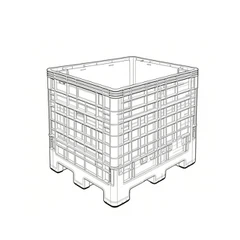
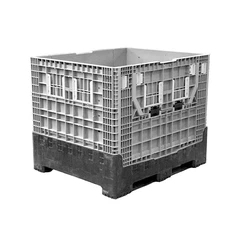
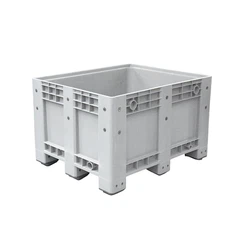
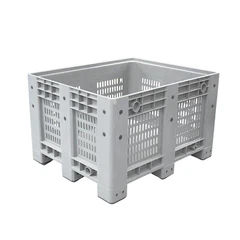
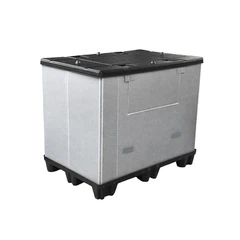
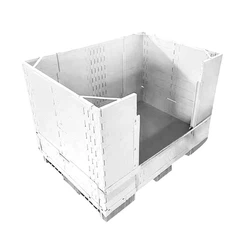
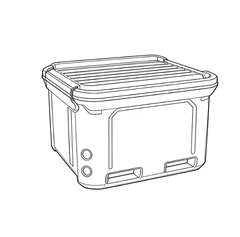
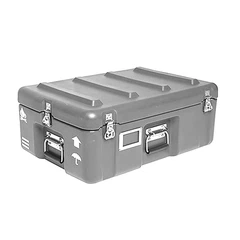
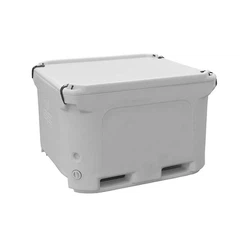
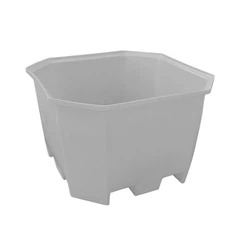
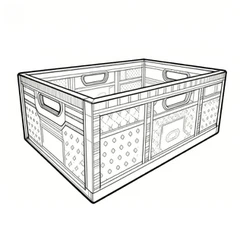
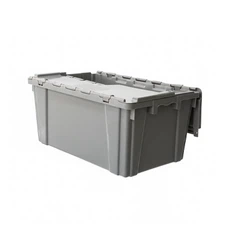
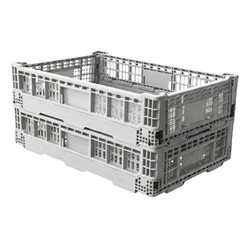
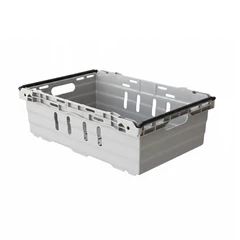
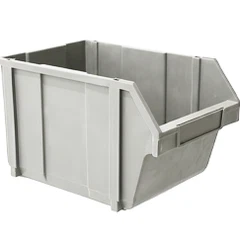
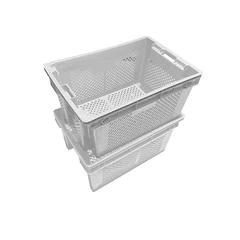
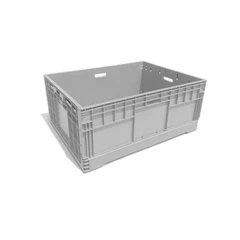
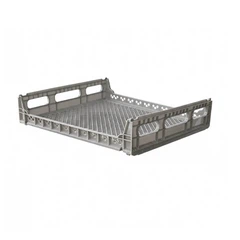
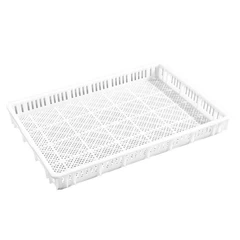
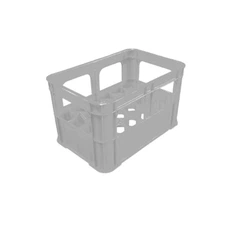
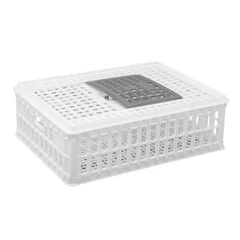
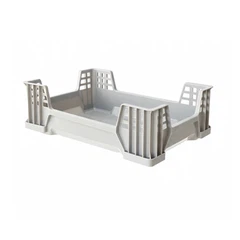


Nestable Folding Crates are designed specifically for logistics and turnover, featuring a foldable and nesting structure to effectively improve empty box management efficiency while meeting daily stacking and transportation needs. The product is made of durable HDPE plastic and supports OEM customization, logo printing, and bulk purchasing services.
Specification
|
Item |
Specification |
|
Product Name |
Nestable Folding Crate |
|
External Dimension |
600 × 495 × 360 mm |
|
Internal Dimension |
560 × 452 × 350 mm |
|
Weight |
2.25 kg |
|
Material |
PP / HDPE (Optional) |
|
Folding Type |
Foldable Side Walls |
|
Application |
Logistics, Warehousing, Food Distribution, Industrial Circulation |
|
20FT Container Loading |
324 pcs |
|
40HC Container Loading |
800 pcs |
Advantages of Nestable Folding Crates
Durable Living Hinge For Long-Term Reuse
The integrally molded PP living hinge, approximately 0.3–0.5 mm thick, withstands over 10,000 folding cycles, making the crate ideal for high-frequency reuse.
Maintain Structural Strength After Repeated Handling
Tested according to ASTM D6179 and ISO 8611, the crate retains over 90% of its original strength after 3,000 stress cycles, supporting repeated stacking, handling, and transportation.
Stable Stacking For Safer Logistics Operations
Nested crates support each other to maintain stable stacking, reducing the risk of tipping, shifting, or unstable storage during transportation and warehouse operations.
Resistant To Moisture And Chemical Exposure
PP/HDPE materials provide excellent resistance against acids, alkalis, detergents, and industrial liquids. The waterproof design performs reliably in humid warehouses, seafood processing, and industrial environments.

Maintenance Guide
Proper maintenance helps extend the service life of Nestable Folding Crate and ensures stable performance throughout repeated handling, stacking, and circulation operations. Follow these practical guidelines to keep the crates in optimal condition.
1. Folding And Unfolding Operation
Before folding or opening the crate, make sure the side walls are properly aligned and release mechanisms are fully unlocked. Avoid forcing the panels or bending the hinges at an angle, as improper operation may create unnecessary stress on the folding structure.
2. Stacking Inspection
When stacking loaded crates, ensure the bottom feet are correctly positioned into the locating areas of the crate below. Proper alignment helps maintain stable stacking and prevents uneven loads that may cause deformation.
3. Avoid Overloading
Always operate within the recommended load capacity. Excessive loads may lead to side wall bulging, bottom deformation, or reduced structural performance during repeated circulation.
4. Low-Temperature Handling
In cold environments below -30°C, plastic materials may become less flexible. Avoid dropping, throwing, or applying sudden impact forces to minimize the risk of cracking.
5. Protect Against Sharp Objects
Although PP/HDPE materials provide excellent impact resistance, sharp metal edges or tools may still damage the crate walls. Avoid direct contact with sharp objects during loading and unloading.
6. Regular Component Inspection
Conduct routine checks on key components, including living hinges, locking clips, and bottom feet. Replace or repair crates if cracks, loose locking parts, or excessive wear are identified.
7. Proper Long-Term Storage
For extended periods of non-use, clean and dry the crates before folding and storage. Keep them away from direct sunlight, extreme heat, and harsh environmental conditions to maintain material performance.
Hot Tags: nestable folding crates, China nestable folding crates manufacturers, suppliers, factory, collapsible crate, collapsible folding crate, collapsible storage crates, folding storage crate, plastic crate box with lid, plastic lidded crates


