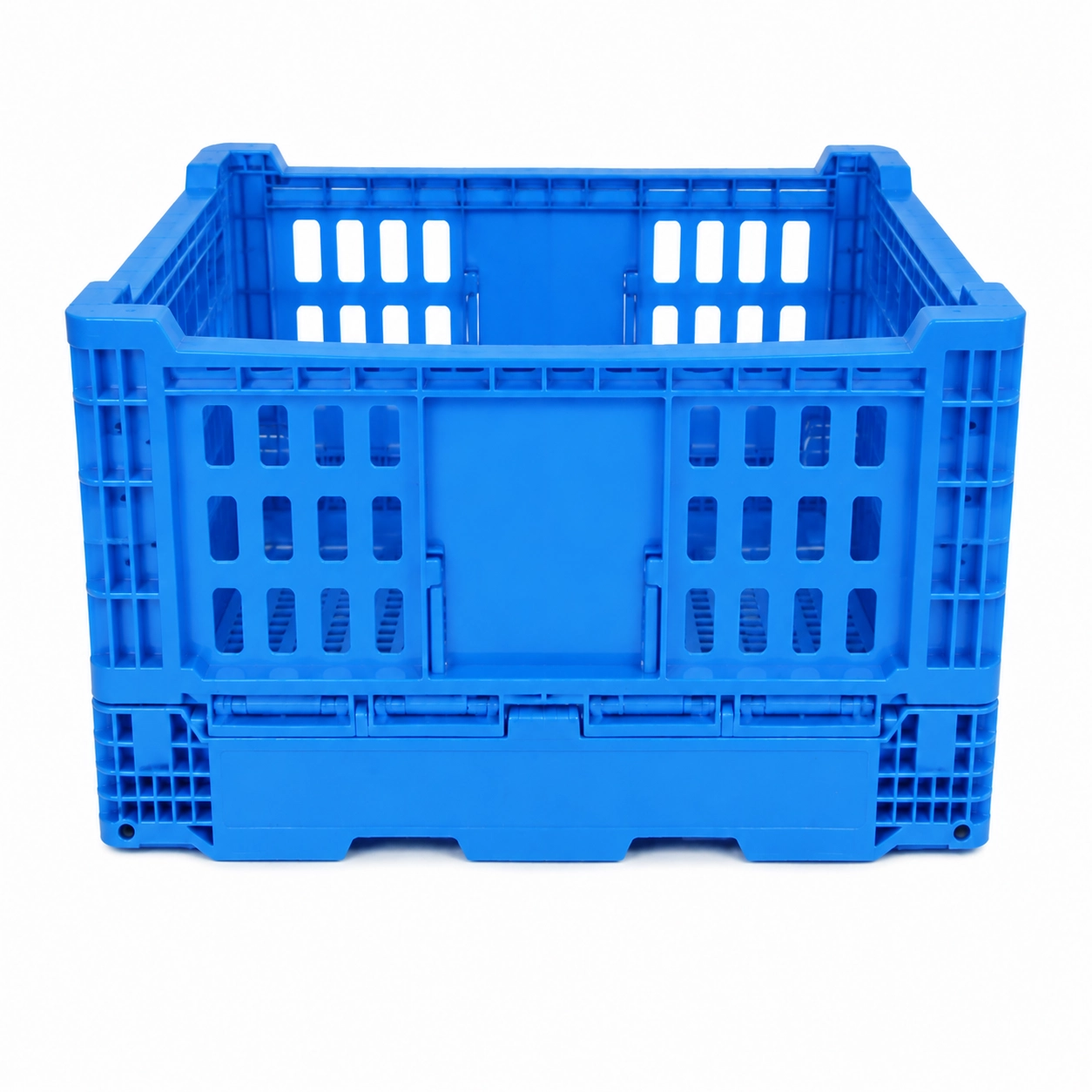
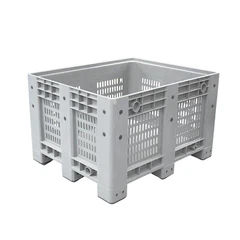
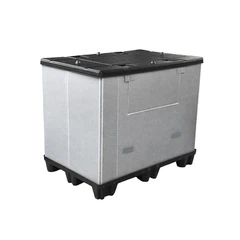
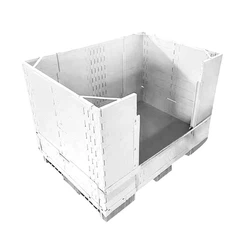
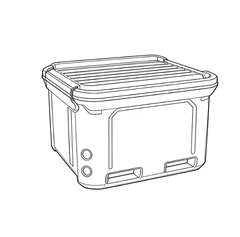
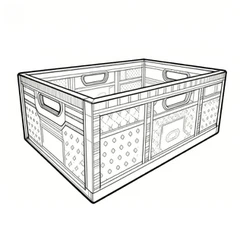
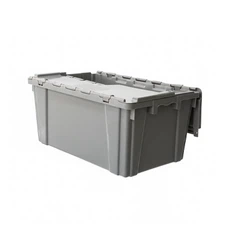
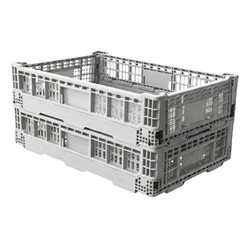
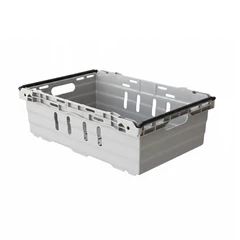
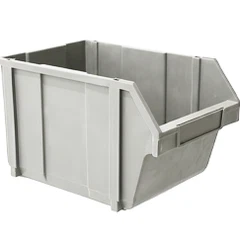
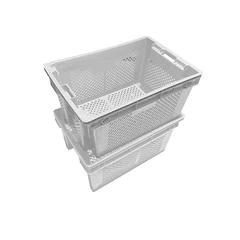
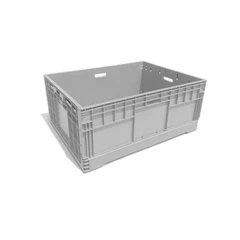
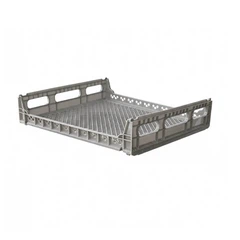
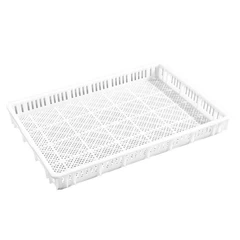
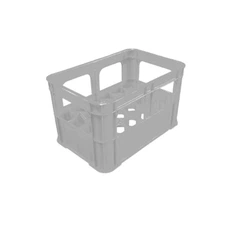
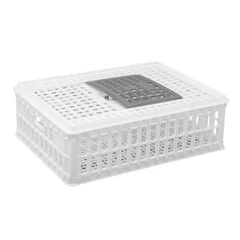
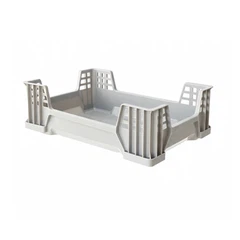
Fresh produce can lose value long before it reaches the customer. The loss often starts with repeated transfers in the field, unstable stacking, poor airflow, slow loading, and large volumes of empty crates returning from distribution centers. A collapsible plastic crate addresses several of these points in one system. It can move from the harvest row to sorting, pre-cooling, transport, storage, and return logistics without changing the basic handling unit.
Research from the UC Davis Horticulture Innovation Lab found that plastic crates reduced reported tomato postharvest transportation losses from 40% with woven sacks to 5% under the Rwanda project conditions studied. The same project reported a reduction from 30% with traditional baskets to 5% with plastic crates. These figures apply to specific field conditions, so they should be treated as case evidence, not a universal rate.
For buyers building a reusable produce-handling system, Enlightening Plast Industry Co., Limited provides folding crates, agricultural containers, and food-handling solutions. Its manufacturing base covers 90,000 m² and supports injection molding, roto-molding, blow molding, mold development, and customized production.

Where Is Produce Handling Efficiency Commonly Lost?
The biggest losses rarely come from one dramatic failure. They build up across small tasks. A worker picks produce into a field basket, transfers it into another container, loads the vehicle, unloads it at the packing center, moves it into cooling, then handles it again for distribution. Every extra transfer adds labor, time, and another chance for bruising. At the same time, empty rigid crates consume the same physical space as full crates, creating a separate problem on the return trip.
Repeated Transfers Add Time and Damage Risk
A better handling flow keeps produce in a suitable crate for more stages of the journey. A rigid interior helps support the crop, while standardized dimensions make stacking and counting easier. UC Davis also notes that plastic crates can reduce bruising and crushing during movement, with smooth interiors and vented sides supporting produce handling.
How Do Collapsible Crates Streamline Field Harvesting?
Harvesting efficiency starts before the truck arrives. The crate has to be practical for workers standing in rows, moving between plants, or carrying produce from a picking point to a collection vehicle. A suitable size can reduce the need for repeated emptying, while a manageable weight and usable handles make full crates easier to move. The folding function also matters before and after harvesting because empty crates can be delivered to the field in a compact form and opened when needed.
Direct Picking Into the Final Handling Crate
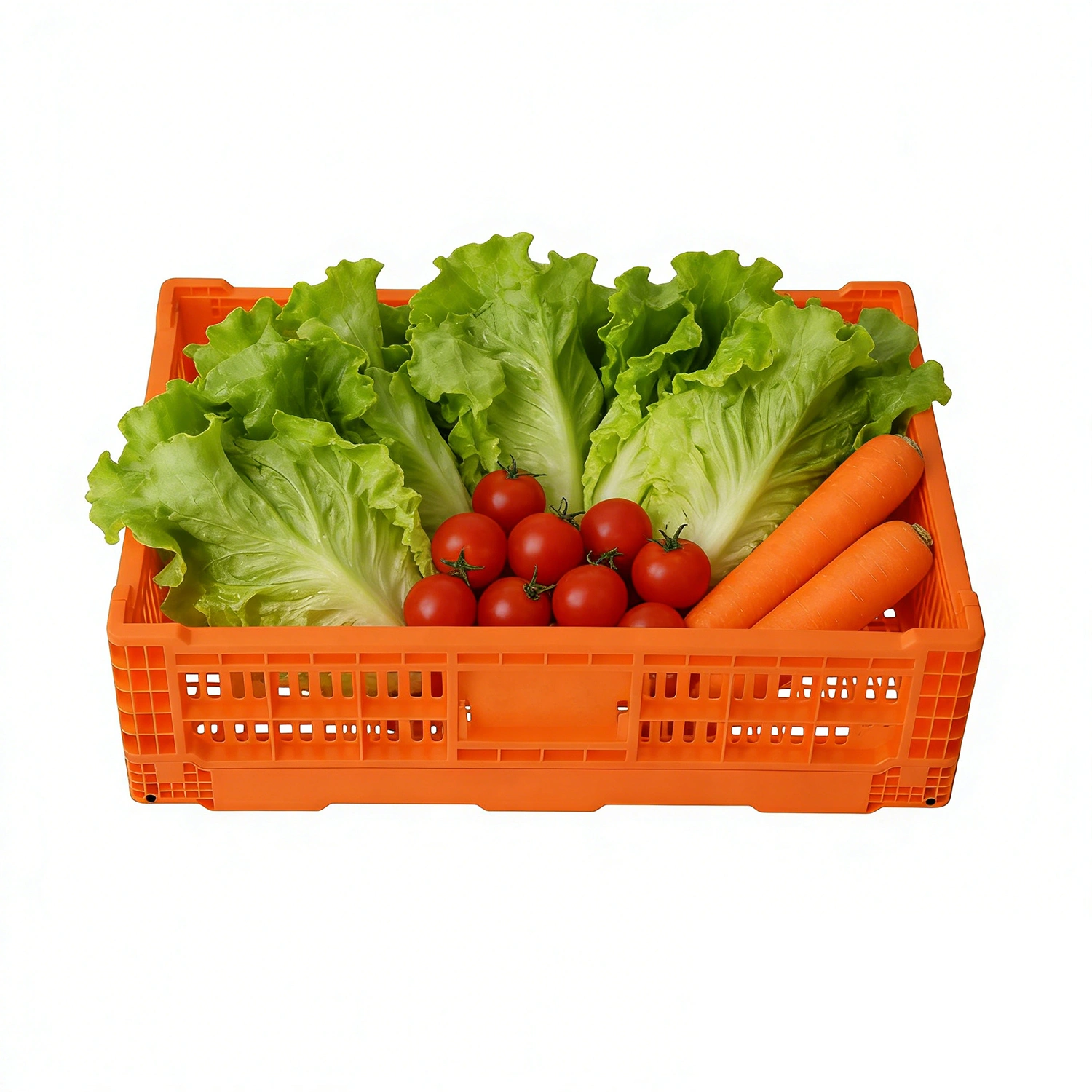
When the crate is suitable for the crop, produce can move directly from the picking point into a reusable transport unit. This cuts one handling stage and keeps the crop in a rigid container during the early part of the supply chain. The Folding Harvest Crate has a 600 × 495 × 300 mm external size, 560 × 452 × 290 mm internal size, and a 2.0 kg weight, giving agricultural operations a practical format for fruit and vegetable handling. Its ventilated structure also supports airflow during field collection and later transport.

How Can Crates Reduce Bruising During Collection and Transport?
Produce damage often comes from pressure, impact, and repeated contact. A bag can change shape around its contents, while weak cartons can lose strength when exposed to moisture. A rigid plastic crate gives the produce a defined space and provides a stronger load-bearing structure during stacking. The actual result still depends on crate depth, crop type, loading height, and handling practices.
Protect Produce With a Stable Interior Structure
Smooth inner walls reduce rough contact with produce, while reinforced corners can carry stacking loads. This matters for tomatoes, peaches, grapes, and other crops where surface damage can lower selling value. UC Davis specifically identifies smooth interiors, ventilation, stackability, and durability as useful features for harvest crates.
A good rule is simple: the crate should carry the stacking force through its structural frame, while the produce occupies the protected space inside. Stack height still needs to follow the tested load rating and the actual transport conditions.
How Do Ventilated Crates Support Pre-Cooling?
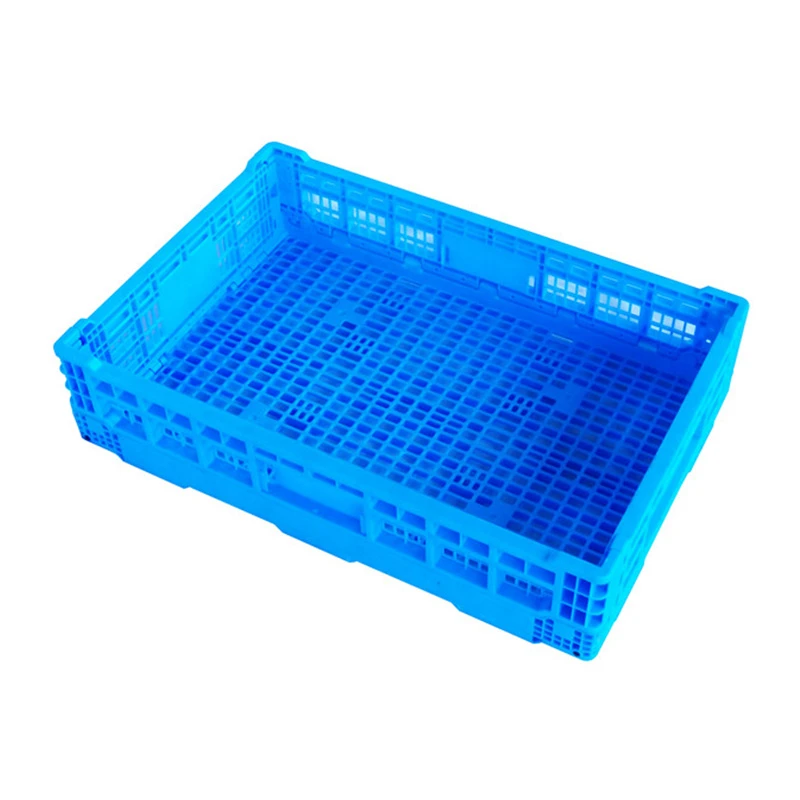
Freshly harvested fruits and vegetables continue to respire after picking, producing heat and moisture. If air movement is poor, heat and moisture can build around the load. Ventilated crates give cooling air paths around and between containers, which can help produce reach the target temperature during pre-cooling. Cooling performance still depends on crop, crate ventilation area, loading density, airflow rate, and cooling equipment.
Keep Air Moving Around the Produce
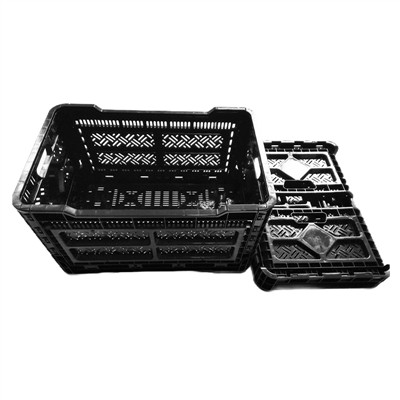
Ventilation is especially useful when crates move from a warm field into a refrigerated facility. Open sidewalls and a suitable base allow air to reach more of the load, while consistent crate dimensions help maintain predictable airflow paths in stacked arrangements. The Food Grade Folding Plastic Crate uses food-grade PP or HDPE, has a smooth interior, and offers folding height reduction of about 70% to 75% when empty.

How Do Folding Crates Improve Loading, Stacking and Warehouse Handling?
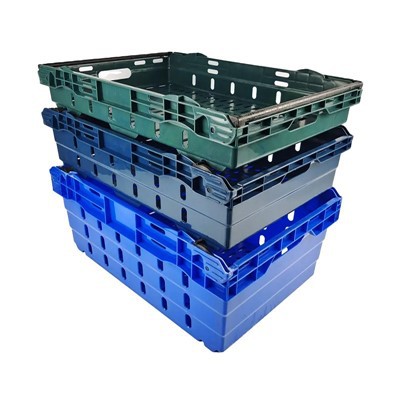
Once produce reaches a packing center, handling speed depends heavily on standardization. Crates with consistent footprints are easier to arrange on pallets, place in vehicles, count in inventory, and move between work areas. Standard dimensions also matter when conveyors, scanners, or automated handling equipment are part of the facility. Consistent tolerances are especially useful for automated systems, although actual compatibility should be tested with the equipment in use.
Build a More Predictable Handling Unit
Stackable crates give each load a defined position, while handles support manual movement. For food distribution, the Folding Crate for Food Distribution is made from food-grade PP and is available in different sizes, with a stated temperature range of -20°C to +60°C. The design also supports QR codes and tracking sensor positions for identification, circulation records, and loss tracking.
Color coding can add another simple layer of control. Different colors may identify farms, crop categories, cleaning status, or processing stages. This makes visual sorting faster when hundreds of crates move across a busy facility.

How Much Can Collapsible Crates Improve Empty-Crate Logistics?
The folding feature creates its clearest value when crates are empty. A rigid crate keeps its full height during return transport and seasonal storage. A folding crate reduces its height after use, so the same truck can carry a much larger quantity of empty units. The actual return ratio depends on folded height, vehicle dimensions, stacking rules, and the packing method.
Reduce Empty Return and Seasonal Storage Volume
For example, a crate that stands 300 mm high and folds to 75 mm has a theoretical height ratio of 4:1. That figure describes the crate geometry. Real vehicle capacity will also depend on floor space and safe loading limits. The food-grade folding model listed above states approximately 70% to 75% height reduction when folded.
This becomes especially useful in seasonal agriculture. During harvest peaks, thousands of crates may be needed for a few weeks or months. After the season, those same containers can occupy large warehouse areas. Folding changes the storage requirement when the crates are empty. Industry sources also identify collapsibility as a way to reduce return-transport and storage volume.
How Do Folding Crates Support Hygiene and Reuse?
A reusable crate only works well when cleaning and return are part of the operating plan. Produce residues, soil, leaves, and moisture can collect around corners, hinges, and locking areas. The cleaning process should cover the entire crate, including moving parts. A clean crate then needs enough drying time before it returns to service.
Create a Controlled Crate Circulation System
Smooth plastic surfaces are easier to wash and sanitize than porous packaging materials, while a closed-loop system gives operators a clear chance to inspect crates between cycles. Food-grade models can also support food-contact requirements when the material and relevant test documents match the intended market. The manufacturer states that its quality system includes raw-material testing, dimensional checks, load testing, drop testing, and stacking tests, with food-contact documentation available for applicable products.
A practical system separates clean and used crates, removes damaged units from circulation, and records cleaning or inspection status. For larger operations, QR codes, RFID, or other identification methods can connect each crate with a circulation record.
When Do Collapsible Crates Deliver the Best ROI?
The purchase price tells only part of the story. A reusable crate creates stronger financial value when it completes many cycles and returns efficiently. A farm with frequent shipments, predictable backhaul, regular cleaning, and high produce damage costs has a very different business case from a one-way shipment where empty crates rarely come back.
Match the Crate With the Actual Supply Chain
A useful calculation includes crate purchase cost, expected cycles, cleaning cost, return freight, loss rate, handling labor, and produce damage. The UC Davis Rwanda project provides a useful example of why this broader view matters: under its study conditions, plastic crates reduced tomato transportation losses from 40% with woven sacks to 5%, and the researchers reported that the crate cost could be recovered after one use.
Collapsible crates tend to fit best where containers circulate repeatedly between farms, packing houses, distributors, retailers, or foodservice facilities. They can be less attractive when return routes are weak, crate loss is high, or cleaning facilities are unavailable.
What Should You Check Before Ordering?
A crate can look suitable on a product page and still fail in daily operation. The right model depends on the crop, load, handling method, cooling system, and return route. A short trial with actual produce often gives better answers than choosing from dimensions alone.
Check the Working Conditions Before Bulk Purchase
Before ordering, check the external and internal dimensions, empty weight, usable capacity, recommended load, stacking load, folded height, ventilation pattern, handle design, temperature range, food-contact documentation, hinge and locking performance, pallet pattern, vehicle loading, and cleaning method. It is also useful to record the time required to fold and unfold one crate.
For a customized project, factors such as size, color, logo, accessories, and structural changes can be discussed with the manufacturer. Its engineering and mold teams support OEM and ODM projects, while its quality system includes material traceability and performance testing.
For example, a buyer handling leafy vegetables may give ventilation and drainage greater weight. A tomato grower may focus on interior contact, crate depth, and stacking pressure. A distributor with a large return network may care most about folded height and vehicle capacity. The same folding concept can serve all three, but the right crate specification can be quite different.
How Can You Build a More Efficient Produce Handling Cycle?
The real value of a collapsible plastic crate appears when the crate works as part of the whole flow:
Harvest → Field Collection → Sorting → Pre-Cooling → Transport → Storage → Distribution → Empty Return → Cleaning → Reuse
Each stage should use the same basic handling unit as far as practical. That reduces unnecessary transfers, keeps product protection consistent, and makes crate counts easier to control. The return stage then closes the loop, with empty crates folded before transport and unfolded when the next harvest begins.
Enlightening Plast Industry Co., Limited operates a 90,000 m² manufacturing base with multiple molding processes and large-scale crate production capacity. Its quality system includes raw-material testing, production inspection, dimensional checks, load testing, drop testing, and stacking tests. For agricultural buyers planning a reusable packaging system, these capabilities can support both standard product selection and project-specific development.
If the next step is to match a crate with a crop, load weight, pallet size, cooling process, and return route, contact the team with those operating details. A clearer specification at the start makes sampling and bulk purchasing much easier.
FAQ
Q: Are collapsible plastic crates suitable for both harvesting and distribution?
A: Yes. A suitable model can serve field collection, sorting, cooling, transport, storage, and distribution. The key is selecting a size, load rating, ventilation pattern, and structure that fit the crop and handling process.
Q: Does a folding crate take up less space when it is full?
A: The main space saving occurs when the crate is empty. During use, the crate returns to its full working height so it can provide the required internal capacity and stacking support.
Q: What crops benefit most from rigid reusable crates?
A: The format is useful across many produce categories. Delicate crops such as tomatoes and peaches need careful control of contact and stacking pressure, while heavier crops such as onions and cabbage place greater demands on structural strength and load capacity.
Q: How should folding mechanisms be maintained in agricultural use?
A: Hinges and locking points should be checked during routine cleaning and inspection. Soil, leaves, and residue should be removed from moving areas, and crates with damaged locks, hinges, or structural parts should be taken out of active circulation.
Q: What information should be prepared before requesting a crate quotation?
A: Prepare the crop type, target load per crate, required dimensions, daily or seasonal crate quantity, pallet size, transport distance, cooling conditions, cleaning method, and empty-crate return route. These details help match the crate structure with the actual operation.