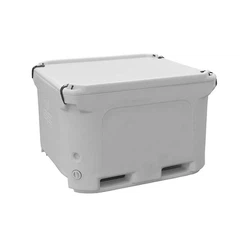
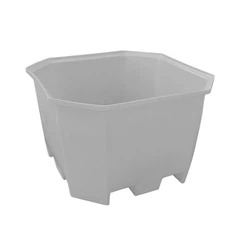
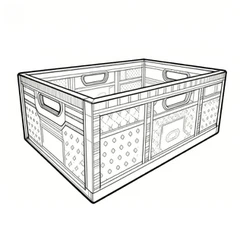
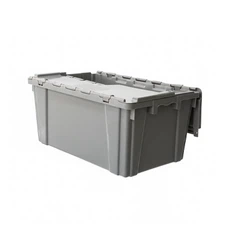
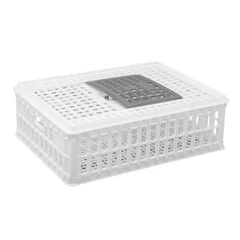
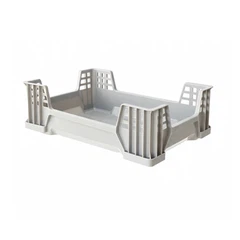
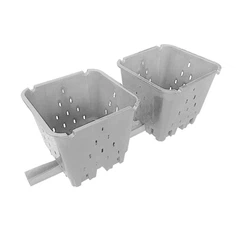

Plastic crates move products through every stage of the supply chain - agriculture, food processing, retail distribution, cold chain logistics, warehousing and manufacturing. But for a purchasing manager, the decisive question is rarely "what types exist." It is "which structure fits my product, my washdown routine, my return logistics and my budget." This guide answers that question the way buyers actually evaluate crates: with a quick-answer comparison up front, then sizes, load ratings, materials, food-contact standards, MOQ and lead-time information for each of the seven main types.
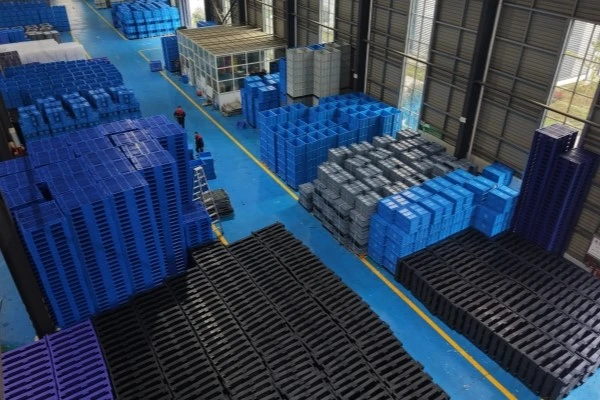
For buyers who need a stable supply, Enlightening Plast Industry Co., Limited is a China-based manufacturer and supplier of plastic crates and reusable plastic packaging. Its 90,000 m² manufacturing base supports injection molding, roto-molding, and other production processes, with more than 700 self-owned injection molds. You can explore its plastic crate product range when you need standard products or a custom solution.
Quick-Answer Comparison: 7 Crate Types at a Glance
|
Type |
Best For |
Airflow |
Empty-Volume Saving |
Typical Size (Custom) |
|
Solid wall |
Sealed protection, washdown areas |
No |
None |
486×355×245mm |
|
Ventilated |
Fresh produce, seafood |
Yes |
Nesting option |
550×390×285mm |
|
Stackable |
Vertical storage in tight floorspace |
Optional |
None |
800×550mm×375mm |
|
Nestable |
Return logistics, agriculture |
Optional |
About 40-70% when empty |
600 × 495 × 360 mm |
|
Foldable |
Reverse logistics, grocery delivery |
Optional |
Folds to approx. 1/3 height |
610 × 425 × 220 mm |
|
Attached lid |
Repeated distribution loops |
No |
Stackable and Nestable |
600 × 400 × 462 mm |
|
Heavy-duty |
Rough handling, high working loads |
Optional |
Folding variants available |
800 × 550 × 375 mm |
What Are Plastic Crates?
Plastic crates are reusable containers made mainly from materials such as polypropylene (PP) and high-density polyethylene (HDPE). Their structure can be solid, ventilated, stackable, nestable, or foldable, depending on the job. Compared with cardboard or wood, plastic crates handle moisture well, are easy to wash, and can be used repeatedly. Food-grade versions are also available for applications where hygiene and material control matter.
Materials: PP vs HDPE - What Buyers Should Check First
Nearly all reusable crates are injection-molded from two polymers: polypropylene (PP) and high-density polyethylene (HDPE). The choice is not cosmetic - it decides how the crate behaves in your cold room, your wash line and your loading dock. Food-contact grades use virgin resin; regrind blends are offered for non-food programs at lower cost. Compare the two materials before comparing individual models:
|
Property |
PP |
HDPE |
Buyer's Rule of Thumb |
|
Density |
0.90-0.91 g/cm³ |
0.94-0.96 g/cm³ |
HDPE crates are slightly heavier per unit |
|
Service temperature |
Approx. -20 °C to +100 °C |
Approx. -40 °C to +70 °C |
Cold chain and freezing: HDPE |
|
Impact resistance at low temp |
Moderate |
Excellent |
Rough handling in winter: HDPE |
|
Rigidity |
High |
Medium-high |
Thin-wall rigid crates: PP |
|
Chemical & grease resistance |
Good |
Excellent |
Industrial washdown: HDPE |
|
Typical programs |
Lighter reusable crates, hot-fill areas |
Cold storage, seafood, meat, heavy wash |
- |
The final material should still be matched to your load, washing process, temperature range and working environment - confirm both the polymer grade and the food-contact status of the specific model you order.
Common Applications
You can find plastic crates in agriculture, fresh food processing, fisheries, food and beverage, retail distribution, cold chain logistics, warehousing, and manufacturing. For example, ventilated crates suit fruits, vegetables, seafood, and other products that need airflow, while solid crates work better when dust and outside contamination are the bigger concern.
Enlightening Plast Main 7 Types of Plastic Crates?
The main difference between plastic crate types comes from their structure. A ventilated crate manages airflow. A solid wall crate gives more protection. A nestable crate reduces empty volume, while a folding crate can reduce it even further. Knowing this difference makes selection much easier.
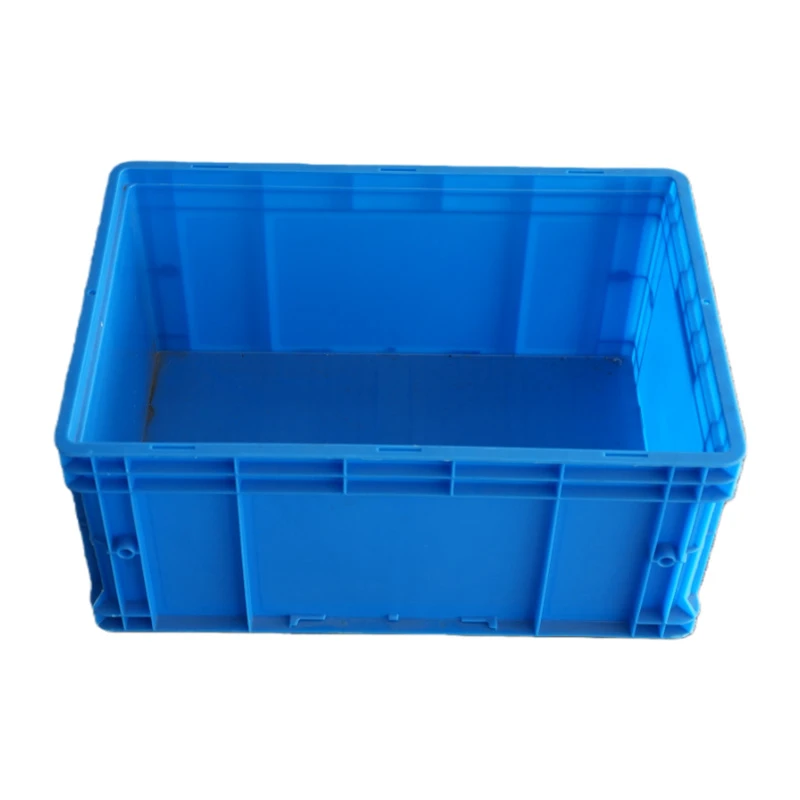
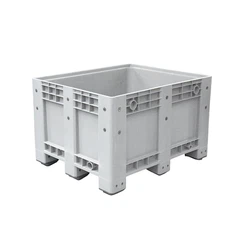
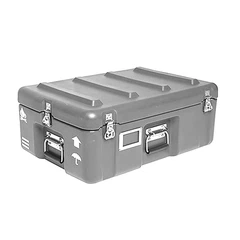
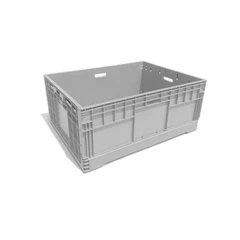
1. Solid Wall Plastic Crates
Definition. Solid wall crates have fully closed side walls and a solid base, sealing out dust, dirt and moisture while remaining fully washable.
- Closed walls and base; smooth interior for easy cleaning
- Optional lid; drain holes can be added on request
- Common size: 486×355×245mm or custom
Sizes and loads. Static and dynamic load ratings for each model are confirmed on request.
Material and temperature. Available in PP or HDPE; HDPE versions suit chilled and wet environments.
Typical use. Food ingredients, meat and poultry processing, enclosed storage and any flow where product protection matters more than ventilation. See our solid wall plastic crates for available models.

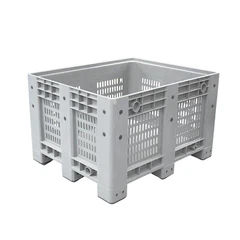
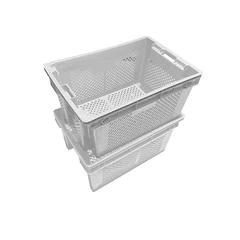
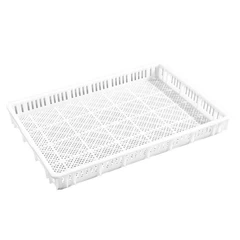
2. Ventilated Plastic Crates
Definition. Ventilated crates use openings in the walls and base to keep air moving around the contents - the standard container for fresh produce.
- Vent openings in all four walls plus base grid
- Reduces moisture buildup during handling and cold storage
- Nestable or stackable variants available
- Common size: 550×390×285mm
Material and temperature. HDPE versions hold up in wet, cold conditions down to approx. -40 °C.
Typical use. Fruits, vegetables, seafood and dairy - anywhere airflow protects shelf life. Fits harvest and packhouse programs; see ventilated plastic crates and our agriculture and husbandry applications.

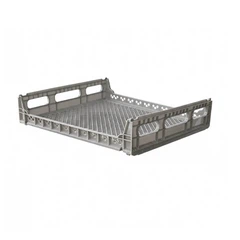
3. Plastic Stackable Bread Tray
Definition. Stackable crates are engineered to sit securely on top of one another when loaded, using reinforced rims and stable corner geometry.
- Reinforced top rim carries the stack load
- Rigid design - no folding, no nesting
- Common size: 725 × 650 × 150 mm
Material and temperature. PP for ambient dry goods; HDPE for chilled lines.
Typical use. Vertical storage in warehouses, distribution centers and processing areas where floor space is expensive. See more detials of our Stackable Plastic Bread Crates.

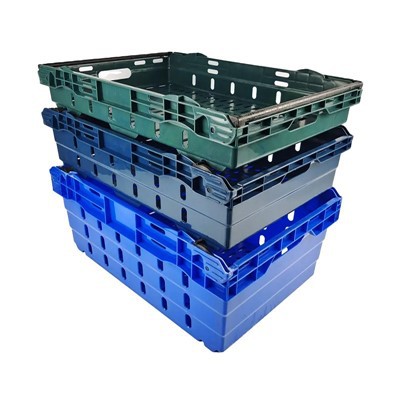
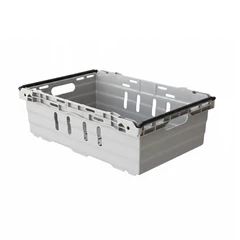
4. Nestable Plastic Crates
Definition. Nestable crates are tapered so that empty units fit inside one another, cutting the volume - and the freight cost - of every return trip.
- Tapered walls; rigid and secure when in use
- Saves roughly 40-70% of warehouse space when empty
- Stacks with a bale arm or lid where fitted
- Common size: 600 × 495 × 360 mm
Material and temperature. PP or HDPE; food-grade virgin resin available for produce and food handling.
Typical use. Agriculture, retail distribution and any closed loop where empty crates travel back to a central warehouse - the return-volume saving usually pays for the crate. See nestable plastic crates.

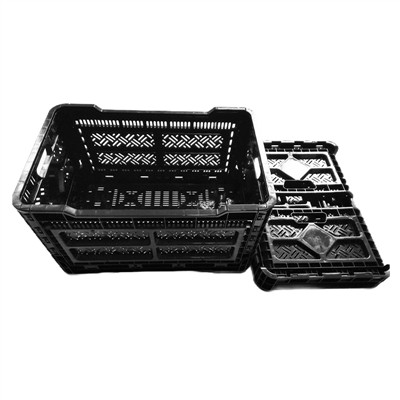
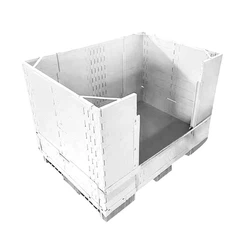
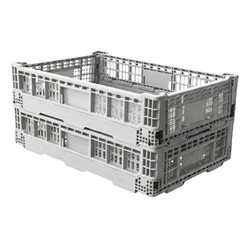
5. Foldable Plastic Crates
Definition. Foldable crates have hinged walls that collapse when empty, offering the largest empty-volume reduction of any crate type.
- Collapsible walls; locked rigid when open
- Folded height approx. 1/3 of open height
- Food-grade versions molded from virgin PP or HDPE
Material and temperature. Virgin PP or HDPE; food-contact grades available.
Typical use. Grocery delivery, retail distribution and reverse logistics - the standard choice when empty crates travel long distances. Compare folding structures in the folding crate range.

6. Attached Lid Containers
Definition. Attached lid containers use hinged lids that never separate from the base - no lost lids, better dust and moisture protection in transit.
- Hinged lid, closeable by hand, compatible with strapping
- Standard Euro footprint 600 × 400 mm
- Heights: 260, 285, 315, 335, 365, 412 and 462 mm
Material and temperature. Food-grade HDPE with smooth interior.
Typical use. Repeated distribution loops, order picking and any flow where contents must stay covered between handling points. See the full attached lid container range and the dedicated attached lid containers buying guide.

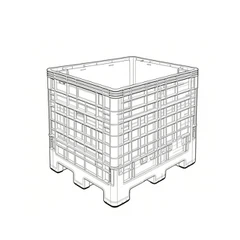
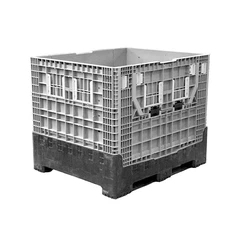
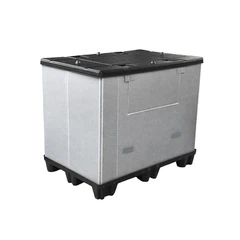
7. Heavy-Duty Plastic Crates
Definition. Heavy-duty crates use reinforced structures and higher-grade resin for repeated loading, rough handling and above-normal working loads.
- Reinforced base and corner structure
- Folding and rigid variants available
- Rated for repeated forklift and rough handling cycles
Sizes and loads. For large loads, verify four numbers before ordering: static load, dynamic load, stacking configuration and the actual working load in your process - engineering will confirm the tested values per model.
Material and temperature. HDPE for impact and low-temperature toughness.
Typical use. Manufacturing, automotive parts, waste and heavy produce handling. See heavy-duty folding plastic crates.

How Do Plastic Crate Types Compare?
The table below focuses on purchasing factors that help you narrow down the product before checking individual designs.
|
Selection Factor |
What to Check |
Why It Matters |
|
Empty Return Frequency |
Daily, weekly, or occasional |
High return frequency favors space-saving designs |
|
Washing Method |
Manual, pressure washing, or industrial washing |
Affects material and structural requirements |
|
Product Fragility |
Hard, soft, fragile, or easily bruised |
Helps determine wall and ventilation design |
|
Handling Equipment |
Manual, trolley, forklift, or conveyor |
Determines dimensional and structural compatibility |
|
Working Environment |
Indoor, outdoor, chilled, wet, or high-temperature |
Influences material choice and service conditions |
|
Identification Needs |
Color, label area, barcode, or RFID |
Helps with sorting and tracking |
How Do You Choose the Right Plastic Crate?
Size and Footprint Reference
Footprint compatibility decides whether a crate program integrates with your pallets, racking and automation. The Euro-type 600 × 400 mm footprint is the de facto industry standard: it fits four per layer on a 1200 × 800 mm Euro pallet and interlocks five per layer on a 1200 × 1000 mm industrial pallet.
|
Footprint (external) |
Pallet Fit |
Available Heights |
Typical Programs |
|
600 × 400 mm |
4 per layer on 1200 × 800 mm; 5 on 1200 × 1000 mm |
ALC: 260-462 mm other types per model |
Retail, distribution, food |
|
400 × 300 mm |
8 per layer on 1200 × 800 mm Euro pallet | Various heights available by model |
Grocery delivery, picking |
Custom footprints, colors, logos and structural changes are supported through our in-house mold shop - see the custom development page.
Load Ratings: What to Confirm Before Ordering
Load data is where most crate purchases go wrong. Three numbers matter: dynamic load (what one crate carries while being moved), static load (what a stacked column carries), and tare weight (the crate's own weight, which drives freight cost). Ask for the tested datasheet, not a catalog claim:
|
Crate Type |
Dynamic Load (per crate) |
Static Load (stacked) |
Tare Weight |
|
Attached lid 600 × 400 |
20–40 kg | 200–400 kg | 2.9-3.7kg |
|
Folding 600 × 400 |
15-30kg | 150-300kg | 1.5–3.5 kg |
|
Nestable 600 × 400 |
20-40kg | 200-400kg |
|
|
Heavy-duty models |
40-80kg | 400-800kg | 3-8kg |
Reference point for planning: 600 × 400 mm crates in this product class typically run in the 20-30 kg dynamic-load range, but exact tested values must come from our engineering datasheet for the specific model and material grade.
MOQ, Price Factors and Lead Time
These are the commercial questions every buyer asks first - here is how they work with us:
MOQ: 500 pcs;
Samples: Free;
Lead time: 15-30 days;
Price drivers: resin grade (virgin vs regrind blend), structure, height, color, logo printing (silk-screen / hot-stamping / in-mold label) and order volume;
Trade terms & shipping: Flexible Terms, Global Shipping;
Request a quote with your target size, load and food-contact requirement via the inquiry page - our team replies with the matching model list and current pricing.
Which Plastic Crate Is Best for Different Applications?
Your product usually gives the first answer. Fresh produce needs airflow, while sensitive goods may need a closed wall. If empty crates travel long distances, nesting or folding becomes more valuable. For repeated distribution, attached lids can help protect the contents during movement.
Agriculture and Fresh Produce
Ventilated plastic crates are a common choice for fruits and vegetables because air can move through the crate. A nestable bale arm crate can also save about 40% to 70% of warehouse space when empty, which is useful during return logistics.
Food and Beverage
Food-grade plastic crates should use materials and additives suitable for the intended food-contact application. Food-grade folding crates can be made from virgin PP or HDPE, with options such as FDA, EU 10/2011, LFGB, and GB 4806.7-2016 compliance depending on the product and testing requirements.
Cold Chain and Fisheries
For fish, seafood, and chilled products, ventilation and low-temperature performance both matter. HDPE offers very good low-temperature performance, while ventilated structures help air and cold move around the contents.
Retail and Logistics
Nestable and foldable crates are useful when empty containers must return to a warehouse or distribution center. Attached lid containers work well when the goods need better protection during repeated transport.
FAQ
Q1: What Are Plastic Crates Used For?
A: Plastic crates are used for storing, handling, and transporting products in agriculture, food processing, retail, fisheries, cold chain logistics, and warehousing.
Q2: Which Plastic Crate Is Best for Fruits and Vegetables?
A: Ventilated plastic crates are usually the better choice because their openings allow airflow and help reduce moisture buildup around fresh produce.
Q3: What Is the Difference Between Stackable and Nestable Plastic Crates?
A: Stackable crates are designed to sit on top of each other during use. Nestable crates fit inside one another when empty, so they take up less space during storage and return transport.
Q4: Is PP or HDPE Better for Plastic Crates?
A: PP is a good choice when rigidity, lower weight, and heat performance matter. HDPE is often preferred for higher impact resistance, chemical resistance, and low-temperature applications.
Q5: How Do You Choose the Right Plastic Crate?
A: Check the product type, load, crate dimensions, ventilation needs, material, washing conditions, stacking method, and empty return requirements before selecting a plastic crate.
Get a Crate Selection Proposal
Send us your product, working load, target footprint and food-contact requirement, and our engineering team will return a shortlist of matching models with tested load data, current MOQ and lead time. Start at the inquiry page, or ask about custom structures through our custom development program.