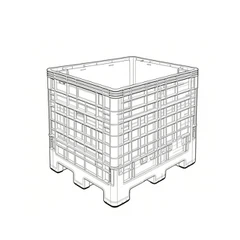
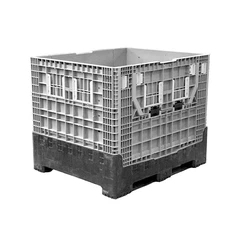
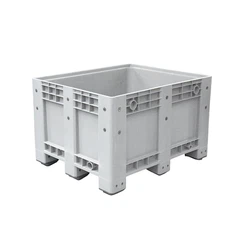
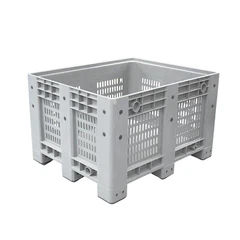
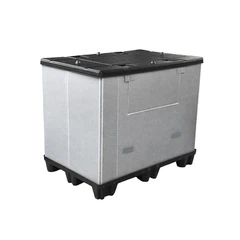
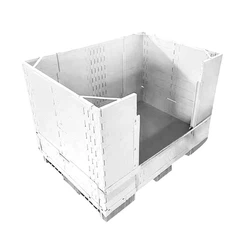
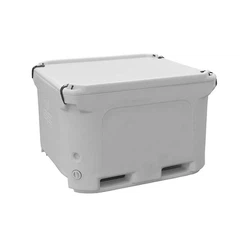
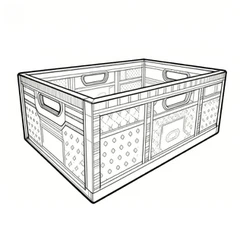
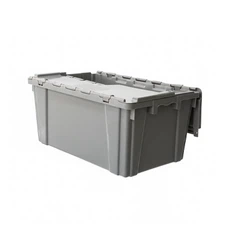
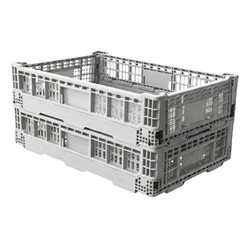
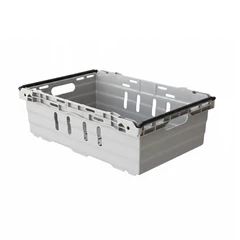
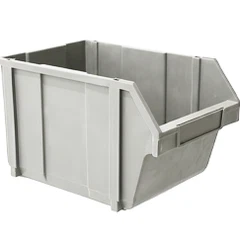
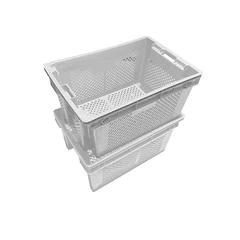
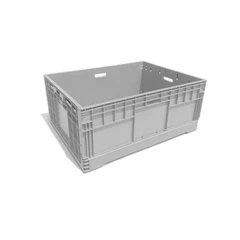
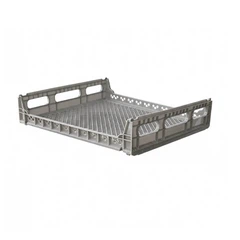
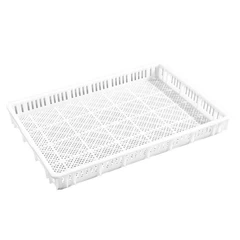
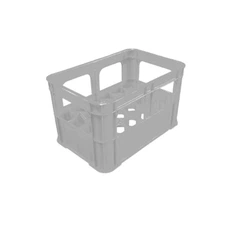
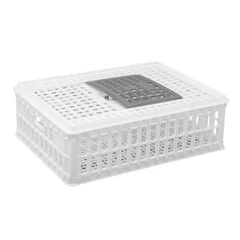
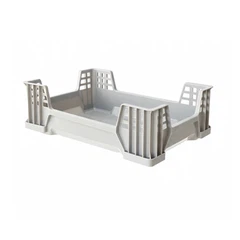
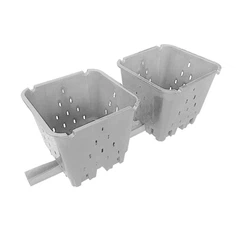

A plastic foldable crate needs to do more than hold products. Its size, load capacity, folding height, material, and structure must fit the actual handling process. A crate used for fresh produce has different needs from one carrying automotive parts. For this reason, custom development should start with the application and then move to structure, material, testing, and production.
For buyers looking for a supplier with both standard products and custom development capability, Enlightening Plast Industry Co., Limited offers plastic crates for agriculture, food, automotive, manufacturing, and supply chain logistics, together with OEM and ODM support.

What Is a Custom Plastic Foldable Crate?
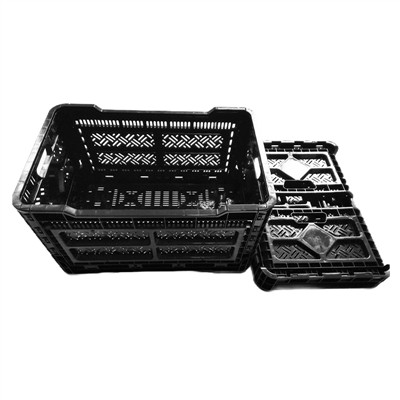
A custom plastic foldable crate is a reusable crate whose dimensions, structure, material, or features are designed for a specific application. Its side walls fold down when empty, reducing storage and return transport space.
What Makes a Foldable Crate Different From a Standard Crate?
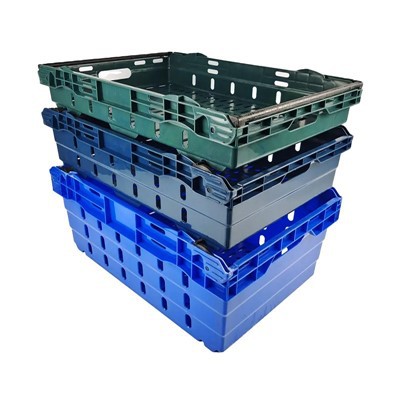
A standard rigid crate keeps its full height when empty. A foldable crate collapses after use, so more empty units can fit into the same storage or transport space. The Folding Plastic Crate provides a practical reference for this design, with multiple standard sizes available for different logistics needs.
When Does Custom Development Make Sense?
Custom development makes sense when a standard crate cannot fit the required pallet, conveyor, rack, product size, load, or folding height. It is also useful when special features such as dividers, lids, RFID, ventilation, or reinforced structures are required.
When Do You Need a Custom Foldable Crate?
The need for customization usually comes from a specific problem in the material flow.
Special Size or Footprint
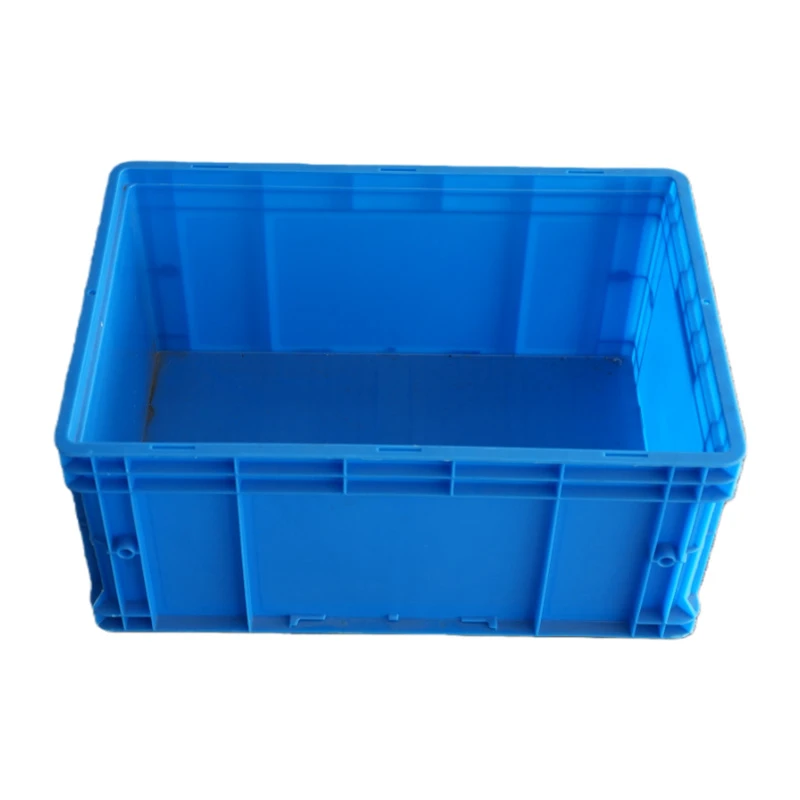
The crate should fit the available pallet, shelf, conveyor, or transport space. Common footprints such as 600 × 400 mm and 500 × 400 mm can be used as starting points, while smaller sizes suit compact components.
Higher Load Capacity
If each crate carries heavy parts, the base, walls, ribs, hinges, and stacking rim must work together. A 30 kg product load also needs to be considered together with the number of stacking layers and handling method.
Specific Folding Height
Folded height affects empty storage and return transportation. If hundreds of empty crates return to a central warehouse, even a small reduction in folded height can increase truck utilization.
Special Ventilation or Wall Design
Fresh produce needs airflow and drainage, while small industrial parts may need solid walls for greater protection. The right wall design depends on the product and operating environment.
Warehouse and Conveyor Compatibility
Check conveyor width, roller spacing, rack dimensions, pallet footprint, handle position, and lifting method before finalizing the design. These details can affect the crate structure.
Return Logistics Requirements
For closed-loop logistics, define the number of empty crates returned, folding frequency, available transport space, and required service life. These factors directly affect the folding mechanism and material choice.
What Should You Define Before Designing the Crate?
A clear specification gives the manufacturer a practical design target. The most useful information covers the product, crate dimensions, loads, folding requirements, handling method, cleaning process, and working environment.
Product Size and Weight
Record product length, width, height, weight, and quantity per crate. Small components may need dividers, while large or heavy parts may require a reinforced base.
Internal and External Dimensions
Internal dimensions determine usable capacity. External dimensions determine compatibility with pallets, racks, conveyors, and trucks. Both should be specified.
Load and Stacking Requirements
Define product weight, static load, dynamic load, stacking load, and maximum stacking layers. These figures guide the base, wall, and stacking structure.
Folding Height
Set the maximum folded height according to warehouse and transport requirements. For example, a 400 × 300 × 200 mm foldable crate can have a folded height of about 50 mm, providing a useful reference for compact storage.
Handling Method
State whether the crate will be moved by hand, pallet truck, forklift, conveyor, or automated equipment. Handle design and base structure should match the actual process.
Cleaning Requirements
Food applications may need smooth surfaces, drainage, and food-grade material. Industrial crates may face oil, dust, chemicals, or frequent washing.
Operating Environment
Temperature, moisture, impact, outdoor exposure, and chemical contact all affect material and structural selection.
How to Design the Foldable Crate Structure?
The structure must support the required load while allowing the crate to fold repeatedly. Hinges, locking points, ribs, stacking features, and the base should therefore be designed as one system.
Folding Side Walls
Side walls should fold smoothly and lock firmly when the crate is open. Solid walls suit parts that need greater protection, while perforated walls support airflow.
Hinges and Locking Points
Hinges face repeated movement, so their strength and geometry matter. Locking points must keep the walls stable during loading and stacking.
Reinforcing Ribs
Ribs increase stiffness without making every part of the wall excessively thick. Reinforcement is especially useful around the base, corners, and hinge areas.
Stacking Rim
The stacking rim keeps loaded crates aligned. Its design should match the base of the crate above it to reduce movement during storage and transport.
Base Structure
The base carries the product weight and transfers the load to the floor, pallet, rollers, or lower crate. A reinforced base can reduce deformation during stacking.
Handles and Handholds
Handles should provide enough clearance for the intended load and remain compatible with labels, conveyors, and other equipment. Standard products can also support customized handle and structural requirements.
How to Choose PP or HDPE for a Custom Crate?
PP and HDPE are both common choices for reusable plastic crates. The better material depends on the load, temperature, impact conditions, cleaning requirements, and application.
PP for General Foldable Crate Applications
PP provides a useful balance of weight and rigidity and suits many warehouse, retail, and distribution applications. Existing folding crate models use virgin PP and offer different sizes and wall designs.
HDPE for Higher Impact Requirements
HDPE is suitable for applications where toughness and impact resistance matter. The Collapsible Plastic Crate uses virgin food-grade HDPE and is designed for repeated logistics use.
Virgin vs. Recycled Material
Virgin resin offers consistent material properties and is widely used for food-related and demanding applications. Recycled material can fit projects with sustainability targets when the required performance allows it.
Food-Grade and Low-Temperature Requirements
Food-contact applications need a suitable material grade. Cold-chain applications also require material performance at low temperatures. Material testing should match the actual working range.

How to Adapt the Crate to Different Applications?
A custom foldable crate should reflect the way products move through the supply chain. The same footprint can use different walls, materials, or accessories depending on the application.
Agriculture and Fresh Produce
Ventilated walls and drainage help fresh produce maintain airflow and allow moisture to escape. A foldable design also reduces empty storage volume after distribution.
Food and Cold Chain
Food-grade material, smooth surfaces, drainage, and suitable low-temperature performance are common requirements. A collapsible HDPE crate can suit repeated movement between cold storage, transport, and distribution.
Retail Distribution
Retail logistics often require frequent empty-crate returns. Foldability reduces return volume, while labels, lids, or dividers can help with store replenishment.
Automotive and Industrial Parts
Solid walls, reinforced bases, stable stacking, and dividers can protect automotive and industrial components. For electronic parts, ESD material may also be considered.
Warehouse and Return Logistics
Here, folding ratio, stacking stability, handling efficiency, and service life become key factors. The standard Folding Plastic Crate can serve as a starting point before further customization.
How Does Custom Foldable Crate Development Work?
Custom development should move from requirements to design, sample testing, and then mass production. This sequence helps reduce structural changes after tooling begins.
Application and Requirement Review
Define dimensions, load, folding height, material, temperature, handling method, wall design, accessories, service life, and expected quantity.
Structural Design
The manufacturer converts these requirements into the crate structure, including wall thickness, ribs, hinges, locking points, handles, and base geometry.
CAD Drawing and DFM Review
CAD defines the final dimensions. DFM review checks whether the structure can be molded consistently and whether hinges, ribs, corners, and wall transitions are suitable for production.
Mold Development
A new mold may be required for major size or structural changes. In-house mold capability can simplify communication between design and production. The factory profile lists more than 700 self-owned injection molds and 20 to 30 new molds developed each year.
Prototype or Sample Production
A physical sample allows you to check dimensions, folding movement, stacking, handles, and compatibility with existing equipment before mass production.
Sample Testing and Revision
Testing may lead to changes in ribs, wall thickness, hinges, locking points, or base structure. Once the sample meets the requirements, production can proceed.
Mass Production
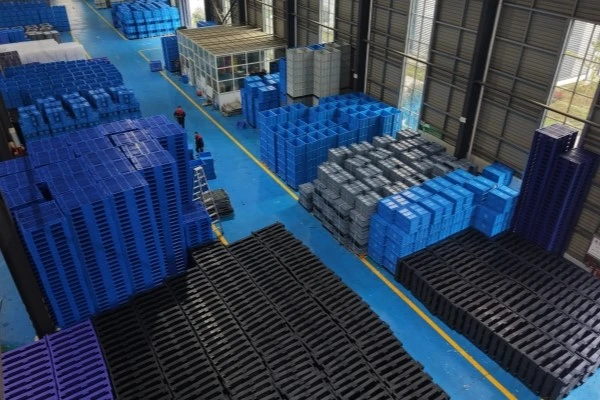
Large-volume production requires stable molding conditions and material control. The factory operates a 90,000 m² manufacturing base and lists annual plastic crate production of 40 million pieces.
What Should You Test Before Mass Production?
Testing should reproduce the conditions the crate will face after delivery. A foldable crate needs both load strength and repeated folding performance.
Load Capacity
Check static and dynamic loads under realistic product weight and load distribution.
Stacking Stability
Stack loaded crates at the planned height and check movement, deformation, and contact between the stacking rim and base.
Folding and Unfolding Cycles
Repeat the folding process to check hinge wear, locking performance, and structural changes over time.
Impact Resistance
Drop and impact testing can assess corners, hinges, walls, and locking points. Quality procedures can also include forklift compatibility and stacking tests.
Dimensional Accuracy
Check internal and external dimensions, folded height, base footprint, handle position, and critical connection areas.
Actual Application Testing
The final check should use the real product and equipment. Load the crate, stack it, move it through the handling system, fold it, and test the empty return process.
How Much Does a Custom Plastic Foldable Crate Cost?
Custom pricing depends on the complete project. A larger mold, stronger structure, special material, or low-volume order can change the unit cost considerably.
Product Structure
Lids, dividers, RFID areas, reinforced sections, and complex folding systems can increase tooling and production costs.
Material
PP, HDPE, virgin resin, recycled material, and food-grade grades have different costs and performance.
Mold Complexity
Mold size, moving parts, number of components, and structural details all affect tooling cost.
Customization
Color, logo, wall design, handles, lids, and accessories add to the project scope.
Order Quantity
A higher order quantity spreads tooling costs across more units, which can reduce the tooling cost per crate.
How to Choose a Custom Plastic Crate Manufacturer?
A custom project requires more than a standard product catalog. The supplier should have engineering, tooling, production, testing, and quality control capabilities.
In-House Mold Development
Own mold development capability helps connect the CAD design with actual production and makes structural changes easier to manage.
Injection Molding Capability
Injection molding can produce detailed ribs, hinges, handles, and base structures at scale. Production capacity also matters for large recurring orders.
Material Control
Material inspection and traceability help maintain stable product quality. Quality procedures include checks for PP and HDPE materials, including tensile, impact, and low-temperature testing.
Sample and Testing Capability
Samples allow the actual crate to be tested before mass production. This is especially useful for automated handling and heavy-load applications.
Quality Inspection
Dimensional checks, appearance inspection, load testing, drop testing, and stacking tests help confirm that the finished crate matches the agreed specification.
OEM/ODM Experience
For a truly custom project, OEM and ODM capability can cover dimensions, materials, colors, structural changes, accessories, and new mold development. Custom crate services can support projects that go beyond standard catalog sizes.
If the required dimensions, load capacity, folded height, material, handling method, and order quantity are ready, contact Enlightening Plast to discuss the suitable crate structure, sample, tooling, and production plan.
FAQ
Q: Can a foldable plastic crate be made in a custom size?
A: Yes. Dimensions can be developed for specific pallets, shelves, conveyors, products, and transport systems.
Q: Can I customize the folding structure?
A: Yes. Hinges, locking points, folded height, wall structure, and base design can be adjusted. A new mold may be required for major structural changes.
Q: Which is better for foldable crates, PP or HDPE?
A: PP suits many general logistics applications, while HDPE is often selected for higher impact and low-temperature requirements.
Q: Do custom crates require a new mold?
A: Major changes in size or structure usually require a new mold. Color, logo, and certain accessories may be possible with an existing structure.
Q: Can I test a sample before mass production?
A: Yes. Enlightening Plast can provide free samples for testing before mass production.