
Many operators jump into black soldier fly farming with the wrong containers and no plan for scale. That mistake costs months and real money. I'll walk you through what actually works.
Black soldier fly farming converts organic waste into larvae protein and fertilizer, and it can turn a profit once you move past pilot scale into standardized, modular production. The real question isn't whether BSF farming works. It's whether your equipment, container choice, and process can scale without falling apart.
I've spent years around this industry, watching black soldier fly farming grow from a niche hobby project into a real commercial sector. I've also seen plenty of operators make the same costly mistakes. Let me walk you through the biology, the equipment, the numbers, and the real challenges, one piece at a time.
What Is the Black Soldier Fly?
Most people hear "fly farming" and picture a pest problem. That reaction costs new operators credibility with investors and regulators before they even start. The black soldier fly (Hermetia illucens) is a non-pest insect species whose larvae eat organic waste and convert it into protein and fertilizer at a fast rate. Adult flies don't bite, don't carry disease the way houseflies do, and only live a short time to breed.
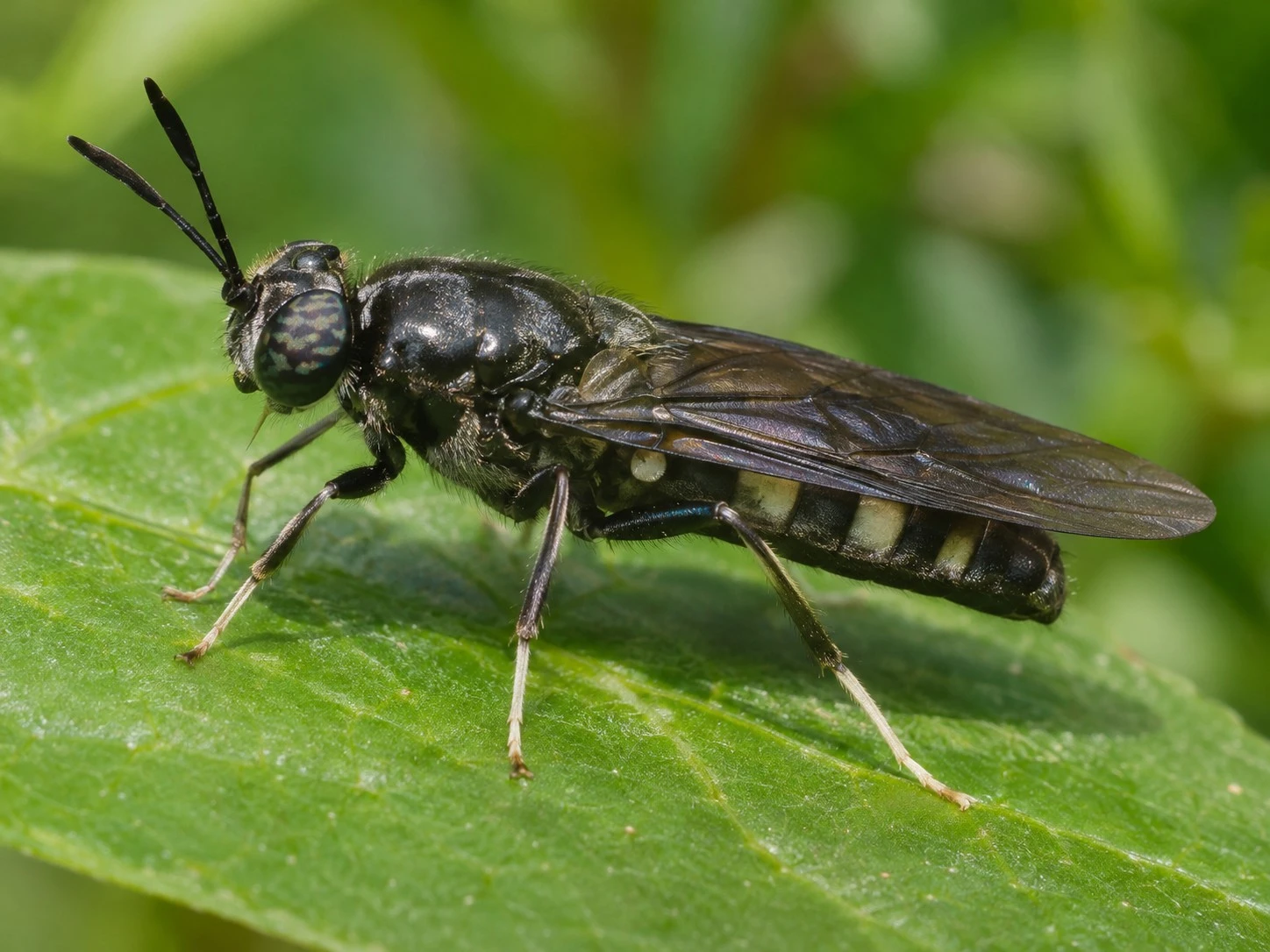
Biological Traits & Life Cycle
The black soldier fly life cycle runs through five main stages: egg, larva, prepupa, pupa, and adult. Adult flies mate and lay eggs, then die within days, since they don't even have functioning mouthparts to feed. The eggs hatch into larvae, and this larval stage is where all the real production value happens. Larvae eat almost constantly, working through organic waste material at a pace that outperforms most other farmed insect species.
Conversion Efficiency - Gaining 5,000x Body Weight in 2 Weeks
This is the number that gets investors' attention. A newly hatched BSF larva weighs almost nothing, and within about two weeks of steady feeding, it can grow roughly 5,000 times its starting body weight. That growth curve is the core reason this insect scaled into a real industry instead of staying a backyard project. But I always tell new operators that this number depends on feed quality, temperature, and larvae density. A packed, poorly ventilated container won't hit that growth curve, no matter what the biology textbook says.
|
Life Stage |
Duration (approx.) |
What Happens |
|---|---|---|
|
Egg |
3-4 days |
Laid in clusters near feed source |
|
Larva |
2-4 weeks |
Rapid growth, main production stage |
|
Prepupa |
Several days |
Larvae stop eating, seek dry, dark space |
|
Pupa |
1-2 weeks |
No feeding, internal transformation |
|
Adult |
5-8 days |
Mating and egg-laying only, no feeding |
How Big Is the Black Soldier Fly Industry, and Where Is It Headed?
A few years ago, almost no one outside the industry knew what BSF farming was. Now it's attracting real capital and real production volume, fast. The black soldier fly industry has grown from a niche operation into a commercial sector with rising annual production volume, increasing investment, and strong market forecasts through 2030. Growth is driven by demand for alternative protein in animal feed, pet food, and organic fertilizer markets.
Annual Production Volume & Investment Growth
Production volume in this industry has moved well beyond small pilot farms. Larger facilities now process organic waste streams at scale, and investment has followed that growth. I've watched more facilities move from single-container pilot setups to multi-unit production lines within a year or two, which tells me the technology and the business case have both matured past the experimental stage.
Market Forecast Toward 2030
Industry analysts widely expect continued growth in the insect protein and insect-based fertilizer markets through 2030, driven by feed cost pressure, sustainability requirements in agriculture, and regulatory approval expanding in more countries. I wouldn't treat any single market size number as gospel, since forecasts vary by source and methodology. But the direction is consistent across most reports I've reviewed: demand keeps rising, and production capacity keeps expanding to meet it.
|
Growth Driver |
Why It Matters |
|---|---|
|
Animal feed demand |
Protein cost pressure pushes buyers toward insect meal |
|
Regulatory approval |
More markets now permit insect protein in feed |
|
Sustainability pressure |
Insect farming uses less land and water than livestock |
|
Waste management need |
Cities and food producers need organic waste solutions |
How Does Black Soldier Fly Farming Actually Work?
Most beginner guides stop at "larvae eat waste, you harvest them." That explanation skips the equipment, zones, and container choices that decide if your farm actually runs. Black soldier fly farming works through three equipment categories (pre-treatment, climate control, post-processing) organized across five functional zones, from breeding through to final processing. Container choice inside those zones decides whether your operation can scale.
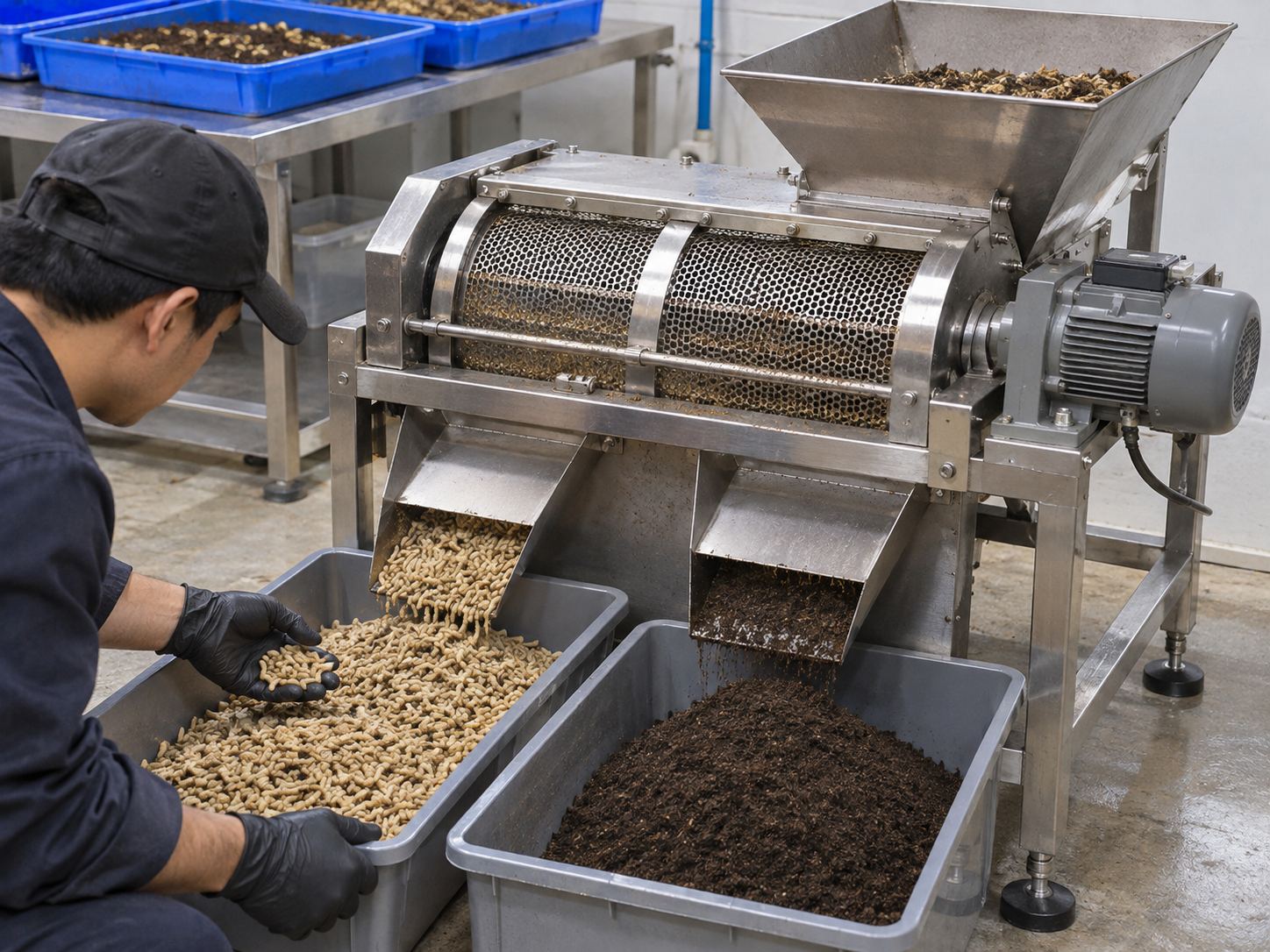
Three Core Equipment Categories
Waste Pre-Treatment Equipment
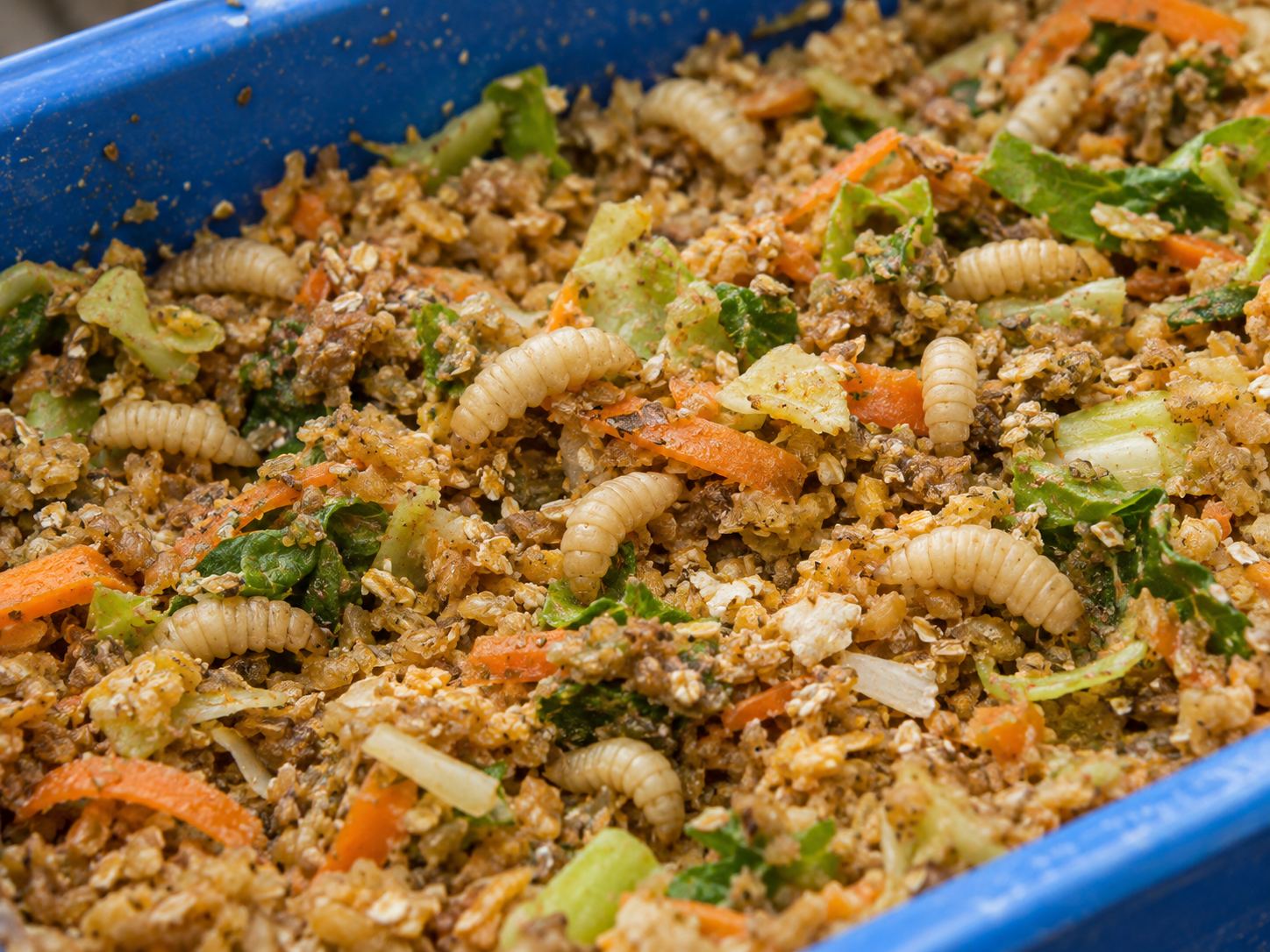
Raw organic waste usually needs grinding or pulping before larvae can eat it efficiently. I don't skip this step, because larvae feeding efficiency drops a lot if the feedstock sits in large chunks. Pre-treatment equipment turns waste into a paste-like consistency that larvae can access fast.
Climate Control Equipment
Larvae growth depends on temperature, humidity, and airflow. Climate control equipment, fans, heaters, dehumidifiers, and sensors, keeps the rearing environment inside a usable range. I treat this as core infrastructure, not an optional upgrade.
Post-Processing Equipment (Drying / Pressing / Grinding)
Once larvae reach harvest size, they need to be deactivated, then dried, pressed for oil, or ground into meal, depending on the end product. This equipment turns raw larvae biomass into a sellable product.
Five Functional Zones
Breeding Zone → Hatching Zone → Waste Processing Zone → Growth Zone → Post-Processing Zone
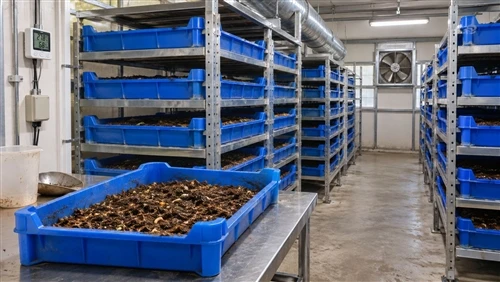
This five-zone layout is the standard flow I've seen hold up across the industry for years. Adult flies mate and lay eggs in the breeding zone. Eggs move to the hatching zone, where they hatch and the tiny larvae get their first "starter feed" until they can feed themselves. From there, larvae move to the growth zone, where they eat pre-treated organic waste that's already been turned into a paste in the waste processing zone, since feeding efficiency drops fast if larvae have to work through large waste chunks. Once larvae reach harvest size, they move into the post-processing zone, where they get deactivated, then dried, pressed, or ground depending on the final product. This flow holds up whether you're running one container or ten, because each zone solves one specific job and doesn't interfere with the others.
|
Zone |
Main Function |
Common Equipment |
|---|---|---|
|
Breeding |
Adult mating and egg-laying |
Breeding cages, light control |
|
Hatching |
Egg hatching, starter feeding |
Hatching trays, incubation control |
|
Waste Processing |
Turning raw waste into feedable paste |
Grinders, mixers |
|
Growth |
Larvae feeding and mass gain |
Rearing containers, climate control |
|
Post-Processing |
Deactivation, drying, pressing, grinding |
Dryers, presses, grinders |
Breeding Container Options Compared - Why Modular Insect Breeding Boxes Lead at Scale
Picking the wrong rearing container is the single most common mistake I see new operators make. It looks like a small decision early on, but it decides whether your farm can actually scale later.
Tray-Based Rearing - Manual, Limited Scale, Best for Pilot Trials
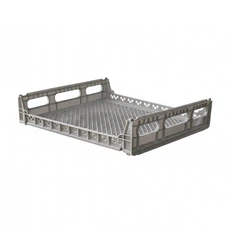
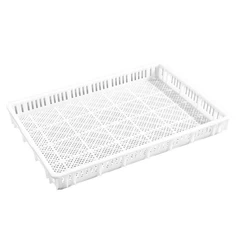
Simple trays work fine for testing feed types and growth conditions at small scale. But tray-based systems depend heavily on manual labor for feeding, cleaning, and harvest, so they hit a labor ceiling fast once volume grows.
Conveyor Belt Systems - Continuous Processing, High Setup Cost
Conveyor systems move larvae and feed continuously through a production line, cutting manual handling. But the equipment and installation cost is high, and the system usually needs a dedicated facility layout, so it's a tough fit for operators still validating their process.
Bioreactors - Highly Automated, High Technical Barrier
Bioreactor-style systems automate climate control and feeding to a high degree. They can produce consistent results at scale, but the technical setup, maintenance, and staff training requirements put this option out of reach for most new entrants.
Insect Breeding Box - The Standardized Infrastructure Unit for Scalable Farming
Positioning: A Standardized Building Block for Commercial-Scale Operations
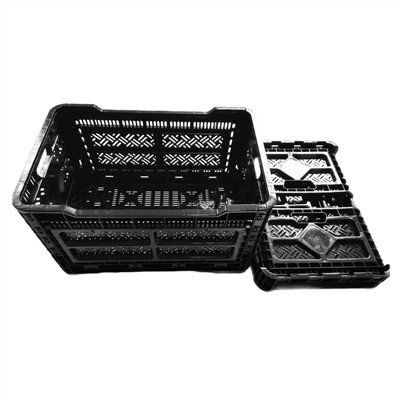
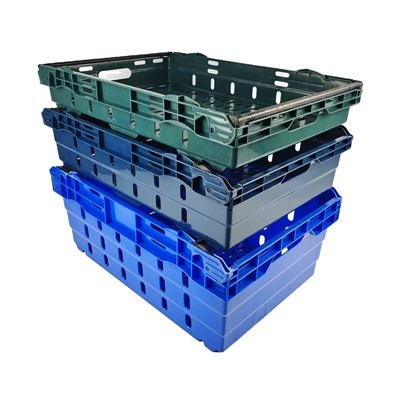
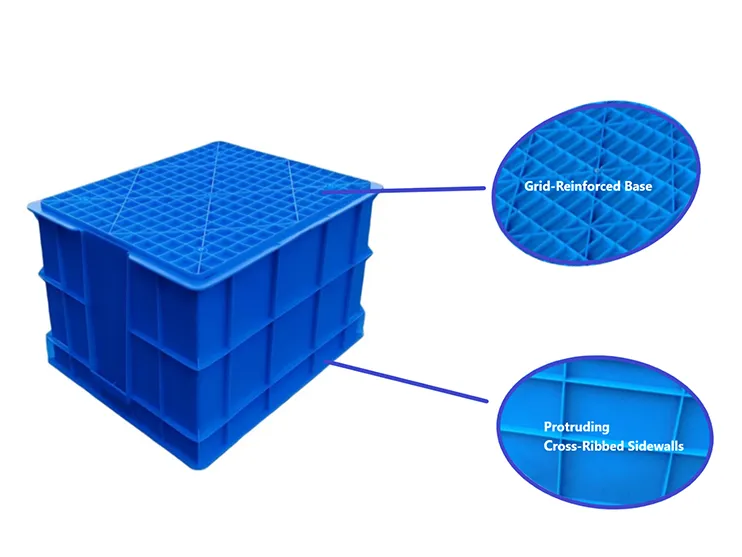
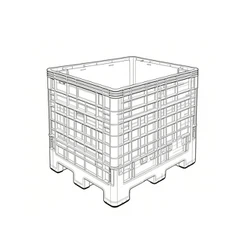
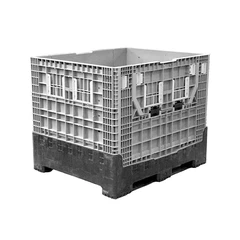
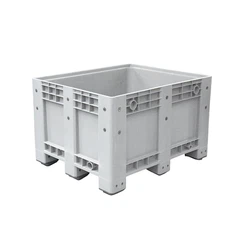
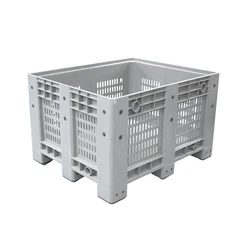
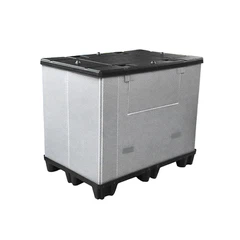
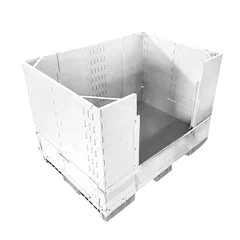
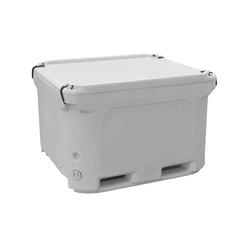
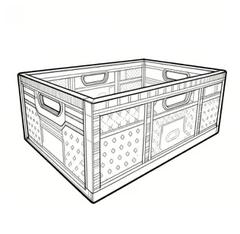
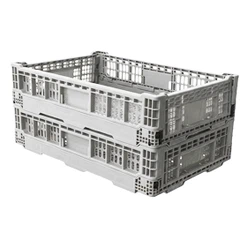
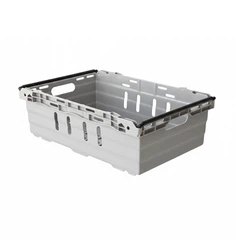
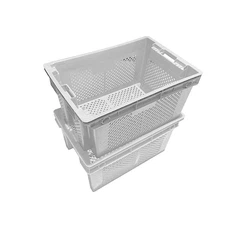
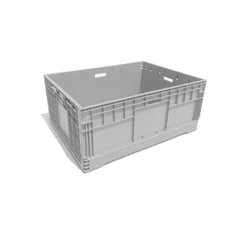
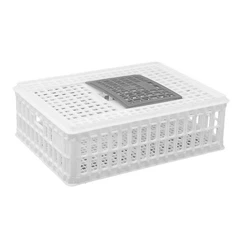
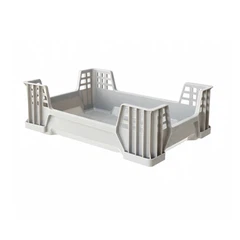
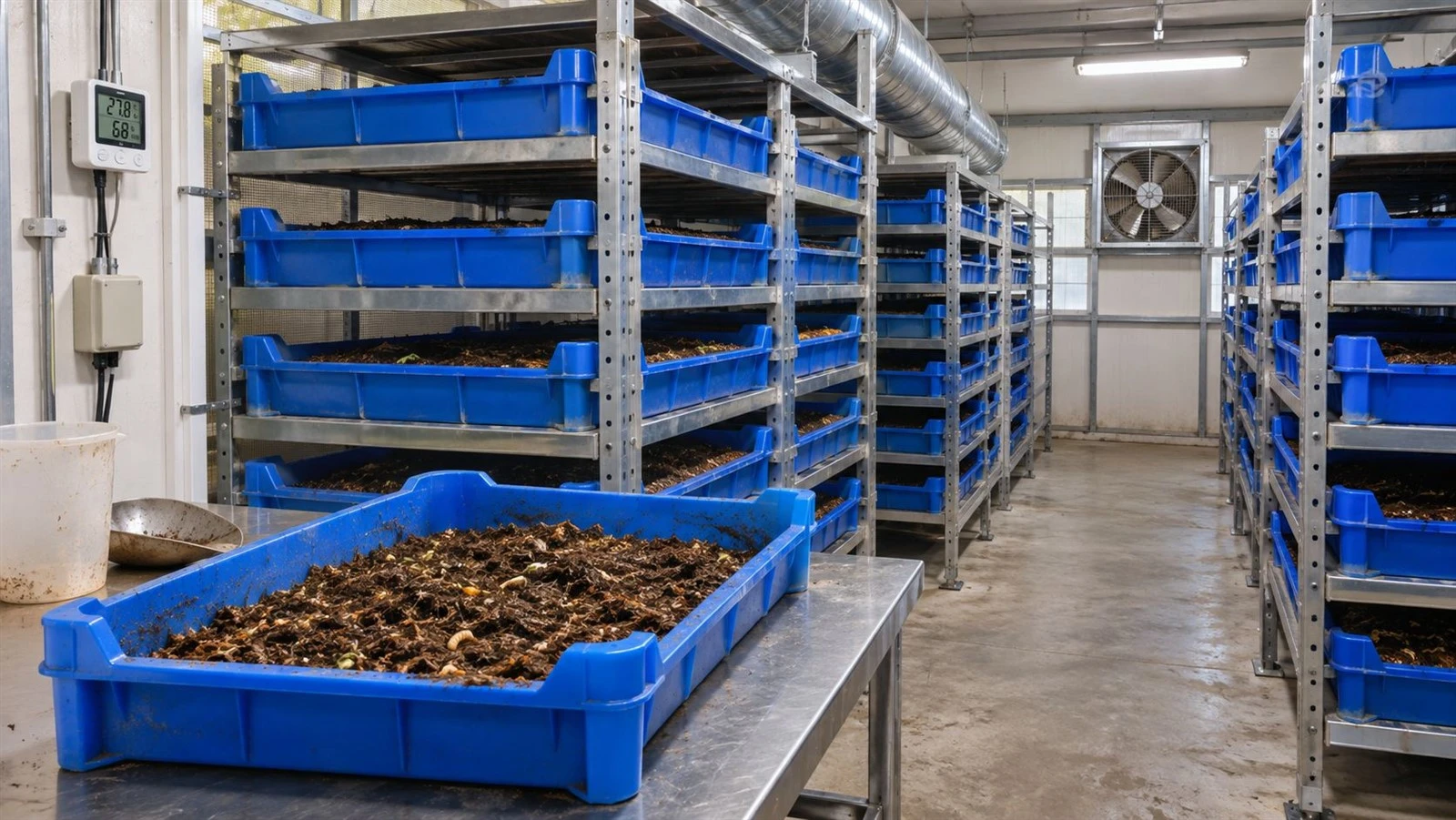
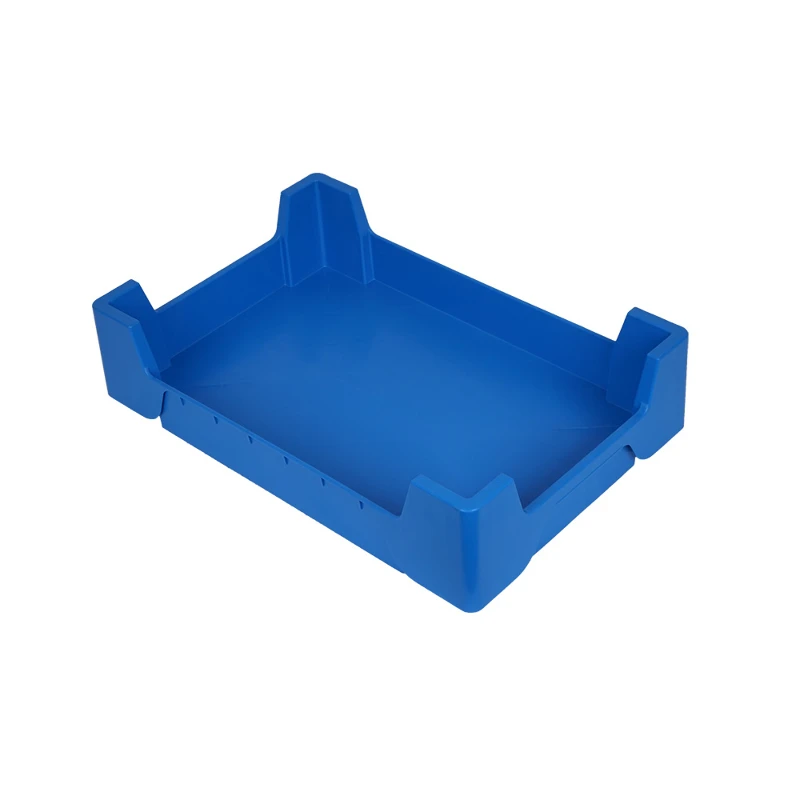
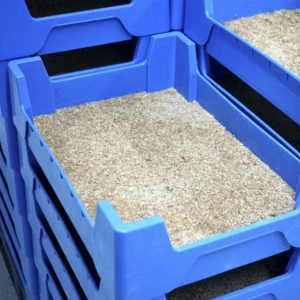
I've come to see the insect breeding box as the most practical middle ground between a basic tray and a full bioreactor. At its core, it's a ventilated plastic crate with open corner posts and extended side walls, built to stack and handle the heat, CO2, and ammonia that larvae produce as they feed. That design isn't decoration. It lets air move through a stacked column of boxes, so heat and gas from feeding larvae actually escape instead of building up.
Key Advantages: Stackable & Modular, Precise Climate Control, Consistent Per-Unit Yield, Easy Multi-Unit Line Integration
The real value isn't the box itself. It's how the box lets you arrange production. Stackable boxes mean you can grow larvae output in one building footprint by building upward, not by expanding your floor space. When boxes are empty, they nest inside each other for storage, cutting storage space by roughly 60% compared to rigid containers that take up the same footprint whether full or empty. Standardized sizing means every box holds a known, predictable yield, so workers follow one consistent process for loading, feeding, and harvest, instead of adjusting their routine for different container shapes. That consistency is what lets an operation scale from a few dozen boxes to several hundred or a few thousand without needing to add staff at the same rate production grows.
But I have to flag a real risk here. Many operators assume stacking tighter always saves more space. In practice, over-tight stacking cuts off airflow, and larvae inside heat up, grow slower, and die off at higher rates, which erases the space savings through losses instead. The real efficiency gain comes from stacking with enough ventilation gap preserved, not from maximizing boxes per square meter on paper.
Best Suited For: Mid-to-Large Farms, Container & Factory-Scale Production Lines
This format fits operators moving past pilot scale into real production, whether that's a converted shipping container, a dedicated factory floor, or a multi-unit line feeding a consistent buyer. It's less useful for a backyard hobbyist testing feed ratios, and less automated than a full bioreactor, which is exactly why it sits in the middle of the scaling curve.
Specifications, Per-Unit Yield & Bulk Pricing
|
Container Type |
Labor Need |
Setup Cost |
Scalability |
Best Fit |
|---|---|---|---|---|
|
Tray-based |
High |
Low |
Limited |
Pilot trials, small tests |
|
Conveyor belt |
Low |
Very high |
High, but rigid |
Dedicated large facilities |
|
Bioreactor |
Very low |
Very high |
High, complex |
Highly automated large operations |
|
Insect breeding box |
Medium |
Moderate |
High, flexible |
Mid-to-large farms, container/factory lines |
Exact per-unit yield and bulk pricing vary by box size, wall height, and material grade, so I always recommend requesting a current quote and load-test data sheet directly from the manufacturer before locking in a bulk order.
Why Choose Black Soldier Fly Over Other Farmed Insects?
New operators often ask why BSF beats crickets, mealworms, or superworms. The answer isn't opinion. It comes down to feed conversion, cycle time, and disease risk.
Black soldier fly farming outperforms mealworms, crickets, and superworms on feed conversion ratio, cycle time, and pathogen risk, which is why it has become the dominant species in commercial insect farming. These advantages hold directionally across most production conditions, even though exact numbers shift by setup.
BSF vs. Mealworms, Crickets & Superworms - FCR, Cycle Time & Pathogen Risk
I don't treat feed conversion numbers as fixed across every farm, since feedstock quality, temperature, and density all shift the result. But the pattern holds up across the industry: BSF larvae convert organic waste into body mass faster than mealworms or crickets achieve on comparable feed, and the larval cycle finishes in weeks rather than the longer cycles common to crickets and superworms. Pathogen risk also runs lower with BSF, partly because the larvae's own gut and surface biology appear less hospitable to several common pathogens compared to some other farmed insects, something researchers have studied directly. For a commercial operator, faster cycles and lower disease risk both mean fewer production losses and a faster road to consistent output.
|
Factor |
Black Soldier Fly |
Mealworms |
Crickets |
Superworms |
|---|---|---|---|---|
|
Feed conversion |
Strong, fast biomass gain |
Moderate |
Moderate |
Moderate |
|
Cycle time |
Short, weeks to harvest size |
Longer |
Longer |
Longer |
|
Pathogen risk |
Generally lower |
Moderate |
Higher disease sensitivity |
Moderate |
|
Waste tolerance |
Wide range of organic waste |
Narrower feed range |
Narrower feed range |
Narrower feed range |
What Are the Real Benefits of Black Soldier Fly Farming?
People assume the only benefit here is "it's good for the environment." That's true, but it's only one part of a bigger economic and welfare story.
Black soldier fly farming delivers environmental benefits through waste reduction and lower resource use, economic benefits through job creation and waste monetization, and animal welfare benefits through sustainable pet food and poultry feed ingredients. These three benefit categories reinforce each other in a working operation.
Environmental Benefits - Carbon & Water Savings
BSF farming converts organic waste that would otherwise go to landfill or incineration, cutting the methane and carbon output tied to waste decomposition. Compared to raising traditional livestock protein sources, insect farming generally uses far less land and water per unit of protein produced. I don't treat every environmental claim as universal, since results depend on facility design and energy source, but the directional advantage over conventional protein production is well documented across the industry.
Economic Benefits - Job Creation & Waste Monetization in the Global South
In many regions, especially parts of the Global South, BSF farming turns an existing cost, organic waste disposal, into a revenue stream. Facilities need labor for feedstock collection, sorting, feeding, and harvest, which creates real local jobs. Smallholder and community-scale operations have used BSF farming as a entry point into a growing protein and fertilizer market without needing the land or capital that traditional livestock farming demands.
Animal Welfare Benefits - Pet Food & Poultry Feed Applications
BSF larvae and larvae meal increasingly show up in pet food and poultry feed as a protein source that doesn't carry the same disease transmission risk profile as some traditional animal byproduct meals. For poultry and aquaculture especially, insect protein offers a feed option that supports animal health while reducing reliance on wild-caught fish meal, which carries its own sustainability concerns.
|
Benefit Category |
Core Advantage |
Who It Helps |
|---|---|---|
|
Environmental |
Waste reduction, lower land/water use |
Communities, waste management systems |
|
Economic |
Job creation, waste monetization |
Local workers, smallholder operators |
|
Animal Welfare |
Lower-risk protein for feed |
Pet food brands, poultry and aquaculture producers |
What Challenges Should You Expect in Black Soldier Fly Farming?
Nobody talks enough about what actually goes wrong in this industry. Startup costs, regulations, and feedstock supply all trip up new operators fast.
The biggest challenges in black soldier fly farming are high startup costs and technical barriers, regulatory constraints that vary by region, and unstable feedstock supply that disrupts production consistency. Plan for all three before you commit capital.
Startup Costs & Technical Barriers
Moving past pilot scale requires real capital for climate control equipment, breeding and rearing containers, and post-processing machinery. I always tell new operators not to underestimate the learning curve either. Running trays in a garage is simple. Running a multi-zone facility with consistent output takes real operational knowledge, and that knowledge usually comes from mistakes made early and expensively.
Regulatory Constraints
Rules on what feedstock you can use, where you can site a facility, and how you can sell the final product vary a lot by country and even by region within a country. Some jurisdictions restrict which organic waste streams are approved for insect feed production, and feed safety rules for the end product differ by target market. I never recommend buying equipment before confirming what's legally allowed on your specific feedstock and sales plan.
Feedstock Supply Stability
A stable rearing process depends on a stable feed supply. If your feedstock source changes composition, moisture, or volume unpredictably, your output swings with it, even with perfect climate control. I prioritize locking in a consistent feedstock partner before scaling container count, since more containers just means more inconsistency if the feed supply itself isn't reliable.
|
Challenge |
Why It Hurts |
How to Manage It |
|---|---|---|
|
Startup cost |
High capital need for equipment |
Scale in phases, validate before expanding |
|
Regulation |
Varies by region, restricts feedstock/sales |
Confirm rules before buying equipment |
|
Feedstock stability |
Inconsistent supply disrupts output |
Lock in reliable feedstock partners early |
Is Black Soldier Fly Farming Actually Profitable at Scale?
Everyone wants a simple yes or no answer here. The real answer depends on how your cost curve behaves as you add production units.
Black soldier fly farming becomes profitable once per-unit yield stays consistent across multiple production units and your capital costs spread across enough output volume to beat your operating costs. Scaling the right way matters more than scaling fast.
Scaling Cost Comparison Table - Per-Unit Yield, Multi-Unit Combined Output & CAPEX-OPEX Curve
I look at profitability through a simple lens: how does cost per unit of output change as you add more production units. Early on, capital expenditure (CAPEX) dominates the cost picture, since you're paying for containers, climate control, and processing equipment before you've produced much output. As you add more standardized units, like insect breeding boxes, each additional unit adds predictable yield without a proportional jump in fixed infrastructure cost, assuming your feedstock and labor scale smoothly too. Operating expenditure (OPEX), feed, labor, and utilities, becomes the main driver of ongoing profitability once CAPEX is spread across enough units.
|
Scale Stage |
Dominant Cost |
Main Risk |
|---|---|---|
|
Pilot (few units) |
CAPEX per unit is high |
Overbuilding before validating process |
|
Early scale (dozens of units) |
CAPEX still significant |
Feedstock and labor consistency |
|
Mid scale (hundreds of units) |
OPEX becomes dominant |
Maintaining per-unit yield consistency |
|
Full scale (multi-unit lines) |
OPEX efficiency drives margin |
Supply chain and sales channel stability |
ROI Insights Backed by Industry Research
I don't promise a universal payback period, since site cost, feedstock cost, and local sales price for larvae meal and frass all shift the number a lot. What I do see consistently across industry case studies is that operations relying on standardized, modular rearing units reach stable, repeatable yield faster than operations using ad-hoc or mixed container setups. That consistency is what actually drives return on investment, more than any single piece of expensive automation. I'd rather see a buyer invest in getting per-unit yield predictable first, then scale unit count, than buy the most automated system available before they've proven their process works.
What's the Sustainability Value of Black Soldier Fly Farming?
People focus on the protein output and forget the other half of the equation. The leftover material from rearing carries real value too.
The sustainability value of black soldier fly farming comes from frass, the larvae's leftover waste material, which works as an organic fertilizer, plus measurable carbon reduction from diverting organic waste away from landfill. Both outputs create a second revenue stream beyond the larvae themselves.
Frass as Organic Fertilizer
Frass, the solid byproduct left behind after larvae finish feeding, works as a real substitute for traditional organic fertilizer and some chemical fertilizer applications. Research backing this shows real benefits for crop yield and soil health, and frass carries bioactive compounds and beneficial microbes that can help restore degraded soil. I don't treat frass as waste to dispose of. I treat it as a sellable product with its own quality standards, moisture content requirements, and market demand, separate from the larvae protein line.
Carbon Reduction Data
Diverting organic waste into BSF rearing instead of landfill cuts the methane that waste would otherwise generate as it decomposes anaerobically. The exact carbon reduction figure depends heavily on what waste stream you're diverting and how it would have been processed otherwise, so I avoid quoting one blanket number across every type of operation. But the directional climate benefit, less landfill methane, less reliance on carbon-intensive fertilizer and feed production, holds up across the research I've reviewed.
|
Byproduct |
Value Created |
What to Confirm |
|---|---|---|
|
Frass |
Organic fertilizer, soil health benefits |
Moisture content, nutrient testing, local regulation |
|
Carbon reduction |
Lower methane from diverted waste |
Baseline waste disposal method being replaced |
What Does the Investment & Market Entry Outlook Look Like?
Capital has started flowing into this sector fast, but not evenly. Knowing where the money is going helps you position your own entry correctly.
The investment outlook for black soldier fly farming shows growing venture capital interest and multiple pathways for enterprises to integrate BSF production into existing waste and feed supply chains. New entrants benefit from studying how early movers structured their capital and partnerships.
VC Investment Trends
Venture capital interest in alternative protein and insect farming has grown steadily over recent funding cycles, with investors drawn to the waste-to-protein business model and the sustainability story behind it. I've noticed funding tends to favor operators who can show consistent, standardized production data over operators still running ad-hoc pilot setups, since investors want proof that a process can scale predictably before they commit larger capital.
Enterprise Asset Integration Pathways
Larger enterprises, food processors, waste management companies, and agricultural businesses, increasingly look at BSF production as a way to integrate an existing waste stream into a new revenue line, rather than building a standalone insect farm from scratch. This path often moves faster than a pure startup approach, since the enterprise already controls feedstock supply and existing logistics. I'd recommend any company sitting on a steady organic waste stream take a serious look at this integration path before assuming they need to build a greenfield operation.
|
Entry Path |
Who It Fits |
Main Advantage |
|---|---|---|
|
Standalone startup |
New entrants, dedicated capital |
Full control over process and brand |
|
Enterprise integration |
Companies with existing waste streams |
Faster path, built-in feedstock supply |
|
VC-backed scale-up |
Operators with proven pilot data |
Access to growth capital |
What Can Real Customer Case Studies Show About Scaling?
Reading a sales page full of vague success stories tells you nothing. Real production data from a multi-unit deployment tells you everything. A real case study of scaling insect breeding boxes should show actual per-unit yield, combined output across multiple units, and how consistent that output stayed as the operation grew. That data matters more than a testimonial quote.
Scaling Deployment of Insect Breeding Boxes - Real Production Data from a Multi-Unit Line
When I evaluate a scaling case study, I look for a specific pattern: what per-unit yield did the operator see on a single box, how did that number hold up once they ran dozens or hundreds of boxes together, and what changed in labor or climate control as the line grew. A strong case study shows yield staying stable, or only dropping slightly, as unit count rises, which proves the process is genuinely scalable rather than only working at small pilot volume. A weak case study shows yield dropping sharply as units increase, which usually points to airflow, feedstock consistency, or labor process problems that only show up at real scale. I'd ask any manufacturer or operator sharing a case study to show the raw per-unit numbers, not just a total output figure, since total output alone can hide a lot of per-unit inefficiency.
|
What to Check |
Why It Matters |
|---|---|
|
Per-unit yield at small scale |
Baseline for comparison |
|
Per-unit yield at full scale |
Shows if the process actually scales |
|
Labor hours per unit |
Reveals if staffing scales efficiently |
|
Yield consistency over time |
Confirms repeatable, not one-time, results |
Planning Your Next Step in Black Soldier Fly Farming
Starting or expanding a black soldier fly farm requires more than choosing the right equipment. Feedstock availability, production targets, facility conditions, and daily operating procedures all need to work together.
If you are still testing your process, start with a manageable number of rearing boxes and evaluate feeding efficiency, cleaning requirements, and larvae growth under actual operating conditions. Once the process becomes more predictable, you can expand the number of units based on your target output and available space.
For farms already moving toward commercial production, it is worth reviewing container specifications and supply capacity before placing a bulk order. Consistent box dimensions, suitable ventilation, and reliable repeat production can make a real difference when managing hundreds or thousands of units.
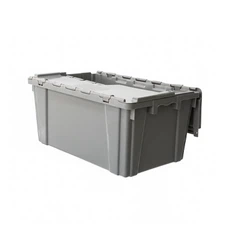
Enlightening Plast supplies stackable plastic insect breeding boxes and customized plastic crate solutions for commercial farming operations. Buyers comparing different box designs or planning bulk orders can share their required dimensions, estimated quantity, and stacking arrangements. The Enlightening Plast team can help evaluate suitable specifications and discuss customization options based on the actual production setup.
Choosing the right container system from the beginning can make production easier to manage and reduce unnecessary adjustments as the farm expands.
About Enlightening Plast
Enlightening Plast Industry Co., Limited is a China-based plastic products manufacturer with over 25 years of production experience. The company supplies stackable plastic crates, insect breeding boxes, and customized plastic container solutions for industrial and commercial applications.
With more than 60 injection and rotational molding machines, Enlightening Plast supports bulk orders, custom product development, and OEM requirements for international buyers. Its manufacturing capabilities cover product dimensions, colors, logos, and mold customization to meet different application needs.
Conclusion
Black soldier fly farming offers a practical way to turn organic waste into valuable insect protein and fertilizer. However, commercial profitability depends on much more than larvae growth rates or market demand. Feedstock consistency, environmental control, labor efficiency, equipment investment, and sales channels all influence the final results.
For operators planning to scale, standardized and modular rearing systems provide a practical foundation for managing production across multiple units. Choosing suitable insect breeding boxes, maintaining proper airflow, and establishing repeatable handling procedures can help reduce operational problems as production expands.
The goal is not simply to build a larger farm, but to build a production system that delivers consistent results at a manageable cost. Starting with the right equipment specifications and expanding based on actual production data is a more sustainable approach to long-term growth.
Frequently Asked Questions
Q: Is black soldier fly farming profitable?
A: It can be, once you move past pilot scale and keep per-unit yield consistent across multiple production units. Profitability depends on feedstock cost, local sales price for larvae meal and frass, and how well your capital cost spreads across output volume.
Q: How do I scale up my black soldier fly operation?
A: Scale by adding standardized, modular rearing units rather than custom one-off setups. Confirm your feedstock supply can grow with you, and validate per-unit yield stays consistent before you commit to a large unit count.
Q: How many breeding boxes do I need?
A: That depends on your target output volume, feedstock capacity, and facility footprint. I always recommend calculating backward from your target monthly larvae output, then sizing box count, climate control, and feedstock supply to match that number.
Q: How long does it take to break even?
A: There's no single answer, since site cost, feedstock cost, and local sales channels all shift the timeline. Operations with standardized, modular units and a stable feedstock partner tend to reach break-even faster than ad-hoc setups, because their yield stays predictable from the start.