
Introduction
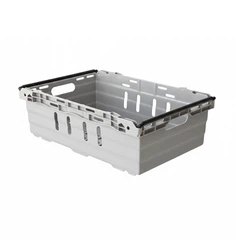
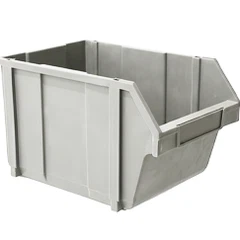
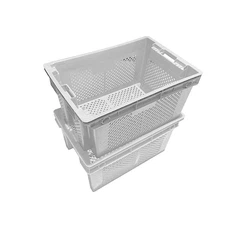
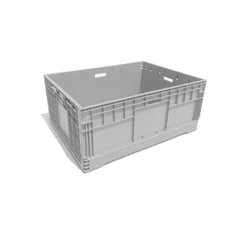
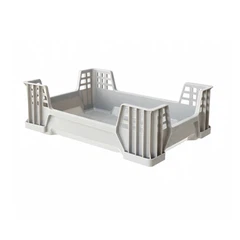
In warehouses, distribution centers, and production facilities, plastic crates often face problems such as bulging sidewalls, sagging bottoms, and unstable stacking during repeated handling. These issues are not determined by plastic material alone, as wall reinforcement, base geometry, rim strength, and stacking alignment all affect structural performance. Understanding how each design feature works helps buyers evaluate plastic turnover crate stacking stability, load capacity, and long-term reliability before placing bulk orders.

Cross-Ribbed Sidewalls: Controlling Bulging Under Stacking Pressure
When loaded crates are stacked vertically, the sidewalls must resist compression and prevent the container from losing its shape.
Vertical Reinforcement Ribs
Vertical ribs increase sidewall stiffness and help transfer compression forces toward the lower structure, reducing the risk of local buckling under stacking pressure.
Horizontal Reinforcement Ribs
Horizontal ribs connect vertical sections and restrict outward bulging, helping the crate maintain its shape when several loaded units are stacked.
Cross-Ribbed Sidewall Design
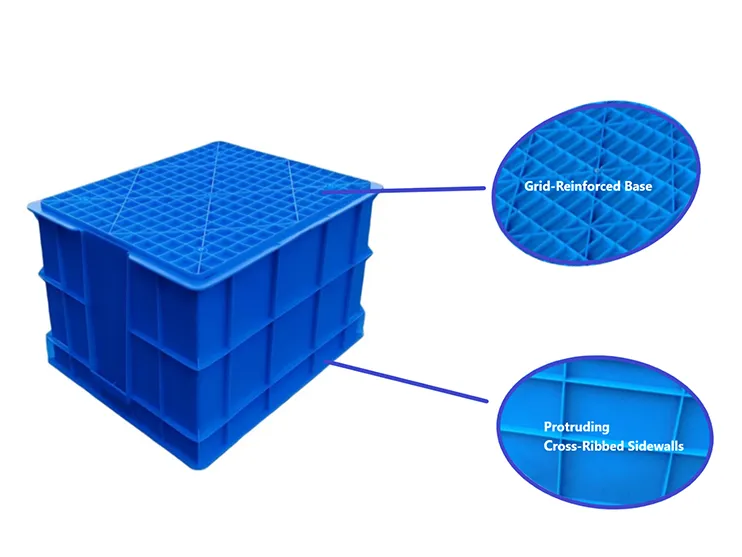
Intersecting ribs distribute localized stress across a wider wall area, improving resistance to deformation during repeated warehouse handling.
Solid vs. Ventilated Walls
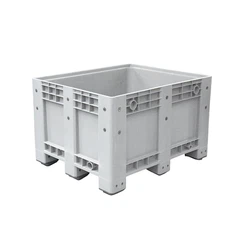
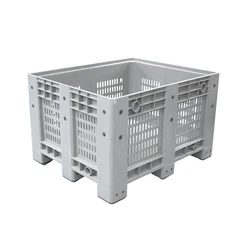
Solid walls generally provide more continuous structural support and better containment for small components, while ventilated walls require a balance between airflow openings and sufficient reinforcement for fresh produce and cold-chain distribution.
A well-designed sidewall should maintain its geometry under the intended stacking load rather than relying on wall thickness alone.
Grid-Reinforced Base: How Bottom Design Affects Load Performance
The base supports the stored goods, transfers their weight to the supporting surface, and influences how the crate performs during lifting, transportation, and stacking.
Grid-Reinforced Base
A dense grid of reinforcing ribs distributes concentrated loads across multiple support sections, reducing localized bending and excessive bottom deflection.
Diagonal Reinforcement Ribs
Diagonal ribs strengthen the base in different directions, helping resist uneven loading when goods are not evenly distributed.
Static Load Performance
Static load testing evaluates how much weight a crate can support while stationary, making it relevant to storage and palletized inventory.
Dynamic Load Performance
Dynamic load testing examines the crate during lifting, movement, and conveyor handling, where vibration, acceleration, and uneven support can affect structural performance.
Stacking Load Performance
Stacking load refers to the additional compression imposed by upper loaded crates, so buyers should verify the bottom crate's performance under the intended stacking height.
Bottom Design for Automated Warehousing
A sufficiently rigid and dimensionally consistent base helps maintain contact with conveyor rollers and automated storage equipment, reducing the risk of sagging-related handling problems.
Different models in the product range offer load capacities of approximately 20–50 kg, but buyers should confirm the rated capacity under the actual loading and handling conditions rather than treating one load figure as suitable for every application.
Reinforced Rims & Stacking Edges: Keeping Crates Aligned
The top rim and bottom positioning edges work together to support vertical loads and prevent neighboring crates from shifting during transportation.
- Reinforced Top Rim: A thicker, reinforced rim provides a more stable contact area between stacked crates, helping distribute compression forces and reduce deformation around the crate opening.
- Raised Base Edges: Raised edges along the bottom perimeter engage with the rim of the crate below, limiting horizontal movement and reducing the risk of misalignment during forklift handling and vehicle transportation.
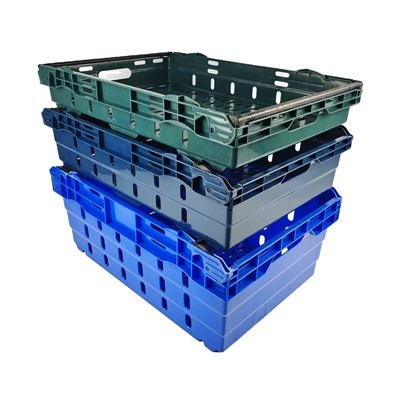
- Stacking Alignment: Consistent rim dimensions and accurately positioned locating edges help keep multiple crates aligned, particularly when warehouse operators stack containers several layers high.
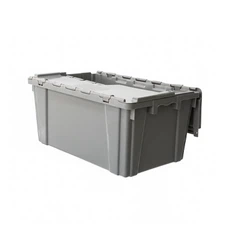
- Stackable Crates: Conventional stackable designs suit operations that prioritize loaded storage density, while compatible lids can provide an additional stacking interface and help protect stored goods.
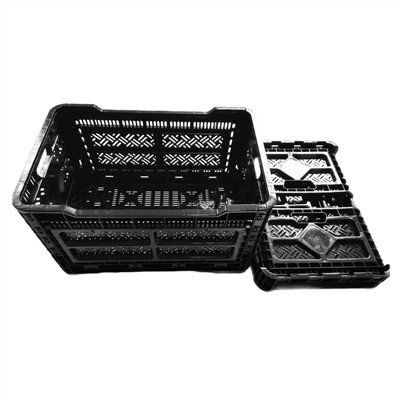
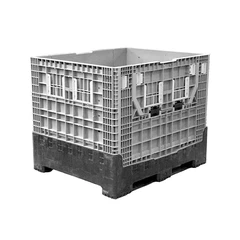
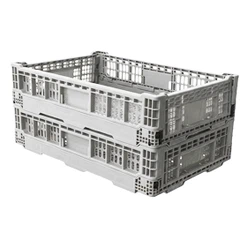
- Collapsible Crates: Folding structures reduce the space occupied by empty containers during return transportation, although buyers should check their locking mechanisms and load ratings before comparing them with rigid stackable models.
For bulk distribution, the most suitable stacking design should provide reliable alignment when loaded without making empty-crate storage unnecessarily expensive.
HDPE, PP & Rounded Corners: Performance Beyond Initial Load Capacity
Material selection and corner geometry influence how a plastic turnover crate responds to temperature changes, repeated impacts, and prolonged loading.
- HDPE Material: High-density polyethylene offers good impact resistance and toughness, making it suitable for crates exposed to repeated handling and demanding distribution environments.
- PP Material: Polypropylene generally provides higher rigidity than HDPE, making it useful where dimensional stability and structural stiffness are important, although its impact performance depends on the specific grade and operating temperature.
- Creep Resistance: Plastic materials can gradually deform under continuous loading, so buyers should evaluate long-term stacking performance rather than relying exclusively on short-term load capacity.
- Temperature Adaptation: Crates designed for operating environments between -40°C and +70°C require material grades and structural designs suited to their actual temperature exposure, particularly when cold storage and loaded stacking occur together.
- Rounded Corner Design: Rounded corners reduce sharp-edge contact and help distribute impact stresses, while smoother transitions can improve movement through AGV, AMR, and conveyor handling systems.
For long-term applications, buyers should consider material grade, wall thickness, rib geometry, operating temperature, and stacking duration as one integrated structural specification.
How to Evaluate Plastic Crate Load and Stacking Performance Before Ordering
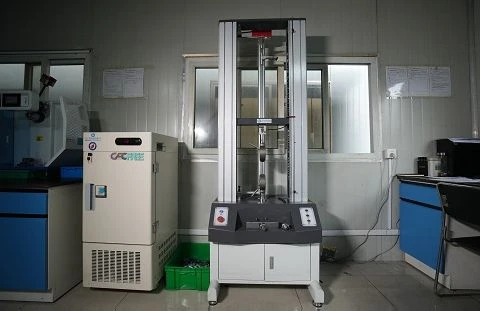
A practical evaluation should combine visual inspection, controlled loading tests, stacking trials, and compatibility checks using the conditions expected in daily operations.
- Inspect Rib Distribution and Wall Thickness: Check whether the base grid is evenly distributed, the reinforcing ribs are continuous, and the wall thickness is consistent, while looking for sink marks or visibly weak sections.
- Measure Loaded Stacking Deformation: Load sample crates with the intended cargo weight, stack them to the required height, and record sidewall bulging, bottom deflection, and alignment changes after a defined holding period.
- Check Static and Dynamic Load Ratings: Ask whether the quoted capacity refers to stationary storage, manual handling, forklift transportation, or another specific operating condition, because these ratings are not interchangeable.
- Verify Equipment Compatibility: Test the crate on existing pallets, shelving systems, conveyor rollers, and automated handling equipment to confirm that its dimensions, base geometry, and locating edges match the operating setup.
- Review Custom Structural Options: If standard dimensions or reinforcement layouts cannot support the required load, ask whether the manufacturer can adjust the base ribs, sidewall structure, material grade, and stacking interfaces through OEM/ODM development.
Recommended Plastic Turnover Crate Structures for Different Applications
|
Application |
Recommended Structure |
Main Evaluation Focus |
|
Cold Chain & Fresh Produce |
Ventilated Walls + Grid-Reinforced Base |
Airflow, low-temperature impact resistance, and loaded stacking |
|
Automotive Parts Handling |
Solid Walls + Cross-Ribbed Sidewalls + Reinforced Base |
Compression resistance, bottom deflection, and repeated handling |
|
Automated Warehousing |
Rigid Base + Rounded Corners + Accurate Stacking Edges |
Dimensional consistency, conveyor compatibility, and stacking alignment |
When comparing samples, buyers should use the same cargo weight, stacking height, support conditions, and test duration to make the results meaningful.
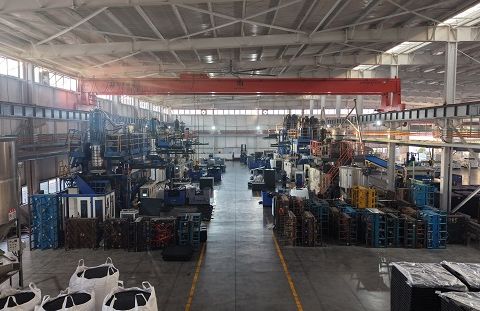
Enlightening Plast provides industrial plastic turnover crates with reinforced base structures, cross-ribbed sidewalls, and stacking configurations for different material-handling requirements. Its OEM/ODM capabilities also allow buyers to discuss adjustments to crate dimensions, reinforcement layouts, and structural details according to their load specifications and warehouse equipment.

Conclusion
The stacking stability and load performance of a plastic turnover crate depend on how its sidewalls, reinforced base, top rim, stacking edges, and material work together under actual operating conditions. Buyers should evaluate static loads, dynamic handling, stacking pressure, and long-term deformation rather than selecting crates based on a single advertised weight capacity. Explore our plastic turnover crate range and contact our team to request product samples or discuss a customized structure for your handling and storage requirements.
More Details About Plastic Turnover Crates