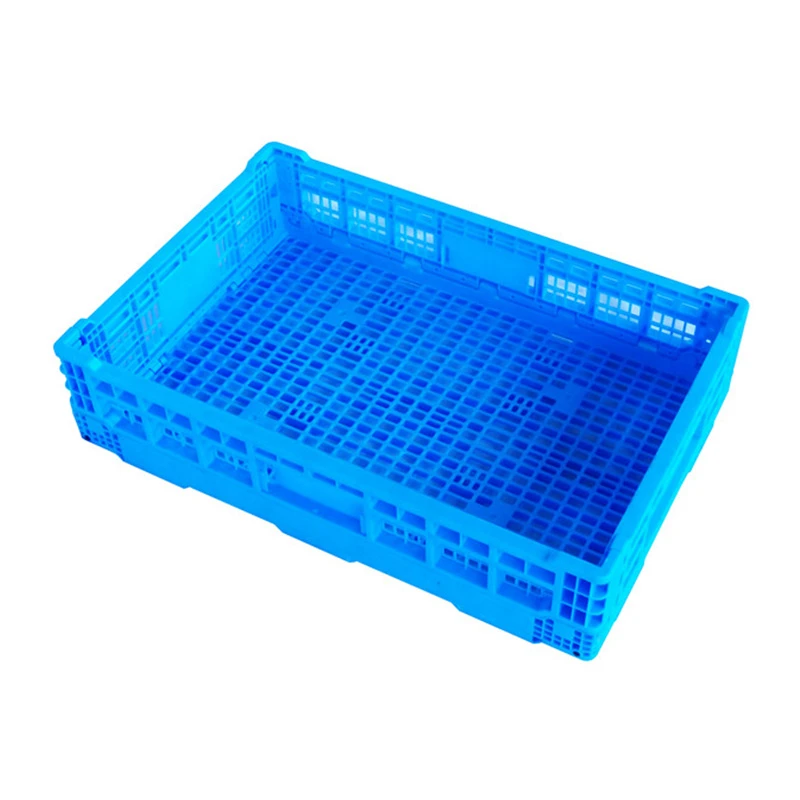
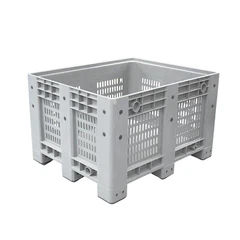
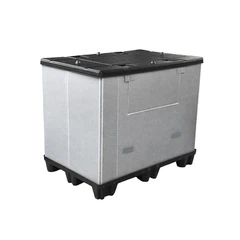
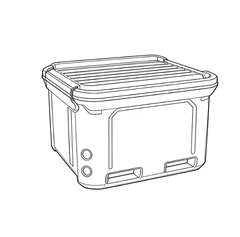
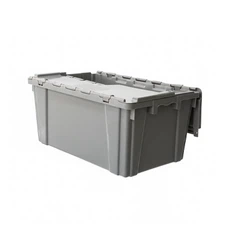
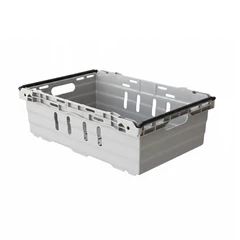
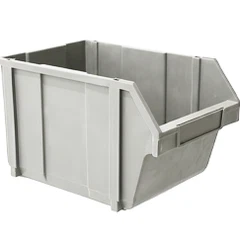
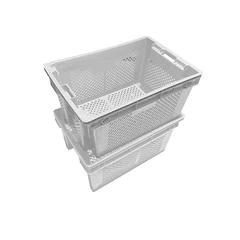
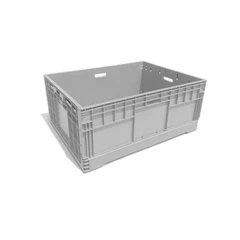
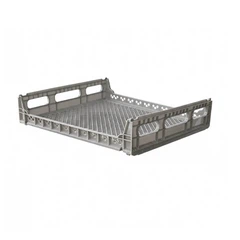
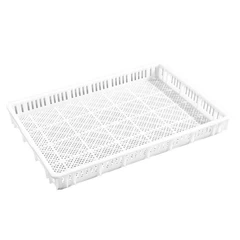
Choosing between virgin and recycled plastic pallet boxes can be difficult when two products have the same dimensions and similar load ratings but different prices. A virgin plastic pallet box usually costs more at purchase, while a recycled plastic pallet box may reduce the initial budget. The outside appearance can also be very similar, so a visual check rarely gives a clear answer.
The difference becomes clearer when the boxes are used in cold storage, food handling, repeated forklift operations, or long-term closed-loop systems. Resin selection affects batch consistency, impact resistance, low-temperature behavior, hygiene control, and service life. Still, the resin is only one part of the finished product. Wall thickness, ribs, base design, molding conditions, and quality control also matter.
For buyers comparing plastic pallet boxes, the practical choice comes from the operating conditions, required service life, and verified test data. Price should come after those points are clear.
For buyers who also need a manufacturing partner, Enlightening Plast Industry Co., Limited provides plastic handling products for industrial, logistics, agricultural, food, and other applications. Its product range includes plastic pallet boxes and bulk handling containers, with factory and quality resources available for procurement review.

What Are Virgin and Recycled Plastic Pallet Boxes?
Virgin and recycled plastic pallet boxes can look almost identical, but their raw material sources are different. That difference affects how consistently the finished box can be produced and how closely its properties can be controlled from batch to batch.
Virgin Plastic Pallet Boxes
Virgin plastic pallet boxes are made from new resin that has not previously been processed into another plastic product. The resin source and composition are usually easier to control, which helps maintain stable color, dimensions, impact performance, and processing behavior. This can be useful when a box faces repeated handling, low temperatures, frequent washing, or strict hygiene requirements. A virgin resin label still does not make a finished box automatically suitable for heavy-duty work. The final result depends on resin grade, wall thickness, reinforcing ribs, box geometry, injection molding conditions, and quality control.
Recycled Plastic Pallet Boxes
Recycled plastic pallet boxes use plastic that has been collected and processed for reuse. The term covers several different material sources. A manufacturer may use controlled internal regrind, industrial post-industrial recycled resin, post-consumer recycled plastic, or mixed recovered material. These sources can have very different levels of contamination and consistency. For that reason, recycled plastic pallet box quality depends heavily on sorting, material traceability, processing history, and formulation control. A well-controlled recycled resin can work well in general industrial storage, but the actual product still needs suitable load and handling tests.
Once the material source is clear, the next question is how that choice affects the box during real bulk handling work.
How Does Material Affect Plastic Pallet Box Performance?
Plastic pallet boxes carry more than their own weight. A loaded box can face forklift impact, repeated stacking, vibration, temperature changes, cleaning, and long periods under load. Material selection affects how predictable the box remains under these conditions, while the structural design determines how that material is used.
|
Performance Factor |
Virgin Plastic Pallet Boxes |
Recycled Plastic Pallet Boxes |
|
Batch consistency |
Usually easier to maintain |
Depends on resin source and process control |
|
Impact behavior |
More predictable with a suitable resin grade |
Can vary with formulation and material history |
|
Cold-temperature use |
Suitable when the selected resin is tested for cold conditions |
Product-specific low-temperature testing is needed |
|
Color control |
Generally easier to keep uniform |
Color variation is more common |
|
Hygiene control |
Material source is easier to specify |
Requires clear source and compliance records |
|
Initial purchase cost |
Usually higher |
Usually lower |
|
Repeated circulation |
Suitable for demanding reusable systems |
Suitable when durability has been verified |
|
Material traceability |
Usually straightforward |
Depends on recycled resin management |
How Do Impact and Low-Temperature Conditions Affect Performance?
A plastic pallet box may receive impact from a forklift, from bulk goods being loaded into the base, or during movement with a full load. Cold conditions add another concern because many plastics become less tough as temperature falls. This matters in meat processing, seafood handling, cold rooms, and refrigerated logistics. Virgin resin can provide more predictable material behavior when the correct grade is selected, while recycled resin needs closer control of its composition and processing history. The useful test is the finished box under the intended temperature and load. A resin certificate alone cannot predict how the complete box will behave.
How Do Stacking Strength and Structural Stability Change?
Stacking performance comes from the whole structure. Box walls carry side pressure, corners and posts transfer upper loads, and the base must handle the weight without excessive deflection. Long stacking periods also bring plastic creep into the calculation, especially when temperatures rise. Virgin material can make batch-to-batch performance easier to control, but a virgin box with weak geometry can still perform poorly. A recycled plastic pallet box can also carry substantial loads when the resin formulation, wall design, base reinforcement, and molding process are controlled. Static load, stacking height, test duration, temperature, and support conditions should all be checked together.
How Do Hygiene and Material Traceability Affect Selection?
Food processing, meat handling, seafood logistics, and pharmaceutical material handling place tighter controls on the box material. The key issue is not whether a box is white, smooth, or made from virgin plastic. Food-contact use depends on the applicable requirements in the target market, the material formulation, and the supporting compliance documents. Virgin resin is often easier to specify and trace for controlled applications. Recycled resin may require a much closer review of its source and compliance status. For a food-grade plastic pallet box, the buyer should also confirm cleaning conditions, temperature range, material traceability, and direct-contact suitability.
Performance only becomes useful for purchasing decisions when it is matched to the actual working environment. A box used in a dry warehouse has a different risk profile from one that moves chilled seafood several times each day.

When Should Buyers Choose Virgin Plastic Pallet Boxes?
Virgin plastic pallet boxes are generally a stronger fit when hygiene, cold-temperature impact, frequent handling, or consistent long-term performance carries a high business cost. The choice should still be based on product-specific data, since virgin resin alone does not define the finished box.
When Are They Suitable for Food, Meat and Seafood Handling?
Food, meat, and seafood operations often require repeated washing and direct contact with the container surface. Boxes may also move between processing areas, cold rooms, loading zones, and transport vehicles several times in one working day. In these conditions, material traceability and controlled hygiene are central procurement points. A buyer should request the applicable food-contact documents, material records, cleaning conditions, minimum operating temperature, and direct-contact suitability for the intended product. Plastic pallet boxes for food and beverage handling can be assessed with these same criteria, with the final decision based on the actual application.
When Are They Suitable for Cold Storage and Repeated Handling?
Cold storage becomes a stronger reason to consider virgin material when the boxes face frequent forklift movement, repeated stacking, and impact while chilled. For example, a box that moves between a processing line and a cold room several times a day needs stable impact performance at its actual working temperature. A higher purchase price can make sense when cracking or deformation would stop a production process or create product handling problems. The minimum temperature and low-temperature impact test should be part of the purchasing specification.
When Are They Suitable for Long-Term Closed-Loop Operations?
A reusable plastic pallet box in a closed-loop system may return to the same facility hundreds of times, depending on the operation. The useful purchasing figures include annual turns, washing frequency, stacking time, forklift handling, repair rates, and replacement cost. In this type of system, the price paid for one box tells only part of the story. A durable virgin plastic pallet box may provide a lower cost per completed trip if it stays in service for more usable cycles under the actual conditions.
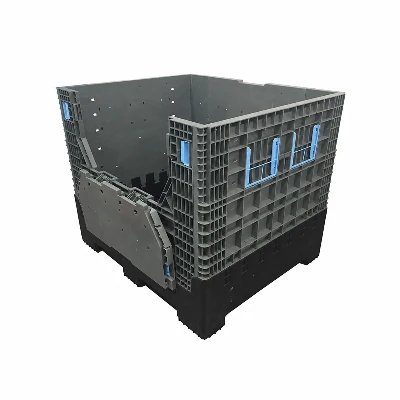
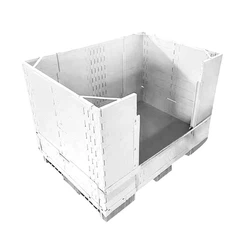
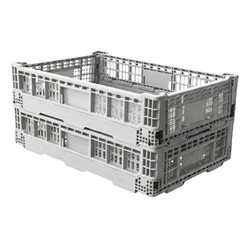
For buyers working with heavy industrial goods, a product such as the Heavy Duty Collapsible Bulk Container is also worth considering when empty-return space is a concern. A collapsible design can reduce the height of empty containers for return transport and storage, while the load performance still needs to be checked against the intended handling conditions.
When Are Recycled Plastic Pallet Boxes a Practical Choice?
Recycled plastic pallet boxes can be a sound choice when the operating conditions are moderate and the recycled resin source is controlled. The decision works best when hygiene requirements are limited, temperature conditions are stable, and the supplier can provide reliable material and finished-product test data.
When Are They Suitable for General Industrial Storage?
General industrial storage often has fewer material restrictions than food or pharmaceutical handling. Parts, packaging materials, industrial components, and other non-food goods may be stored indoors at stable temperatures with limited handling frequency. In such cases, controlled recycled material can provide a lower entry cost while still meeting the required load rating. The key is to match the box to its actual workload. A lower resin cost should never replace a required stacking or handling test.
When Are They Suitable for Moderate-Duty or Shorter-Cycle Projects?
A recycled plastic pallet box may fit projects where the box has a moderate workload, a shorter circulation period, or limited return use. This can include temporary storage, internal material movement, and operations where box replacement has a manageable cost. Before placing a bulk order, confirm the expected load, stacking period, temperature, handling frequency, and material source. A short static test gives useful information, but it cannot represent every long-term stacking condition.
When Do Controlled Recycled Resin Sources Support Sustainability Targets?
Recycled resin can reduce demand for new plastic resin, but recycled content should be considered together with product life. Controlled industrial recycled material is usually easier to manage than mixed plastic waste because the source and composition can be tracked more closely. If a high recycled content causes frequent cracking and replacement, the material saving may lose part of its practical value. A better procurement target is a stable recycled formulation that still meets the required service conditions.
For buyers comparing product options, the next step is to turn these performance differences into a cost calculation.

Does a Lower Price Mean a Lower Total Cost?
The lowest quotation does not always produce the lowest operating cost. A plastic pallet box creates value each time it completes a useful trip, protects the load, and returns to service without repair. That makes actual usage more useful than purchase price alone.
How Should Cost per Completed Trip Be Calculated?
A simple starting point is:
Cost per Completed Trip = Purchase Price ÷ Actual Number of Completed Trips
For example, if a virgin plastic pallet box costs 25% more but completes twice as many usable trips under the same operating conditions, its cost per trip is lower. If both boxes perform equally in a low-demand warehouse, the recycled option may provide better value. The figures should come from actual use or reliable testing, not a fixed service-life assumption.
A wider calculation can include:
Total Operating Cost = Purchase Cost + Replacement Cost + Product Loss + Downtime + Cleaning Cost − Recycling Value
Which Hidden Costs Should Buyers Include?
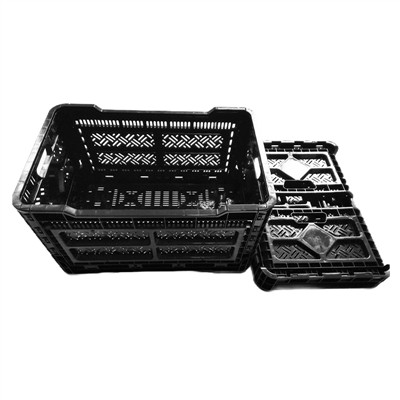
A cracked side wall may create a replacement cost, but the bigger cost can come from production interruption or damaged goods. Excessive bottom deflection may also create problems in automated handling. Food operations can face extra cleaning or disposal work after contamination. Logistics operations may also care about empty return volume, because collapsible pallet boxes can occupy much less space when folded. Plastic pallet boxes and bulk handling products can therefore be compared by purchase price, usable cycles, handling requirements, and empty-storage needs as one calculation.
Cost comparisons become useful only when the material and load claims are supported by actual product data.
How Can Buyers Verify Plastic Pallet Box Material and Quality?
A supplier quotation may list resin type, load capacity, dimensions, and product weight. Those figures are useful, but they leave several questions unanswered. A stronger procurement review connects the raw material documents with the exact finished box, production batch, and test conditions.
What Material Documents Should Buyers Request?
For a serious order, request a material declaration, resin specification, recycled content declaration when applicable, material batch records, food-contact documents when required, and relevant third-party test reports. The documents should match the actual product model and purchase requirements. A general resin report does not automatically prove that every finished pallet box uses the same material source. Factory quality procedures and inspection records can add another layer of control. Factory and quality resources can be reviewed as part of the supplier assessment.
Which Finished-Product Tests Matter?
A suitable test plan may include static stacking, dynamic handling, drop, low-temperature impact, bottom deflection, forklift handling, compression, and folding-cycle tests for collapsible models. The test report should state the load, stacking layers, test duration, temperature, support method, lid condition, and pass criteria. A statement such as "static load 4,000 kg" has limited value without the conditions behind that number. This is especially relevant for heavy-duty plastic bulk containers where the box may remain loaded for long periods.
How Should Samples Be Tested Under Actual Conditions?
A sample test becomes much more useful when it follows the planned operation. Load the box with the actual goods or an equivalent weight, stack it to the intended height, use the planned forklift method, and test it at the working temperature. Repeated washing should be included when sanitation is part of the process. For collapsible models, inspect the folding panels, doors, hinges, and locking parts as well as the base and side walls. A visual check can find color variation, black spots, unusual odor, or surface defects, but color, smell, surface gloss, and product weight cannot confirm resin grade by themselves.
A supplier that can provide consistent production records, testing, and application support gives buyers a better basis for a large order. Enlightening Plast Industry Co., Limited supports this type of supplier review with manufacturing resources and product support for plastic handling applications.
How Should Buyers Make the Final Selection?
The final decision can be made with a short sequence of checks. Start with the application, then move to operating conditions, load data, circulation requirements, and supplier evidence. Resin type comes into focus after those conditions are clear.
|
Operating Requirement |
Recommended Direction |
|
Direct food-contact use |
Verified food-contact material |
|
Cold storage with frequent handling |
Resin and finished-box cold impact testing |
|
High-frequency closed-loop circulation |
Compare usable cycles and replacement rates |
|
General indoor industrial storage |
Controlled recycled resin may be suitable |
|
Short-cycle, cost-sensitive use |
Recycled material can be considered |
|
Automated handling |
Check dimensions and bottom deflection |
|
Sustainability target |
Verify recycled content and required performance together |
A practical procurement sequence is simple: confirm food-contact or hygiene requirements, define the lowest operating temperature and cleaning conditions, set the load and stacking requirements, estimate handling frequency and circulation period, calculate replacement and damage costs, review material and finished-box tests, then compare quotations.
The core decision is also clear. Virgin plastic pallet boxes are generally better suited to food handling, cold storage, frequent circulation, and applications where consistent performance has a high value. Recycled plastic pallet boxes can provide good value in general industrial storage and moderate-duty handling when the resin source is controlled and the finished product meets the required tests.
The right pallet box material depends on how the box will be used, how often it will circulate, and what conditions it must handle. If the choice is still unclear, contact Enlightening Plast Industry Co., Limited with the required box size, load, operating temperature, stacking conditions, handling frequency, and expected order quantity. These details can be used to discuss a suitable pallet box material and structure for the application.
FAQ
Q: Can Recycled Plastic Pallet Boxes Handle Heavy Loads?
A: Yes, when the resin formulation, wall structure, base design, and molding process are suitable for the load. The stated capacity should be supported by finished-product stacking and handling tests under defined conditions.
Q: Are Virgin Plastic Pallet Boxes Always Stronger?
A: No. Virgin resin gives a more controlled material starting point, but strength also depends on wall thickness, ribs, corners, base structure, molding quality, and load distribution.
Q: Can Recycled Plastic Pallet Boxes Be Used for Food Handling?
A: They can be considered only when the material and finished product meet the food-contact requirements that apply to the intended market and use. Valid documents should relate to the actual product and material specification.
Q: How Can Buyers Tell Whether a Pallet Box Uses Recycled Resin?
A: Color, odor, gloss, and weight can offer clues, but they cannot confirm the resin source. Material declarations, batch records, production controls, and suitable testing provide stronger evidence.
Q: Does a Heavier Plastic Pallet Box Usually Last Longer?
A: A heavier box is not automatically more durable. Resin quality, wall thickness, structural design, load distribution, temperature, handling frequency, and manufacturing quality all affect service performance.