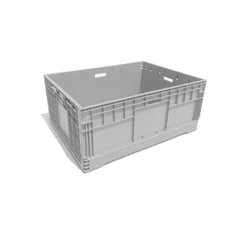
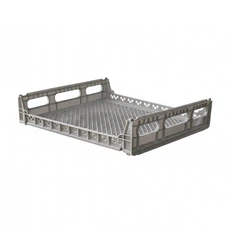
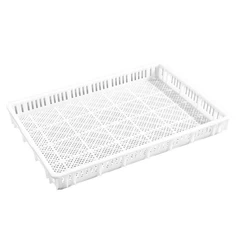
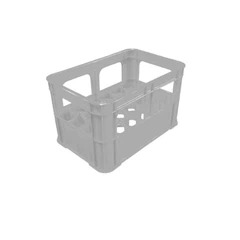

Introduction
In industrial supply chains, packaging must do more than hold products during transportation; it must protect cargo, support efficient handling, and withstand repeated use. Wooden crates can release splinters and nails in food-handling environments, while cardboard packaging can lose compression strength when exposed to moisture, creating risks for valuable industrial components. As a form of returnable transport packaging (RTP), plastic pallet boxes offer a reusable solution for bulk storage and transportation, helping businesses improve cargo protection, warehouse utilization, and packaging management.

What Are Plastic Pallet Boxes and Why Are They Used In Bulk Handling
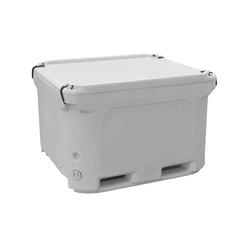
Plastic pallet boxes are large-capacity industrial containers with integrated pallet bases, designed to store, move, and transport bulk quantities of materials or products. Their forklift-compatible construction allows operators to handle larger loads as a single unit rather than moving multiple smaller packages individually.
Unlike disposable packaging, plastic pallet boxes can circulate repeatedly between production facilities, warehouses, and distribution centers. Their reusable construction, moisture resistance, and easy-to-clean surfaces make them suitable for industrial environments where packaging must maintain consistent performance across multiple handling cycles.
For businesses operating closed-loop logistics systems, these containers form part of a returnable transport packaging (RTP) program. Standardized container dimensions and reusable structures help coordinate packaging circulation between suppliers and customers while reducing dependence on single-use wooden crates and cardboard boxes.
How Plastic Pallet Boxes Improve Bulk Storage Efficiency
For warehouses handling large quantities of raw materials, components, or finished products, a plastic pallet box for bulk storage must provide sufficient load capacity and reliable stacking performance. These two factors determine how much material can be stored within a given warehouse footprint.
Dynamic Load & Static Load Capacity
Dynamic load refers to the maximum weight a container can carry while being moved by a forklift or pallet truck, whereas static load refers to the weight it can support when stationary under approved stacking conditions.
Selected heavy-duty plastic pallet box models offer the following reference capacities:
- Dynamic Load: 1,000 kg – Supports the movement of heavy materials when the selected model and handling conditions meet the specified rating.
- Static Load: 4,000 kg – Provides substantial vertical load capacity during stationary storage, subject to the manufacturer's approved stacking configuration.
These ratings apply to selected product models rather than every plastic pallet box. Buyers should compare the rated capacity with the actual cargo weight and handling conditions before selecting a container.
Vertical Stacking for High-Density Warehouse Storage
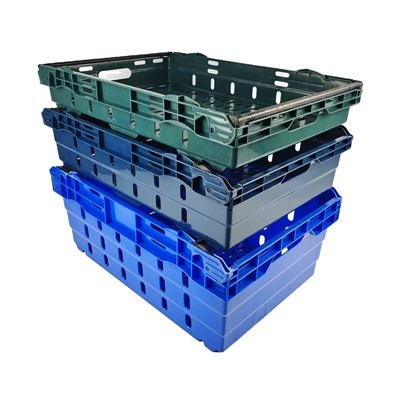
Stackable plastic pallet boxes allow warehouses to use vertical space more effectively without increasing their floor area. Selected foldable and sleeve-pack models support approximately 5–8 stacking layers, depending on their design and approved loading conditions.
For example, increasing a warehouse storage arrangement from four levels to eight levels can potentially double the vertical storage positions within the same floor footprint. This improvement depends on ceiling clearance, floor loading limits, cargo weight, and the stability of the complete stacking arrangement.
Before adopting a high-density stacking layout, warehouse managers should confirm the maximum permitted stacking height, loaded-container stability, and whether the containers are suitable for floor stacking or rack storage.
Reinforced Bases & Stable Stacking Structures
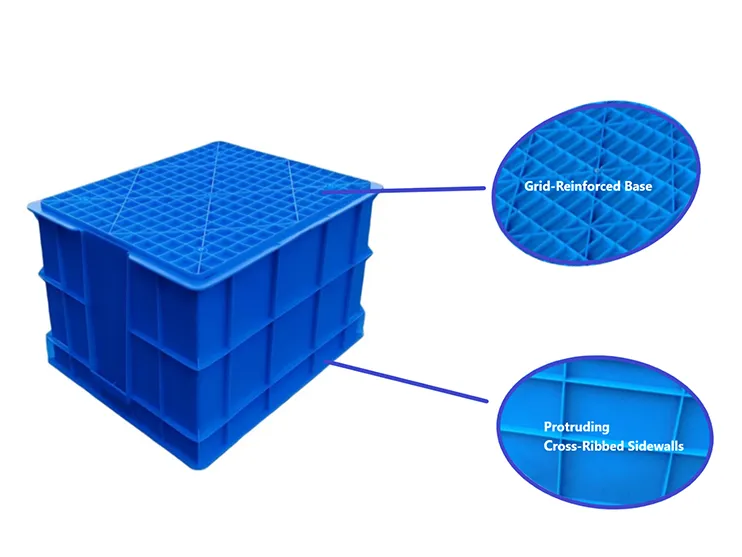
The pallet base carries the cargo weight and transfers vertical forces through the container structure. Reinforced ribs, thicker load-bearing sections, and interlocking stacking features help maintain structural integrity during repeated loading and storage.
For dense materials such as metal components and automotive parts, the load should be distributed across the pallet base rather than concentrated in a small area. Buyers should also consider the container's corner strength and base deflection under the intended load, especially when containers remain stacked for extended periods.
How Plastic Pallet Boxes Reduce Bulk Transport Costs
A plastic pallet box for bulk transport must protect cargo throughout loading, unloading, and repeated movement between facilities. Its overall dimensions, empty-return configuration, and compatibility with material-handling equipment directly affect transportation efficiency.
Collapsible Designs Reduce Empty Return Volume
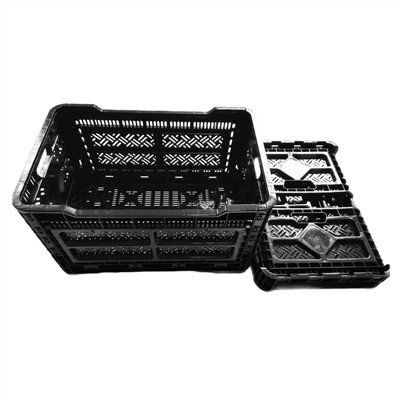
Empty containers can occupy substantial truck and warehouse space when they retain their original assembled height. Collapsible designs address this issue by allowing the walls to fold down after unloading.
Depending on the model and folding configuration, selected collapsible plastic pallet boxes and sleeve-pack containers can reduce empty-container volume by approximately 60%–80%. This reduction allows logistics operators to transport more empty containers in the same available vehicle space and reduce the storage area required between shipment cycles.
For companies with frequent return shipments, collapsible plastic pallet boxes and pallet pack containers provide two practical configurations for managing empty-return logistics.
Standard Dimensions & Four-Way Forklift Access
The 1200 × 1000 mm footprint is a widely used industrial pallet format and is available in selected plastic pallet box configurations. Matching container dimensions with warehouse layouts, truck loading arrangements, and existing pallet-handling equipment helps reduce unused space and simplifies material movement.
Four-way forklift access allows operators to approach a container from any of its four sides. This flexibility reduces the need to reposition containers before lifting and makes loading and unloading more convenient in busy warehouse and distribution environments.
However, buyers should verify the actual fork-entry dimensions, clearance, and rated load of the selected model. Compatibility with existing forklifts and pallet trucks should be confirmed before integrating new containers into an established handling system.
Reusable Containers for Long-Term Transport Operations
Reusable plastic pallet boxes support repeated transportation between suppliers, manufacturing facilities, warehouses, and customers. Unlike disposable packaging, they can remain within a company's logistics network and circulate through multiple shipment cycles.
For international supply chains, standardized container specifications help businesses coordinate packaging inventory across different locations. A consistent return process also makes it easier to manage container ownership, empty returns, and replacement requirements.
Companies developing returnable transport packaging and supply chain logistics solutions can select container configurations according to shipment frequency, transportation routes, and cargo-handling requirements.
Our Transport Packaging Solutions
How To Choose The Right Plastic Pallet Box For Your Industry
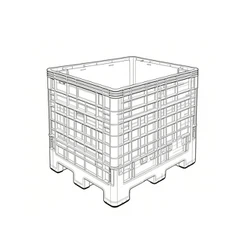
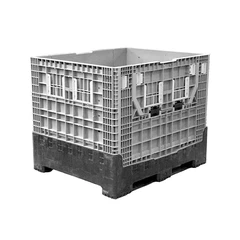
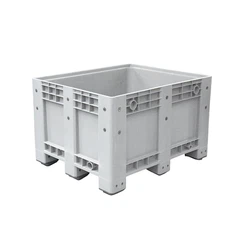
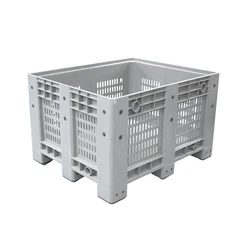
The four main plastic pallet box configurations serve different industrial requirements. Buyers should compare their structural characteristics, cargo suitability, and empty-return arrangements before choosing a product for bulk procurement.
|
Container Type |
Best Applications |
Core Advantages |
Empty Return Efficiency |
|
Collapsible |
|
|
High; selected models reduce empty volume by approximately 60%–80% |
|
Rigid |
|
|
Low; fixed walls retain their assembled volume |
|
Vented |
|
|
Depends on whether the selected model is stackable, nestable, or collapsible |
|
Pallet Pack |
|
|
High; selected designs allow the sleeve to fold between the pallet and lid |
Collapsible Plastic Pallet Boxes: Return Logistics
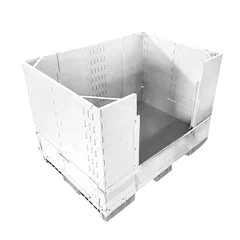
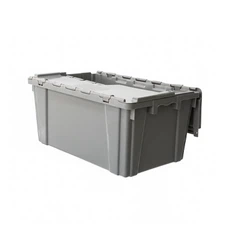
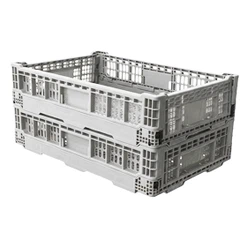
Collapsible containers are suitable for manufacturers and distributors that regularly send full containers to customers and receive them back empty. Their fold-down wall construction makes them particularly useful when empty containers must travel over long distances or occupy limited warehouse space.
These containers are commonly used for automotive components, industrial parts, and manufacturing materials that require repeated bulk handling. Buyers can compare solid-wall and ventilated-wall configurations according to the protection and airflow requirements of their products.

Rigid Plastic Pallet Boxes: Heavy Industrial Storage
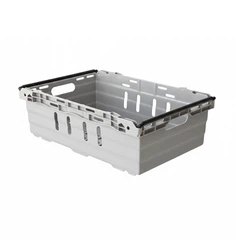
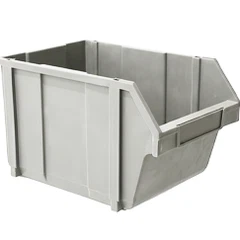
Rigid plastic pallet boxes use fixed walls to create a permanent enclosure around the cargo. They are suitable for operations where containers are mainly used for heavy industrial storage, material circulation, or repeated handling without a frequent empty-return requirement.
Typical applications include metal components, automotive parts, recycling materials, and manufacturing goods. Buyers prioritizing fixed-wall stability and straightforward container construction can consider rigid plastic pallet boxes.

Vented Plastic Pallet Boxes: Agricultural & Cold-Chain Handling
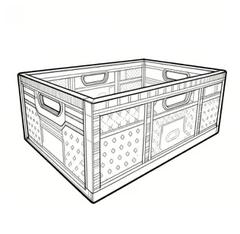
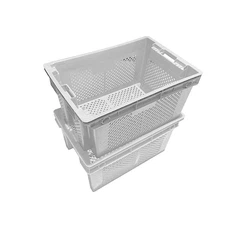
Vented plastic pallet boxes feature perforated walls that allow air to circulate around stored products. This construction supports cooling and moisture management during harvesting, temporary storage, and refrigerated distribution.
They are particularly suitable for fruits, vegetables, and agricultural products that require airflow to manage accumulated heat and moisture. Their washable plastic surfaces also support repeated use in food-handling environments.
Agricultural buyers can explore vented plastic pallet boxes for different harvesting, storage, and distribution requirements.

Pallet Pack Containers: Flexible Industrial Packaging
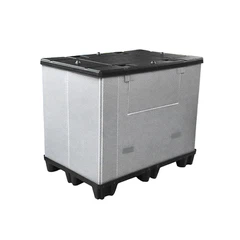
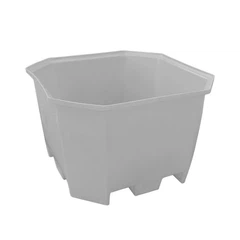
Pallet pack containers consist of three main components: a pallet base, a foldable sleeve, and a top lid. This modular construction provides a large internal loading space while allowing the sleeve to fold down when the container is empty.
They are suitable for automotive assemblies, electronics, and other industrial components that need organized bulk packaging. The separate components also make it easier to adapt container height and internal protection to different cargo dimensions.

Key Design Features That Affect Storage and Transport Efficiency
Beyond the overall container configuration, wall construction, forklift entry design, and material selection influence how well a plastic pallet box performs in a specific operating environment.
Solid Walls vs. Ventilated Walls
Solid walls provide a more enclosed space that helps protect cargo from external contamination, dust, and material loss during handling. They are commonly selected for automotive components, industrial parts, and products that require greater enclosure.
Ventilated walls feature openings that allow air to circulate through the container. This structure is more suitable for agricultural products and other goods that benefit from airflow during storage and transportation.
The choice should depend on cargo sensitivity, ventilation requirements, and the level of external protection needed during handling.
Forklift Compatibility & Handling Efficiency
Forklift entry points determine how easily operators can lift and move containers within a facility. Four-way entry provides greater approach flexibility, while appropriately reinforced fork-entry areas help maintain structural integrity during repeated lifting.
For facilities using automated storage and retrieval systems, conveyors, or specialized pallet-transfer equipment, buyers should also check the container's external dimensions, base geometry, and equipment compatibility.
Stackability & Space Optimization
Stacking performance depends on the pallet base, corner structure, interlocking features, and actual cargo weight. A container rated for high static loads may still have restrictions on stacking height under specific operating conditions.
Procurement teams should request the approved stacking configuration and load-test information for the exact model rather than relying only on general descriptions of heavy-duty construction.
Material Selection for Different Operating Environments
HDPE and PP are commonly used in reusable industrial containers, but their suitability depends on the intended application and operating environment.
HDPE offers good impact resistance and moisture resistance, making it suitable for industrial storage, agricultural handling, and demanding warehouse operations. PP is widely used in structural components and sleeve-pack systems where dimensional stability and specific design requirements are important.
For cold-chain operations, outdoor storage, or exposure to cleaning chemicals, buyers should confirm the material grade, operating temperature range, and chemical compatibility before ordering. Food-contact applications also require appropriate material documentation and regulatory verification.
Custom Plastic Pallet Boxes For Industry-Specific Requirements
Standard container specifications may not fit every production line, warehouse layout, or cargo configuration. Buyers can discuss the following customization requirements when standard models do not match their operating conditions.

Custom Dimensions & Load Capacity
Custom dimensions help containers fit existing warehouse layouts, conveyor systems, and transportation equipment. Buyers should provide the required external dimensions, internal dimensions, usable volume, and maximum cargo weight when requesting a quotation.
Load capacity should be specified according to the actual operating conditions, including dynamic transportation, stationary stacking, and repeated loading cycles. Reinforced bases, thicker corners, and structural modifications can be considered when standard models do not meet the required load ratings.
Wall Structures & Functional Accessories
Wall configurations can be selected according to cargo protection and ventilation requirements. Solid walls provide greater enclosure, while ventilated walls support airflow for agricultural products.
Additional options may include lids, drop gates, wheels, drainage holes, internal dividers, anti-slip components, and protective inserts. Buyers should specify which functions are essential for their handling process rather than adding accessories that may increase cost without improving operational performance.
Branding & Identification for Logistics Management
Color differentiation, printed logos, barcodes, and RFID integration can help companies identify container ownership, product categories, and inventory locations.
These features are particularly useful for distributors and manufacturers operating reusable container pools across multiple facilities. Consistent identification systems also support container tracking, stock management, and return logistics coordination.
Why Manufacturer Capability Matters In Long-Term Procurement
For bulk buyers, supplier selection involves more than comparing unit prices. Production capacity, batch consistency, quality management, and delivery coordination all influence the reliability of long-term container procurement.
Production Scale & Supply Stability
Enlightening Plast operates a 90,000 m² manufacturing base equipped with large-scale molding production lines and in-house manufacturing capabilities. Its plastic pallet box production capacity reaches 5,000,000 units annually, supporting bulk orders for distributors, industrial buyers, and international logistics projects.
Standard products can be prepared for dispatch within 7–10 days, subject to stock availability and order confirmation. For large-volume or customized orders, buyers should confirm the production schedule, material availability, and shipment plan before placing an order.
Quality Control & International Compliance
Consistent container quality is essential when products circulate repeatedly through warehouses, factories, and transportation networks. ISO 9001 and ISO 14001 management systems support quality and environmental management, while product-specific testing helps verify structural performance and material suitability.
Enlightening Plast provides products tested against applicable SGS requirements and EN 840 performance criteria, with food-contact-suitable models designed to meet relevant FDA requirements. Buyers should request the actual test reports, applicable product models, and material documentation to verify compliance with the regulations and operating conditions of their destination markets.
Global Supply Experience & Long-Term Cooperation
Enlightening Plast serves customers across more than 230 countries and regions, with its reusable packaging solutions used by internationally recognized companies such as Walmart, Ford, DHL, and Coca-Cola.
For distributors and large industrial procurement teams, international supply experience, consistent product specifications, and repeat-order support are important factors when evaluating a long-term manufacturing partner. Buyers should also review production planning, communication procedures, and shipment coordination before establishing a regular supply arrangeme.


Conclusion
Choosing the right plastic pallet box for bulk storage and transport requires evaluating load capacity, stacking performance, container structure, material properties, and return logistics requirements. Collapsible, rigid, vented, and pallet pack designs serve different operational needs, so buyers should match the selected configuration to their cargo and handling processes. Contact Enlightening Plast to discuss your application, request suitable product specifications, and obtain a bulk quotation for your reusable plastic pallet box requirements.
Find Your Suitable Plastic Pallet Boxes
FAQ
Q: What Is The Difference Between Dynamic Load And Static Load In Plastic Pallet Boxes?
A: Dynamic load refers to the maximum load a container can carry during movement, while static load refers to the weight it can support when stationary under approved stacking conditions.
Q: How Much Weight Can A Heavy-Duty Plastic Pallet Box Hold?
A: Selected models support up to 1,000 kg of dynamic load and 4,000 kg of static load, although actual capacities depend on the specific container structure and model.
Q: How Many Plastic Pallet Boxes Can Be Safely Stacked?
A: Selected foldable and sleeve-pack models support approximately 5–8 stacking layers, but the permitted height depends on cargo weight, container design, and manufacturer-approved load ratings.
Q: How Much Space Can Collapsible Plastic Pallet Boxes Save During Return Transportation?
A: Depending on their folding structure and original dimensions, selected models can reduce empty-container volume by approximately 60%–85%, helping businesses improve truck utilization and reduce return logistics costs.
Q: Are Plastic Pallet Boxes Suitable For Food Storage And Transportation?
A: Yes, selected food-contact-suitable models made from appropriate HDPE or PP materials can be used for food handling, agricultural storage, and transportation, subject to applicable material and regulatory requirements.
Q: What Information Should Buyers Provide When Requesting A Bulk Quotation?
A: Buyers should provide the required dimensions, cargo type, maximum load, stacking height, handling equipment, wall configuration, order quantity, destination, and expected delivery schedule to receive an appropriate product recommendation and quotation.