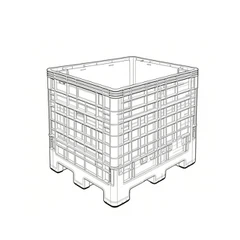
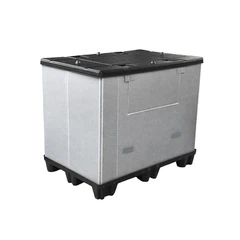
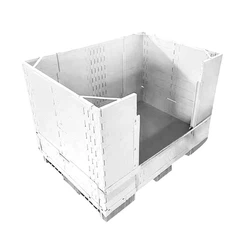
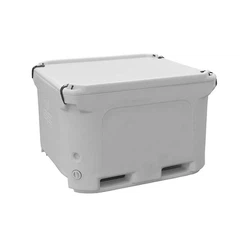
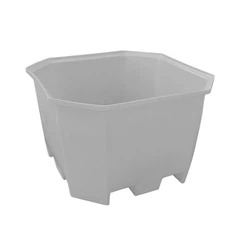
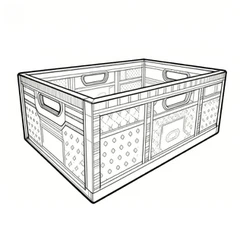
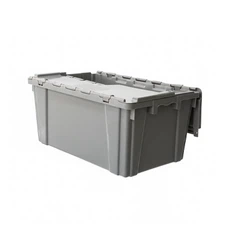

Many buyers compare crate prices first, but the wrong crate type can raise freight, labor, storage, and damage costs.
A foldable vs rigid plastic crate decision should be based on the return route, storage pressure, load weight, handling speed, and lifecycle cost. Foldable crates are suitable for space-saving return systems, while rigid crates are suitable when fixed strength and simple handling matter more.
When buyers compare a foldable vs rigid plastic crate, the catalog price should not be the starting point. The first step is to check how the crate moves through the operation. A crate that works well in a closed-loop distribution route may not be the best choice for long-term static storage. A crate that protects heavy parts well may waste too much space when it returns empty. The right answer depends on how the crate earns back its cost in daily use.

What Is the Main Difference Between a Foldable Plastic Crate and a Rigid Plastic Crate?
Many crates look similar when loaded, but they behave very differently after the goods are removed.
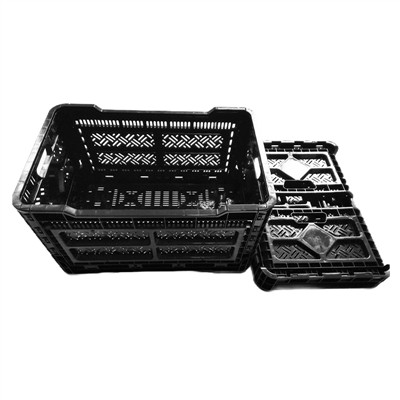
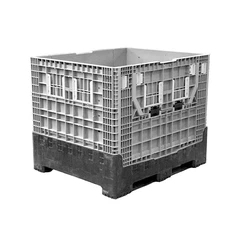
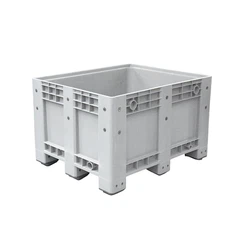
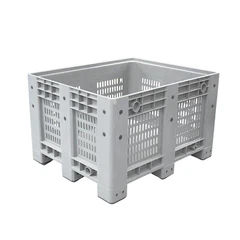
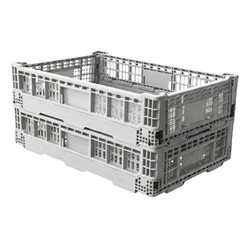
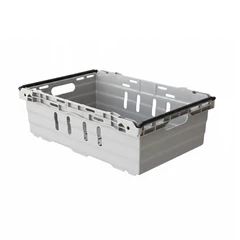
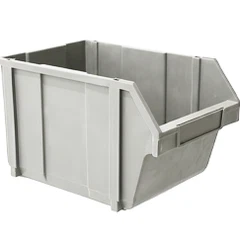
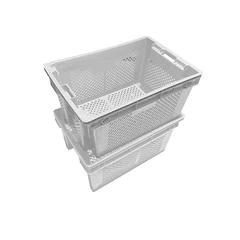
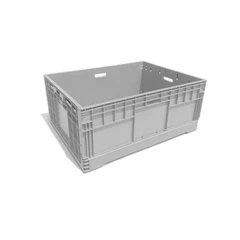
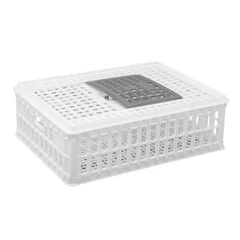
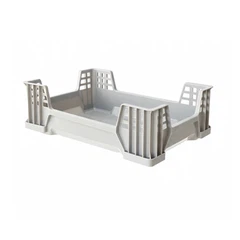
The main difference is the structure. A foldable plastic crate can collapse when empty to save return and storage space. A rigid plastic crate keeps its fixed shape all the time, so it may offer a stronger and simpler structure but takes more empty space.
Compare the Crate in Both Loaded and Empty States
A foldable vs rigid plastic crate should be compared in two states: loaded and empty. When the crate is loaded, both types must protect the goods, stack safely, and fit the handling route.
When the crate is empty, the difference becomes clear. A foldable plastic crate can fold down to a much lower height, so the buyer can store more empty crates in the same warehouse area and return more crates in one truck. A rigid plastic crate cannot collapse, so it keeps occupying almost the same volume whether it is full or empty.
This is why the choice should not be based only on product size. A buyer should ask how often the crate returns empty, how long it waits in storage, and whether warehouse space is expensive.
If the crate only stays in one warehouse and rarely returns empty, the folding function may not create enough value. If the crate moves through a repeated supply chain, the folding function can reduce operating costs during every cycle.
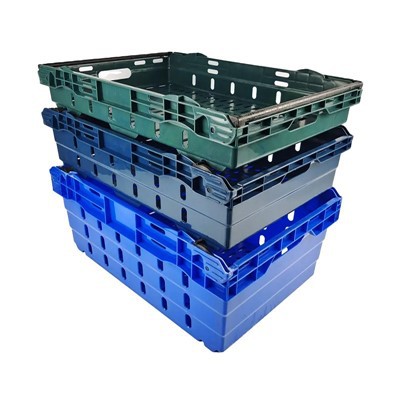
Rigid crates still have clear advantages because they have no folding hinges or sidewall locks, so their structure is simple and stable. They can be a strong choice for heavy loads, rough handling, or storage systems where the crate remains filled for longer periods. The decision should balance space saving against structural simplicity.
|
Comparison Point |
Foldable Plastic Crate |
Rigid Plastic Crate |
|
Empty state |
Folds down to save space |
Keeps full volume |
|
Return logistics |
Strong advantage |
Higher empty volume |
|
Structure |
Hinges and locks need quality control |
Simple fixed body |
|
Heavy load use |
Depends on reinforced design |
Often stronger by default |
|
Storage efficiency |
Best when empty crates build up |
Good when crates stay loaded |
|
Procurement focus |
Lifecycle cost and return route |
Strength and direct handling |
When Should Buyers Choose a Foldable Plastic Crate?
A foldable crate is strongest when empty space becomes a repeated cost in the supply chain.
A foldable plastic crate is suitable when the operation has regular return routes, limited warehouse space, high empty crate volume, retail or produce distribution, closed-loop logistics, or seasonal storage pressure. The folding function should reduce real costs, not just look convenient.
Use Foldable Crates When Return Flow Matters
When a crate folds flat, the buyer can return more empty crates in one truck or store more empty crates in one area. A space-saving foldable plastic crate with a collapsible structure can significantly improve empty return efficiency in reusable logistics systems. Many collapsible plastic crate designs reduce empty volume by a large percentage, often around 60% to 85%, depending on the structure, folding mechanism, and folded height.
This range should not be treated as a fixed guarantee for every reusable foldable plastic crate. Instead, it should be used as a reference for calculating the buyer's own return route, transportation frequency, and warehouse storage requirements.
Foldable crates also help when the warehouse has seasonal peaks. For example, a produce buyer may need many returnable plastic crates during harvest but fewer crates after the season. These stackable plastic crates can be stored in compact stacks between cycles, helping distributors and warehouses better manage seasonal inventory changes.
The buyer should still check hinge strength, lock stability, stacking performance, and worker handling because a low-quality industrial foldable plastic crate with weak hinges may create more maintenance costs and replacement risks later.

|
Good Fit for Foldable Crates |
Why It Fits |
|
Closed-loop logistics |
Empty crates return again and again |
|
Retail distribution |
Backroom and return storage space matter |
|
Agriculture and produce |
Seasonal peaks create empty crate storage pressure |
|
Cold-chain routes |
Reusable crates need efficient return flow |
|
Automotive parts circulation |
Parts containers move between fixed points |
|
Export or long-distance return |
Empty volume affects freight cost strongly |
|
Custom brand programs |
Color, logo, labels, and tracking can support asset control |
When Should Buyers Choose a Rigid Plastic Crate?
A rigid crate is often better when strength, simple structure, and direct handling matter more than empty-space savings.
A rigid plastic crate is suitable when the operation needs strong fixed walls, heavy load protection, long-term loaded storage, simple stacking, or fewer moving parts. It can be better when the crate rarely returns empty or when folding does not save enough money.
Use Rigid Crates When Fixed Strength Is the Priority
The rigid side of the foldable vs rigid plastic crate decision is suitable when fixed strength is more important than empty-space savings.
A heavy duty rigid plastic crate has a simple advantage because it does not need folding hinges, folding sidewalls, or locking mechanisms. The crate body is fixed, so the structure can provide stable support and reliable performance during repeated handling.
For heavy items, sharp-edged parts, rough internal handling, or long-term loaded storage, this simple structure can matter. Industrial rigid plastic crates are often selected when products require stronger side support, high load capacity, or continuous use in manufacturing and warehouse environments.
Rigid crates can also be easier for some workers because there is no folding step. If the operation is very fast and the crates do not return empty over distance, removing the folding action can save handling time. This makes durable plastic crates suitable for production lines, storage rooms, parts warehouses, and internal transfer systems where containers remain in circulation.
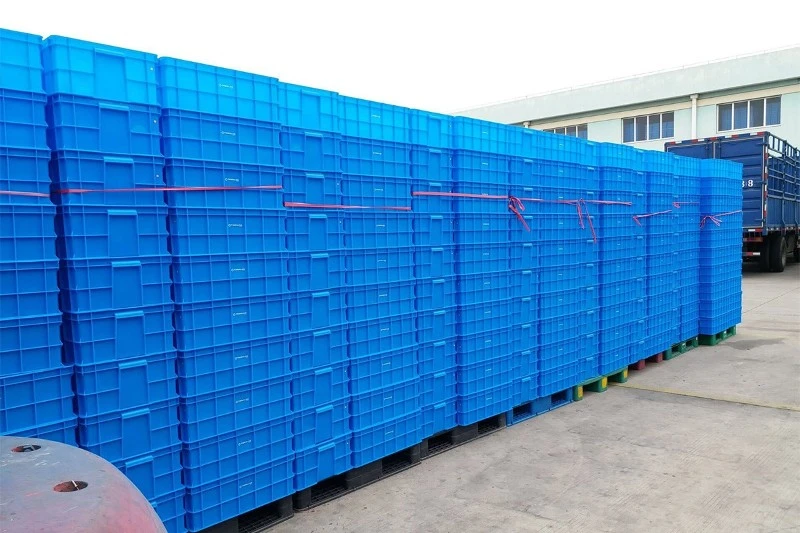
The trade-off is empty volume. A rigid crate continues to take up space after unloading. If a buyer stores hundreds or thousands of empty plastic storage crates, the warehouse can become crowded. If those returnable plastic crates return by truck, the buyer may pay to move empty space instead of products.
Rigid crates should not be considered cheaper only because the unit price may be lower. Buyers should also evaluate the total lifecycle cost, including service life, handling frequency, storage requirements, and performance of the plastic transport crate in real working conditions.

|
Good Fit for Rigid Crates |
Why It Fits |
|
Heavy industrial parts |
Fixed walls can provide strong support |
|
Long-term loaded storage |
Empty-space saving may not matter much |
|
One-site warehouse use |
Return logistics cost is limited |
|
Very fast manual flow |
No folding step is needed |
|
High-impact handling |
Simple body may reduce weak points |
|
Fixed rack or automation use |
Stable geometry can be easier to control |
|
Low empty inventory |
Storage waste is not a major issue |
How Do Both Crate Types Affect Storage and Return Freight?
Storage and return freight often decide the real cost difference between foldable and rigid crates.
Foldable crates reduce empty storage and return freight because they collapse after use. Rigid crates may stack well when full, but they keep their full volume when empty. If empty crates move or wait often, foldable crates usually create stronger cost savings.
Calculate Cost per Cycle, Not Only Cost per Crate
Buyers should compare cost per cycle when evaluating foldable vs rigid plastic crate options.
A rigid crate may have a lower unit price, but if it returns empty every week, the freight cost can add up. A foldable crate may cost more at purchase, but it may reduce return truck space, warehouse storage area, and staging time.This is why the cheaper crate on the invoice is not always the cheaper crate in operation.
For return freight, the buyer should compare how many empty crates fit in one truck, container, or pallet stack. Foldable crates can often fit several times more empty units into the same volume. The exact number depends on folded height, wall thickness, crate footprint, and stacking stability. This is especially important for distributors, exporters, retailers, and closed-loop operations.
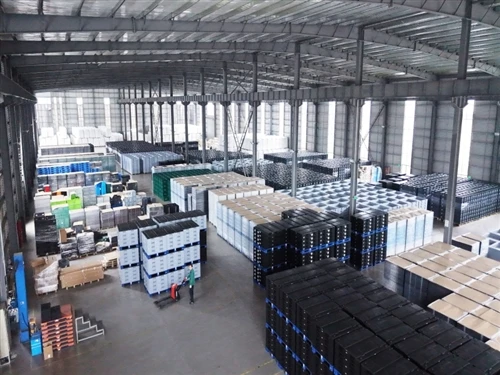
For warehouse storage, the buyer should compare how empty crates are stored between cycles. Empty rigid crates may occupy aisles, corners, backrooms, or outdoor storage areas. Folded crates can be grouped and stacked more cleanly. This makes counting easier and can improve safety.
The best comparison uses real data. Buyers should provide the monthly crate quantity, return frequency, truck type, warehouse cost, and handling method before estimating whether the folding function can recover the price difference.
|
Cost Area |
Foldable Crate Effect |
Rigid Crate Effect |
|
Empty return freight |
Lower volume after folding |
Same volume when empty |
|
Empty warehouse storage |
Compact folded stacks |
Larger empty stacks |
|
Loading density |
More empty units per trip |
Fewer empty units per trip |
|
Labor during return |
Folding step is needed |
No folding step |
|
Asset counting |
Compact stacks can help |
Bulky storage may spread out |
|
Total cost |
Strong when cycles repeat |
Strong when return cost is low |
How Do Load Capacity and Product Protection Compare?
Space saving is important, but the crate must still protect the product during real handling.
Rigid crates often provide strong fixed-wall protection by default. Foldable crates can also protect goods well, but the buyer must check hinge strength, lock stability, corner support, base ribs, and stacking performance. The right choice depends on product weight and damage risk.
Check the Weak Points Before Buying in Bulk
When comparing load capacity in a foldable vs rigid plastic crate project, the weak points should be checked first.
A rigid crate usually has fewer structural weak points because the walls and corners are fixed. This can be useful for heavy loads, sharp products, fragile parts, or rough handling.
If the product has high value or a high damage risk, the buyer should check whether the crate has enough sidewall stiffness, base strength, and stacking stability.
A foldable crate has more moving parts. It may include hinges, folding sidewalls, locks, and special corner structures. These parts must work together when the crate is open. A good foldable crate should feel stable when loaded. The sidewalls should not shake too much. The locks should not open during transport. The corner supports should carry the planned stacking load. The base should resist bending. This does not mean foldable crates are weak. Many industrial foldable crates are designed for repeated use and demanding logistics.
However, quality control becomes more important because the folding function adds engineering complexity. Buyers should test samples before bulk orders, especially when the goods are heavy or the crate will be folded many times. Product type also matters. Fresh produce may need ventilation, smooth edges, and easy cleaning. Automotive parts may need stronger walls or dividers. Retail goods may need label areas and stable stacking.
|
Protection Factor |
What Buyers Should Check |
|
Product weight |
Does the crate support the real loaded weight? |
|
Impact risk |
Are the walls and corners strong enough? |
|
Stacking height |
Can the bottom crates handle vertical pressure? |
|
Hinges |
Can they survive repeated folding? |
|
Locks |
Do they keep the sidewalls secure when open? |
|
Base ribs |
Do they reduce bending under load? |
|
Product surface |
Are the edges smooth enough to avoid damage? |
|
Environment |
Does the material fit cold, moisture, or cleaning needs? |
Which Crate Type Is Better for Labor and Daily Operation?
The best crate is not only strong. It also needs to fit how workers move, fold, stack, clean, and count it.
A foldable crate can improve return handling and storage order, but it adds a folding step. A rigid crate is simple to use, but it can take more space when empty. Worker flow, handling speed, ergonomics, and cleaning should be checked before choosing.
Watch How Workers Use the Crate During One Full Shift
Workers should be observed using crates during a normal shift before a foldable vs rigid plastic crate solution is selected.
The crate may look good in a specification sheet, but the real test happens during daily handling. Workers lift it, slide it, stack it, wash it, scan it, and return it. If the crate slows workers down, the operation may lose money even if the product price is attractive.
A foldable crate has an extra step because workers need to fold it after unloading and open it before reuse. If the folding system is smooth, this step is quick. If the hinges are stiff or the locks are confusing, workers may avoid folding it. The buyer then loses the space-saving benefit.
The buyer should check whether one worker can open and fold the crate easily, safely, and repeatedly. A rigid crate is simple because workers do not need to open or close it. This can help in high-speed internal workflows. However, empty rigid crates may create clutter. Workers may spend more time moving bulky empty crates or finding space for them. Cleaning is also part of daily operation. Plastic crates are often used in food, agriculture, and cold-chain applications. Smooth surfaces, drainage, and accessible corners can reduce cleaning time.
|
Labor Factor |
Foldable Crate |
Rigid Crate |
|
Opening and closing |
Needs folding action |
No folding action |
|
Empty handling |
Compact after folding |
Bulky when empty |
|
Worker training |
May need simple instructions |
Easier to understand |
|
Cleaning |
Hinges and locks need attention |
Fixed body may be simpler |
|
Counting and storage |
Folded stacks can help control |
Large empty stacks need space |
|
Fast internal flow |
Good if folding is not frequent |
Strong if no return step is needed |
How Should Buyers Decide Based on Total Lifecycle Cost?
The right crate should reduce costs across many cycles, not only look cheaper on the first purchase order.
The decision between foldable and rigid plastic crates should be based on total lifecycle cost. This includes purchase price, freight, return transport, warehouse space, labor, damage rate, replacement rate, cleaning, and how many times the crate can be reused.
Build a Simple Decision Model Before Ordering
Buyers should create a simple cost model before placing a bulk order because choosing between a foldable plastic crate and rigid plastic crate is ultimately a lifecycle cost decision. The model should start with the purchase price, but it should also consider transportation costs, empty crate storage, return logistics, labor requirements, cleaning processes, and the expected service life of the crates. For companies purchasing reusable plastic crates or returnable logistics crates in large quantities, these operating costs often have a greater impact than the initial unit price.
A complete evaluation should include product damage risk, handling frequency, and how the crate performs during repeated use cycles. A collapsible plastic crate may provide better value when freight costs and warehouse space are major concerns because the reduced empty volume can improve return transportation efficiency. This is especially important for distributors, retailers, and manufacturers operating closed-loop supply chains. On the other hand, a heavy duty rigid plastic crate may be a better choice when the crate remains loaded for long periods, carries heavier products, or requires maximum structural stability in industrial environments.
The same solution does not apply to every operation. Buyers should select the crate type based on actual working conditions, including load requirements, storage methods, transportation routes, and handling processes. Customization can also influence the final decision. A custom foldable plastic crate can be designed with brand colors, logos, label areas, barcodes, RFID tag areas, ventilation structures, and reinforced components to support different applications. A custom rigid plastic crate can include thicker sidewalls, dividers, drainage designs, and enhanced stacking features for industrial storage, manufacturing logistics, and material handling.
As an experienced plastic crate manufacturer, Enlightening Plast Industry Co., Limited provides customized reusable plastic crate solutions for different industries, including custom colors, logos, mold development, and structural improvements based on specific operational needs. The best crate solution is not simply the lowest-priced option, but the one that improves logistics efficiency, reduces long-term costs, and supports stable supply chain operations.
|
Lifecycle Cost Item |
Question to Ask |
|
Purchase price |
What is the crate cost per unit? |
|
Freight to site |
How many crates fit per shipment? |
|
Return freight |
Does the crate return empty often? |
|
Storage cost |
How much space do empty crates occupy? |
|
Labor cost |
Does the crate speed up or slow down handling? |
|
Damage cost |
Does the crate protect goods well enough? |
|
Replacement cost |
How long will hinges, locks, and walls last? |
|
Custom value |
Can color, logo, size, or mold improve control? |
Conclusion
Foldable crates are suitable for space-saving return systems, while rigid crates are suitable for simple, strength-focused operations.
Need Help Choosing the Right Plastic Crate?
Choosing the right plastic crate requires more than comparing product prices. Buyers should consider crate size, load requirements, structure, material, working environment, return routes, and purchase volume before making a decision.
As a professional plastic crate supplier, Enlightening Plast Industry Co., Limited provides reusable plastic crates, foldable plastic crates, rigid plastic crates, and customized logistics packaging solutions for distributors, manufacturers, and supply chain companies worldwide. With experience in different industrial and commercial applications, Enlightening Plast can help buyers select a suitable crate solution based on their specific operational needs.
Please contact Enlightening Plast for product recommendations, customization options, and bulk order support:
Elaine
Email: sales29@cnpreface.com
Phone: +86 13173207232
Website: prefacepallets.com
Buyers can also send their required crate size, load weight, purchase quantity, and application details. Enlightening Plast will help match a suitable plastic crate solution.