
A Practical Hold-Time Guide Built Around Insulation Performance (With Real Data + Shipping Examples)
Dry ice is one of the most effective cooling materials in cold-chain logistics. It can keep seafood, frozen meat, pharmaceuticals, and temperature-sensitive chemicals at deep-freeze conditions. But one question always comes first:
How long will dry ice last in an insulated container?
The most honest answer is: it depends on how fast heat enters the box. That is why the real topic is not only dry ice, but also the insulation performance of the container.
Quick Answer (What Most Buyers Use as a Planning Baseline)
For most shipping and cold-chain operations, a common planning rule is:
- Expect about 5–10 lb of dry ice to sublimate every 24 hours in a well-insulated container.
- FedEx also recommends using at least 5–10 lb per 24 hours, and adding extra dry ice for delays.
So for a simple estimate:
|
Shipping Duration |
Dry Ice Planning Range (Well-Insulated) |
|
24 hours |
5–10 lb |
|
48 hours |
10–20 lb |
|
72 hours |
15–30 lb |
This is not a "guarantee." It is a practical baseline that helps procurement teams avoid under-packing.
What Dry Ice Is
Dry ice is solid carbon dioxide (CO₂). It does not melt into liquid. It turns directly into gas, which is called sublimation. Britannica confirms dry ice sublimates at −78.5°C (−109.3°F).
That temperature explains why dry ice is used for deep-freeze shipping. It also explains why it disappears quickly if insulation is weak.
Dry ice also absorbs a large amount of heat during sublimation. A common engineering reference value is about 571 kJ/kg (around 246 BTU/lb) of cooling from sublimation energy.

One Safety Rule That Cannot Be Ignored
Dry ice produces CO₂ gas, so containers must allow gas to vent. Do not seal a dry ice shipper airtight.
The FAA advisory circular notes: one pound of dry ice sublimates into about 8.8 cubic feet of CO₂ gas.
This is why dry ice shipping requires proper packaging and ventilation.
The Real Question: How Fast Does Heat Enter Your Container?
Dry ice "lasts" based on heat gain. If heat moves into the container slowly, dry ice sublimates slowly. If heat moves in fast, dry ice is consumed fast.
This is why insulation capability is the core factor for hold time.
The 3 Ways Heat Enters a Container
Conduction – heat moves through the container wall
Convection – warm air leaks through gaps or circulates in empty space
Radiation – sunlight and hot surfaces raise the heat load
In procurement terms: wall thickness + insulation core + lid sealing decide the real performance.

Why Sublimation Rate Varies So Much (Data You Can Trust)
Some sources give planning ranges, but aviation and safety studies also offer measurable rates.
The FAA advisory circular reports experimentally determined sublimation rates in packaging:
- Large amounts (around 100 lb) can sublimate at about 1% per hour
- Small amounts (around 5 lb) can sublimate at about 2% per hour
This supports a key reality: small dry ice quantities disappear faster, especially when the container is frequently exposed to warm air.
Key Variables That Change Dry Ice Hold Time (What Buyers Should Check)
Even with the same container, dry ice duration can shift a lot. These are the main drivers:
Container insulation level
Better insulation means less heat leakage, so dry ice lasts longer. UPS uses the 5–10 lb per 24 hours rule as a baseline, but it also notes real rates depend on conditions.
Ambient temperature
A warehouse at 20°C and a truck yard at 35°C do not behave the same.
Dry ice format: blocks vs pellets
Pellets have more surface area, so they sublimate faster. A FAA study found pelletized dry ice in small quantities showed higher sublimation behavior, and the study measured an average ~2.0%/hour rate in shipping containers during testing.
ThermoSafe also explains that slabs or blocks tend to last longer than pellets because of lower exposed surface area.
Dead-air space and loose packing
Extra empty space speeds up sublimation. The CISA dry ice primer warns that dead-air space in a container causes dry ice to sublimate faster.
Opening frequency
Every opening replaces cold internal gas with warm air. That heat load costs dry ice.
Starting temperature of your product
Shipping frozen product is easier than shipping chilled product. Less "warmth" inside means less dry ice is needed early.
Insulated Container Types: Materials, Structure, and Real Performance Differences
This is where most hold-time decisions are made. Different container types are not equal, even at similar sizes.
1) EPS Foam Boxes (Expanded Polystyrene / "Styrofoam")
EPS foam shippers are common because they are low cost and easy to source. They work for short delivery routes.
But EPS often has limits:
corners deform during stacking
lids may not seal tightly
performance drops when the foam is damaged
If the goal is consistent multi-day hold time, EPS is usually not the strongest option.
2) EPP Foam Containers (Expanded Polypropylene)
EPP is used for reusable operations and repeat handling. It is more resilient than EPS in many cases.
Still, hold time depends on thickness and sealing. If the lid fit is not stable, convection losses increase.
3) PU Foam Insulated Shippers (Rigid Shell + Polyurethane Core)
This is a popular industrial configuration because polyurethane foam delivers strong insulation when properly engineered.
FedEx points out that packaging matters, and also uses the 5–10 lb per 24 hours planning range for dry ice shipments.
Many manufacturers describe high-performance insulation as thick PU foam construction. In practice, thicker insulation tends to reduce heat gain, which directly reduces dry ice consumption.
4)Rotomolded LLDPE Insulated Containers (LLDPE Shell + PU Foam Core)

This is one of the most reliable structures for repeat cold-chain logistics, especially when durability is as important as insulation.
Why rotomolded LLDPE helps:
Rotational molding (rotomolding) is widely used to create strong, seamless hollow plastic parts. Integrity Rotational describes rotomolding as producing single-piece parts without seams or welds.
This matters in shipping because seams often become weak points for cracking and heat leakage. A one-piece shell helps reduce failure points during impact and stacking.
Why LLDPE is commonly used in rotomolding:
A company notes LLDPE is often used in rotomolding because it is durable yet forgiving.
The British Plastics Federation also states LLDPE is one of the most common materials used in rotational moulding.
Why PU foam core completes the system:
The LLDPE outer shell gives structure. The PU foam core provides thermal resistance. Together, this design supports stable performance in real distribution cycles.
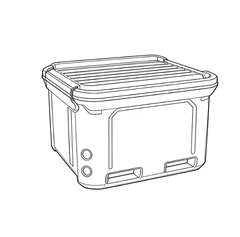
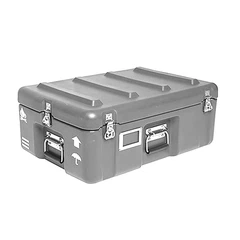
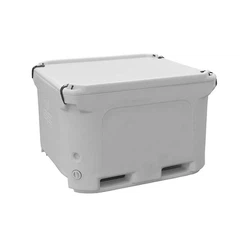
This is the typical structure used in many Plastic Insulated Containers, including a Rotomolded Cooler Transport Box used for seafood, frozen meat, and remote delivery.
If the operation needs a rugged insulated shipper for cold-chain reuse, this configuration often performs better than basic foam-only systems.
In practical product terms, containers like a Plastics Polar Insulated Box or Polar Insulated Fish Boxes are often built around this idea: strong exterior, stable insulation core, and reliable sealing.

Real-World Shipping Examples (How Buyers Use These Numbers)
Example 1: 48-hour frozen seafood shipment
A seafood exporter wants stable frozen condition using Dry Ice Containers and wants to reduce risk in transit.
A practical plan looks like this:
- choose a rotomolded LLDPE + PU insulated design or a high-grade PU shipper
- pack blocks instead of pellets when possible
- avoid dead-air space by tight packing
- plan dry ice as 10–20 lb for 48 hours using the 5–10 lb/day baseline
- add buffer if route delays are possible
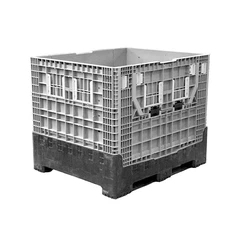
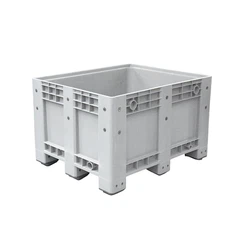
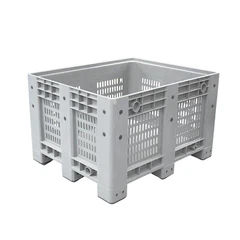
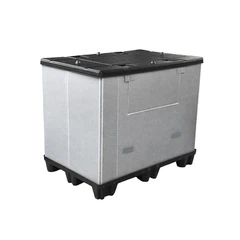
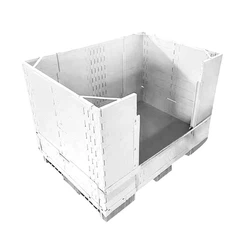
This is where Insulated Bulk Containers can be useful for large-volume loads that need stronger structure and repeat use.
Example 2: Small medical shipment with pellet dry ice
Small packages often lose dry ice faster. FAA data shows small amounts (5 lb) can sublimate around 2% per hour under test conditions.
This is one reason small shipments often require:
- better sealing
- better insulation thickness
- extra dry ice buffer
How to Make Dry Ice Last Longer (Without Just Adding More Dry Ice)
You do not always need more dry ice. Often, you need better control of heat gain.
Choose the right container first
Use a stronger insulation configuration when shipping beyond 24 hours. UPS and FedEx both point to the 5–10 lb per day planning rule, but insulation design controls whether that plan works.
Use blocks when duration matters
Pellets cool fast, but blocks last longer.
Reduce empty air space
Dead air speeds sublimation. Fill the volume with product or fillers so airflow is limited.
Open less often
Every opening adds heat, and dry ice pays the cost.
Keep it away from heat sources
Do not place the shipper on a hot floor or in direct sunlight. These are small details, but they change hold time.
FAQ (Procurement-Friendly)
Can dry ice last 3 days in an insulated container?
Yes, it can, but it usually requires both strong insulation and enough dry ice. The common planning rule is 5–10 lb per 24 hours, so 72 hours often needs 15–30 lb depending on conditions.
Can the container be airtight?
No. Dry ice must vent CO₂ gas. FAA documents highlight CO₂ volume generation and the need for ventilation practices.
What matters more: container material or dry ice amount?
Both matter, but insulation design usually comes first. A weak container wastes dry ice.
Final Takeaway: Hold Time Is an Insulation Decision
If the goal is reliable dry ice duration, the decision should start with the container, not the dry ice.
Use 5–10 lb per 24 hours as the planning baseline
Reduce heat gain through stronger insulation and better sealing
For harsh handling and repeat use, rotomolded LLDPE + PU foam is a practical structure because it combines seamless shell strength with stable insulation performance
Pack smarter (blocks, tight fill, fewer openings) to protect hold time