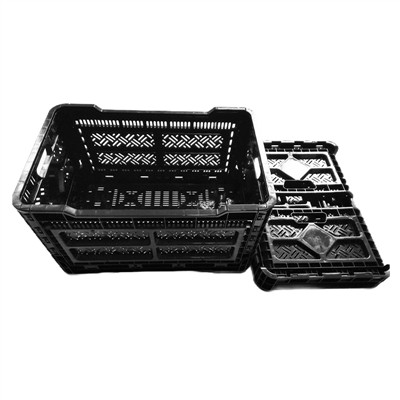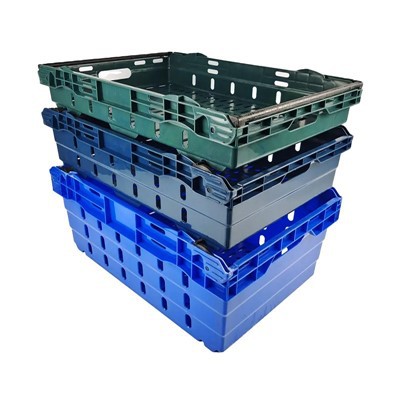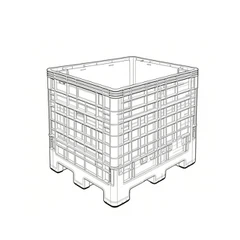
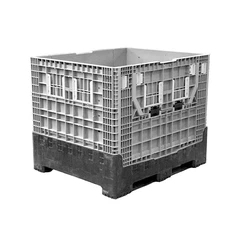
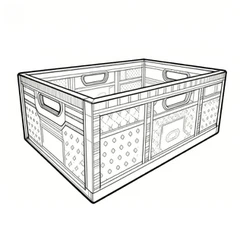
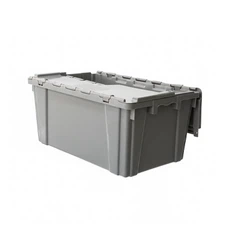
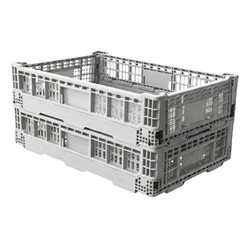
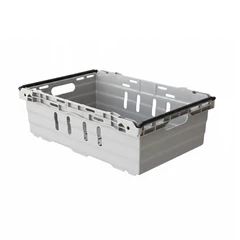
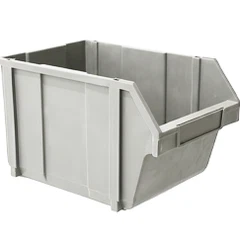
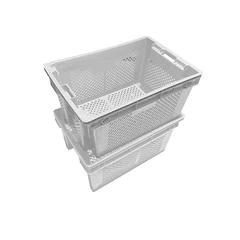
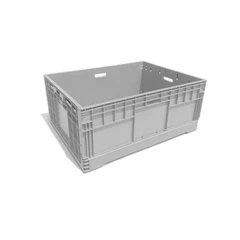
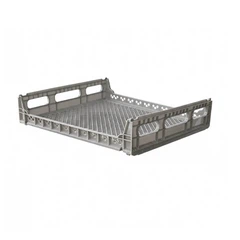
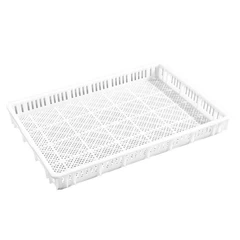
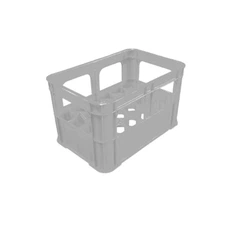
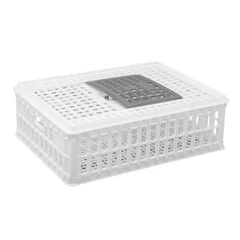
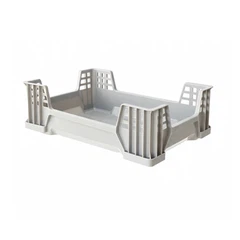
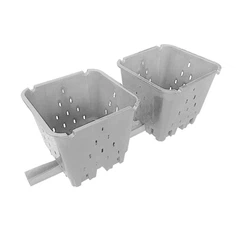

I have seen many storage problems start with the wrong crate design. A crate may fit the product well but waste warehouse space when it is empty. Stackable plastic crates are better when loaded crates need stable vertical storage. Nestable plastic crates are better when empty crates need to save space. Stack-and-nest crates can support both needs.
Where does the crate spend most of its time? A full crate needs stable stacking, while an empty crate needs low storage volume. This simple point can make crate selection much easier.

What Is the Difference Between Stacking and Nesting?
A crate design changes how much space it uses when it is full or empty. I find this difference more important than the product name alone.
Stack-Only Plastic Crates
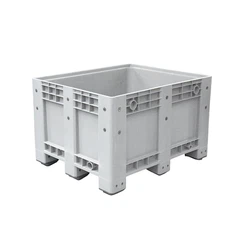
Stackable plastic crates are designed to sit securely on top of each other when loaded. Their base and upper rim support the crate above. This design works well for warehouse storage, production lines, and parts handling. It also helps keep products at a fixed height during handling.
Nestable Plastic Crates
Nestable plastic crates are shaped so that empty crates can fit inside each other. This can reduce the height of an empty stack. I usually consider this design when return transport or empty storage takes up a large part of the operating cost.
Stack-and-Nest Plastic Crates
Stack-and-nest plastic crates combine both functions. A rotation, locking feature, or designed rim can change the crate from a nesting position to a stacking position. This type can work well when the same crate moves between storage, transport, and return stages.
|
Feature |
Stackable Crates |
Nestable Crates |
Stack-and-Nest Crates |
|
Loaded stacking |
Stable vertical stacking |
Depends on design |
Stable when switched correctly |
|
Empty storage |
Higher stack |
Lower stack |
Lower stack |
|
Internal space |
Often more regular |
May reduce usable space |
Depends on design |
|
Empty stack height |
Higher |
Lower |
Lower |
|
Handling |
Simple stacking |
Simple nesting |
May need a switching step |
|
Best fit |
Loaded storage |
Return transport |
Mixed operations |
The main difference is not simply whether a crate can stack or nest. The real issue is how the design affects daily work. A stackable plastic crate may use more space during empty returns. A nestable plastic crate may provide less convenient loaded stacking. A stack-and-nest plastic crate can reduce this trade-off, but the mechanism needs to be checked carefully.

How Does Crate Design Affect Daily Operation?
A crate can affect storage space, handling time, product protection, and transport cost. I look at the complete operating cycle instead of only checking the crate when it is full.
Loaded Storage and Product Protection
For loaded storage, I focus first on the stacking structure. A stable rim and reinforced base can help prevent movement between crates. Internal dimensions also matter because a crate that is too large may allow products to move during handling.
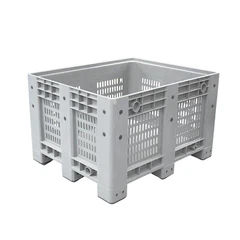
Solid wall plastic crates can suit parts and products that need protection from dust and contact. Ventilated plastic crates can suit applications that need airflow or drainage. Plastic crates with lids can add protection during storage and transport.
Empty Storage and Return Transport
Empty crates often create a different problem. They contain no products, but they still occupy warehouse and vehicle space. Nestable plastic crates can reduce this unused volume.
I would compare the actual empty stack height rather than rely only on a stated space-saving percentage. For example, 100 empty crates with a lower nested height can reduce the space needed in a return vehicle or storage area. The saving becomes more important when crates travel between different sites many times.
Handling and Equipment Compatibility
Handling also affects crate selection. Hand holes may be useful for manual movement. Forklift-compatible designs can support heavier warehouse operations. Some plastic logistics crates can also work with conveyors, racks, pallets, or automated storage systems.
|
Operating Need |
Suitable Design |
Main Check |
|
Loaded warehouse storage |
Stackable |
Load and stack limit |
|
Frequent empty returns |
Nestable |
Empty stack height |
|
Mixed full and empty handling |
Stack-and-nest |
Switching mechanism |
|
Manual handling |
Lightweight crate |
Handle position |
|
Automated handling |
Standardized crate |
Equipment compatibility |

Which Crate Type Fits Different Operations?
The best choice depends on where the crates spend most of their working life. I would not select a crate only from its catalog photo.
On-Site Manufacturing and Parts Storage
Manufacturing operations often keep loaded crates near workstations, machines, or assembly areas. Plastic stackable crates can provide a fixed storage structure and help use vertical warehouse space. Heavy-duty plastic crates can also support repeated handling of metal parts, components, and tools.
Retail Distribution and Empty Returns
Distribution operations often face large empty volumes after delivery. Nestable plastic crates can reduce the space needed for return transport. This design can be useful when crates move between stores, warehouses, and distribution centers.
Agriculture, Food Processing and Cold Storage
Food and agricultural operations may need ventilation, drainage, cleaning, and temperature resistance. Ventilated plastic crates can support airflow around products. Solid plastic crates can suit products that need more enclosed support. Material selection also matters in cold storage because low temperatures can affect plastic performance.
|
Requirement |
Design to Consider |
Check Before Ordering |
|
High loaded stack |
Stackable |
Loaded stacking limit |
|
Limited warehouse space |
Nestable |
Empty height |
|
Two-way operation |
Stack-and-nest |
Switching method |
|
Food handling |
Food-grade plastic crate |
Material and compliance |
|
Cold storage |
HDPE or suitable PP crate |
Operating temperature |
|
Frequent washing |
Washable plastic crate |
Drainage and wall design |
I would also test the actual product before placing a large order. Product size, weight, center of gravity, and handling method can change the result. A crate that looks suitable on paper may not provide enough internal space or stack stability in real use.

How Can Empty Crate Space and Total Cost Be Compared?
A lower purchase price does not always mean a lower operating cost. I prefer to compare the complete cost of owning and moving the crates.
First, I compare the same quantity of empty crates. If 500 crates are needed, I measure the total height of 500 empty stackable crates and 500 empty nestable crates. This gives a more useful result than comparing one crate at a time.
Next, I check return freight. If empty plastic crates travel long distances, the reduced volume of nestable crates may lower transport space requirements. The actual saving depends on vehicle dimensions, loading rules, and freight rates.
I also include warehouse space. A lower empty stack may free floor space for other goods. At the same time, the handling process should be considered. If workers need extra steps to switch or separate crates, that time has a cost.
|
Cost Factor |
What to Compare |
|
Purchase |
Unit price and required quantity |
|
Storage |
Empty stack height and floor space |
|
Transport |
Loaded and empty shipping volume |
|
Handling |
Stacking, nesting, and switching steps |
|
Replacement |
Breakage and expected reuse |
|
Customization |
Color, logo, size, and structure |
A practical cost comparison should include the purchase price, storage, handling, transport, and replacement costs. I would also check whether the crate can be reused across several operating stages. A crate that works for storage, transport, and return can reduce the need for different container types.
What Should Be Checked Before Ordering Plastic Crates?
I always recommend checking the actual operating conditions before choosing a plastic crate. The basic product dimensions are only the starting point.
The external dimensions should match available storage and transport space. The internal dimensions should match the products without leaving too much unused space. Load capacity should be checked for both individual crates and loaded stacks.
Material is also important. HDPE and PP plastic crates can have different performance depending on the design and operating environment. Temperature, cleaning methods, moisture, and impact should all be considered.
Wall design matters too. Solid wall plastic crates can provide enclosed support, while ventilated crates can improve airflow and drainage. Lids, handles, drain holes, and reinforced bases can be added when the application requires them.
Compatibility should also be checked. A new crate may need to work with existing pallets, racks, conveyors, forklifts, or other plastic containers. I would test samples under actual conditions before approving a large production order.
For custom plastic crates, I would confirm the external size, internal size, material, color, logo, load requirement, stacking method, nesting ratio, MOQ, and delivery requirements before production. Enlightening Plast can support custom colors, LOGO, dimensions, structure, lids, labels, drainage holes, ventilation holes, handles, and dedicated molds.
Conclusion
Stackable crates focus on loaded storage, nestable crates focus on empty-space savings, and stack-and-nest crates combine both functions for mixed operating conditions.
Find the Right Plastic Crate for Your Operation
I would start with four points: product size, product weight, empty return volume, and handling method. These details usually show whether a stackable plastic crate, nestable plastic crate, or stack-and-nest plastic crate is more suitable.
Enlightening Plast Industry Co., Limited provides plastic logistics crates, heavy-duty plastic crates, stackable crates, nestable crates, ventilated crates, solid wall crates, and customized industrial containers. Sample testing can help confirm the actual fit before a larger order.
If you are comparing different crate designs or planning a new packaging project, contact Enlightening Plast to discuss dimensions, load requirements, quantities, customization options, and suitable crate solutions for your operation.
Frequently Asked Questions
Q: Can a Plastic Crate Be Both Stackable and Nestable?
A: Yes. Stack-and-nest plastic crates are designed for both functions. The crate normally uses a specific rim, base, or rotation mechanism to change between stacking and nesting positions.
Q: Can Nestable Crates Be Stacked When Full?
A: Some nestable plastic crates can be stacked when full, but not every model is designed for this use. The loaded stacking limit and locking structure should be confirmed before purchase.
Q: How Much Space Can Nesting Save?
A: The space saving depends on crate geometry, quantity, and nesting depth. I recommend measuring the actual empty stack height for the required quantity instead of using a general percentage.
Q: Can Crates From Different Suppliers Stack Together?
A: Compatibility cannot be assumed. External dimensions, rim design, base shape, and stacking feet can differ between suppliers. A sample test is the safest way to check compatibility.
Q: What Is a Typical MOQ for Plastic Crates?
A: For Enlightening Plast, the typical MOQ for plastic crates is 500 pcs, while plastic pallet boxes generally start at 50 pcs. The final MOQ may vary for customized sizes, colors, logos, or special structures, so the order details should be confirmed before production.