
Introduction
When comparing reusable plastic crates vs cardboard, the purchase price of one box can be misleading. A proper packaging cost comparison should include the costs generated throughout the delivery cycle, including reuse, labor, storage, product damage, consumables, and reverse logistics. For procurement teams, the better option is the one that delivers the lowest cost per completed shipment under the actual supply-chain conditions.

How Does the Initial Cost Differ Between Reusable Plastic Crates and Cardboard
Cardboard has a low purchase price but is normally treated as a consumable packaging material. Every new shipment therefore creates another packaging expense, making its cost increase with shipment volume.
Reusable plastic crates require higher upfront spending but distribute that investment across repeated trips. Buyers can estimate the packaging cost per trip with:
Packaging Cost per Trip = Purchase Price ÷ Expected Usable Cycles
The actual break-even point depends on crate price, service life, loss rate, and circulation frequency. A high number of successful rotations can substantially reduce the effective cost per shipment, while frequent loss or early replacement can weaken the economic case.
How Do Storage and Labor Costs Change the TCO
Beyond purchase price, packaging affects both warehouse utilization and the amount of work required for every shipment.
Cardboards
Flat Storage: Unused boxes remain flat, allowing high storage density and reducing warehouse space requirements.
Packing Labor: Workers generally need to fold the box before use.
Sealing Materials: Tape or other closure materials add recurring consumable costs.
Handling: Preparation and disposal create additional labor at high shipment volumes.
Reusable Plastic Crates
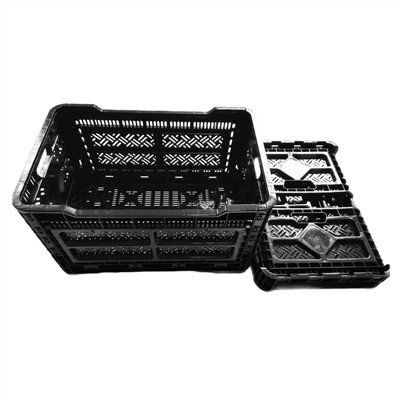
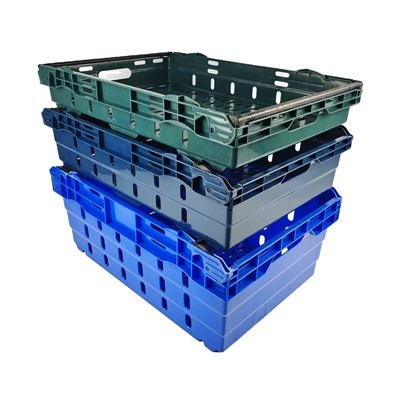
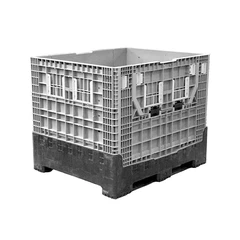
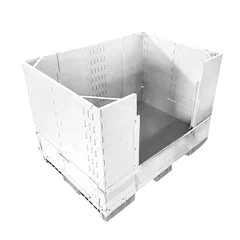
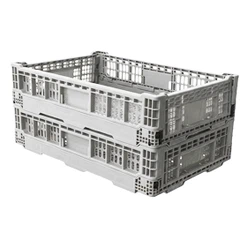
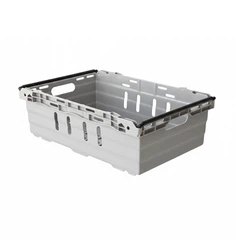
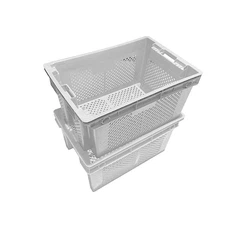
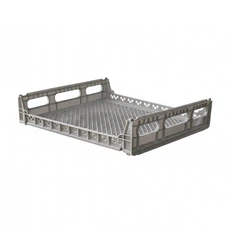
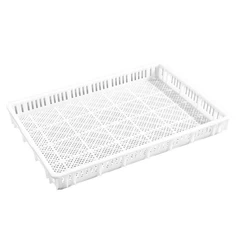
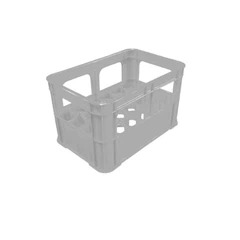
Empty Storage: Rigid crates require more space than flat cardboard, although folding and nestable designs can reduce their empty volume.
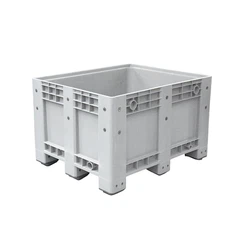
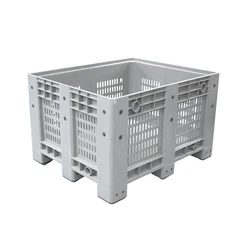
Ready-to-Use Handling: Rigid containers can eliminate much of the folding and taping work required for cardboard.
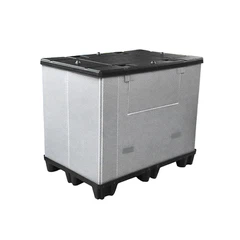
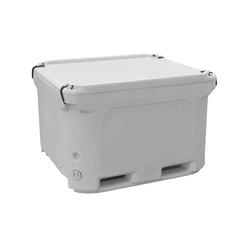
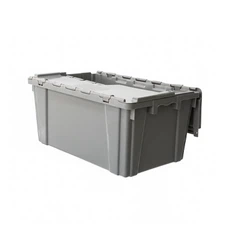
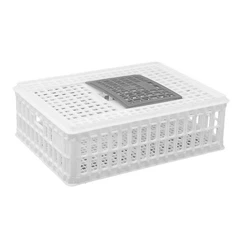
Attached-Lid Configurations: Integrated lids can reduce separate lid handling and sealing steps.
Automation: Standardized rigid crates can support repetitive conveyor and automated material-handling operations.
For high-volume operations, these labor differences should be converted into a cost per shipment rather than treated simply as operational advantages.
How Should Buyers Account for Product Damage in Packaging TCO
Packaging also creates financial value by protecting the goods inside it. The relevant TCO variable is
the expected cost of product damage, not simply the strength of the packaging.
Cardboards
• Performance depends on flute type, board grade, ECT, and Mullen burst strength.
• Compression can weaken boxes under heavy stacking loads.
• Moisture can reduce corrugated board strength and increase deformation risk.
Reusable Plastic Crates
• Rigid walls provide structural protection during handling and stacking.
• Moisture resistance helps protect contents in wet or humid conditions.
• Stable construction can reduce deformation during repeated circulation.
Buyers can quantify this variable with:
Expected Damage Cost = Shipment Value × Expected Damage Rate
When transported goods have high unit values, even a small difference in damage rates can materially change the TCO.
When Does Reverse Logistics Determine the Better Packaging Choice
Reusable packaging only creates a cost advantage when the supply chain can generate enough economical reuse cycles. Reverse logistics is therefore one of the most important variables in the comparison.
Cardboards work better when
• Shipments primarily move in one direction.
• Customers are widely distributed.
• Empty containers would require expensive dedicated return transportation.
• Packaging recovery cannot be reliably controlled.
• The cost of losing reusable containers is high.
Reusable Plastic Crates work better when
• Suppliers, plants, warehouses, or stores form a predictable return loop.
• Containers can complete multiple rotations before replacement.
• Regional or scheduled return routes are already available.
• Folding or nesting reduces empty-return volume.
• Container recovery and tracking can be managed efficiently.
The key question is therefore not simply whether a crate is reusable, but whether it can be returned, reused, and recovered at a reasonable cost.
How Can Buyers Calculate the Total Cost of Ownership
A practical model should include both direct packaging costs and the secondary costs created by each packaging system:
TCO per Trip = Packaging Cost per Trip + Labor Cost + Storage Cost + Consumables + Reverse Logistics Cost + Expected Damage Cost + Disposal Cost
For reusable plastic crates, packaging cost per trip starts with purchase price divided by expected usable cycles, followed by return transportation, loss, maintenance, cleaning, and storage where applicable.
For cardboard, the recurring box purchase cost should be combined with assembly labor, tape, storage, disposal, and expected damage.
Using actual shipment volume, labor rates, product values, return distances, and packaging prices will produce a more reliable result than comparing unit prices alone.
Which Option Has the Lower TCO for Your Supply Chain
If you want to choose a lower TCO option, please pay attention to:
Reusable plastic crates are more likely to deliver a lower TCO when high circulation, lower handling labor, strong product protection, and an economical return loop outweigh their higher purchase and storage costs.
Cardboard remains competitive when low upfront cost, flat storage, and one-way distribution outweigh the recurring labor, consumable, disposal, and damage costs. The right choice should be based on the cost per completed delivery under the buyer's actual operating model.
The final decision should therefore be based on the complete delivery cycle rather than the container's purchase price.
Conclusion
Enlightening Plast provides reusable plastic crate solutions that can be evaluated around practical TCO factors such as durability, reusable configurations, customization, and handling requirements. By matching crate design with circulation patterns and operational needs, buyers can assess whether reusable packaging can generate measurable long-term cost savings.
The right packaging is not the one with the lowest purchase price. It is the one with the lowest cost per completed delivery after all relevant costs are included. Compare Purchase Price → Cycles → Labor → Storage → Damage → Reverse Logistics, then contact us to discuss a reusable plastic crate solution suited to your supply chain.